Online Reporter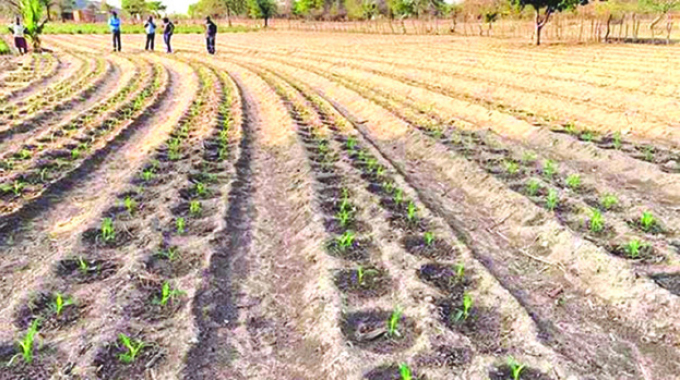
WITH all the work being done to help Zimbabwean farmers improve their yields and their output of grains and oilseeds, the Government is now looking at the private sector industrialists to play their part in ensuring that farmers are able to plant precisely what the processors want.
The build-up of output under the Second Republic has largely been accomplished by the Government mobilising all concerned and providing the essential research, especially in farming systems such as conservation agriculture.
Funding for inputs has largely been driven by Government, sometimes directly as with the swathe of Presidential schemes for smallholder farmers, starting with Pfumvudza/Intwasa and sometimes via guarantees to banks, largely for the A2 and other medium-scale commercial growers.
The Agricultural Marketing Authority has also been reinstated, and the long process of building up the necessary large capital assets has been started through revolving funds, that see a return on what was already there plus the annual additions to the capital reserves made via the Budget each year.
The Grain Marketing Board, which handles Government purchases of grain and oilseed, was also revamped so that it could perform these functions, but has not been given back the monopolies it held during colonial times and the early days of independence.
It is the designated contractor for Pfumvudza and other direct Government schemes and farmers using these schemes have to sell any surpluses to the GMB. It also needs to make some annual purchases each year, especially in good years when there are surpluses, to build up the strategic reserves that can be carried over from season to season and are there when a drought hits.
And even in good years, like this year, the Government finds that invariably there are some rural dwellers somewhere who need assistance, however perfect the weather, it is not perfect everywhere and the GMB is expected to have stocks that the Department of Social Services can access to ensure that the Government policy that no one goes hungry is fulfilled.
The GMB also acts as the buyer of last resort, that is after producer prices have been set it promises to buy at those prices everything that the farmers deliver. This basically ensures that when private companies, processors and others buy from farmers they must at the very least pay the Government price, since otherwise the farmer can simply deliver the crop to the GMB.
In the old days millers and oilseed processors and others would simply buy their needs from the GMB or the Cotton Marketing Board or whichever monopoly board under the then AMA was handling the crop or livestock they were interested in.
This was not necessarily the most efficient way of running the agricultural sector and it did allow a number of distortions to enter, especially when subsidies were introduced, with the selling price being less than the producer price, or in the early colonial days of the GMB when racial quotas of grains were introduced so that black farmers would be unable to compete with white farmers.
While the Government will remain active in the markets it now wants the private sector to assume its true role and start dealing directly with farmers and buy what it needs each year from farmers, with these guaranteed purchases backing the financing of the grain and oilseed crops for local processing.
This should also be able to cope with the need to expand oilseed production. We grow almost all the grain we eat, and can build reserves in good years that help in the drought years. But oilseed production lags behind demand and needs to be pushed a lot harder.
Funding could be through contract farming or based on other models that use the certainty of sales to raise the finance that the farmers need to grow the crop. Futures contracts using commodity exchanges are a fairly common method in some countries.
To back this needed switch, the Ministry of Lands, Agriculture, Fisheries, Water and Rural Development has now laid down that processors of oilseed, grains and their products must buy at least 40 percent of their requirements from April next year, when the harvest of what we will soon be planting is reaped, and that from April 2028 they must buy all their raw materials from Zimbabwean farmers.
This will make imports less attractive, although they might still be needed in some years for some crops. But the industrialists will no longer be able to seek out cheaper imports since if the imports are lower in cost than what Zimbabwean farmers are paid, the difference is still paid, but goes into the revolving funds of the AMA to build up its capital assets.
This removes any incentive for a local agro-industrialist to seek imports for any reason than filling a supply gap, and makes it clear that the easiest way of filling that gap will be to track down capable farmers and make sure they can grow what the industrial processor requires.
Regardless of the complex finance models that can be developed and matched to the needs to buyers and sellers, it would seem to be smart for the processors of grain and oilseed to have ever closer relations with the farmers, so that they can help farmers grow exactly what the processors want.
We have already seen that wheat millers would like a slice of our now surplus wheat harvest to be switched to harder grains or the durum wheats that provide the harder grain inputs in the warmer producer countries around the Mediterranean, and which would therefore grow under irrigation in Zimbabwe.
We would guess that as traditional grains build up markets in Zimbabwe and become a product of choice rather than necessity, that millers will want to increase the spread of varieties rather than just concentrate on three or four.
Oilseed production is being raised through more programmes involving soya and sunflower, but there would appear to be scope for the canola oils, which come from varieties of rape selected to be grown to flower stages and then the seeds rather than the leaves, which is the common crop in most Zimbabwean vegetable gardens. But Zimbabwean farmers can obviously grow the crop and should have access to the specialist seed varieties as well.
We are building up the sort of agricultural industry we need, with the Government providing direction and assistance but wanting the farmers and the industrialists to play their parts at far higher levels than in the past.