admin
admin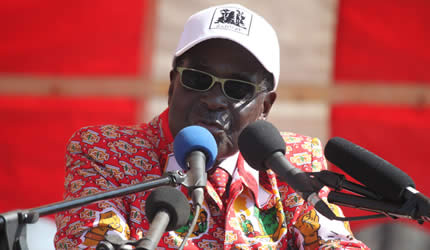

TODAY is a significant day in the history of Zimbabwe’s politics and in the political career of President Robert Mugabe. The President will be sworn into office today following his massive triumph in the 31 July harmonised elections. His revolutionary Zanu-PF party — the people’s party —also cruised to a landslide victory in the parliamentary and council elections. It garnered an enviable two thirds majority in Parliament while it whitewashed its major rival, the MDC-T in the council elections winning most of the rural council wards and several urban council wards in some cities and towns.
Zimbabweans will be proud today when their leader is inaugurated into office because they know they made a wise and informed choice to choose a leader and a party that stands for their empowerment. On the other hand President Mugabe will feel vindicated for all the demonisation he has been subjected to over the years. This might probably be his last term in office and when he retires he will do so knowing fully well that his legacy is intact.
It has taken nearly a month for the President to be sworn in because of the court challenge that his main rival Mr Morgan Tsvangirai of the MDC-T initially lodged before withdrawing. However, despite the withdrawal, which was a nullity, the Constitutional Court still ruled that President Mugabe won the 31 July presidential poll in a free, fair and credible manner and therefore is the legitimately elected Head of State and Government of the Republic of Zimbabwe.
Now after the endorsement of the polls by several observer groups from Africa, who include the African Union, Sadc, Comesa, local, regional and international churches and civic bodies as well as numerous other observers from the progressive world, the last seal of approval of the legitimacy of our elections has come from our own Constitutional Court, the highest court in the land.
With that President Mugabe will be inaugurated today at a ceremony at the National Sports Stadium in Harare fully aware that he has the mandate of his people, which has been endorsed by our own institutions and observers from other countries.
Zimbabweans should be applauded for keeping faith in the party that brought them freedom, a party that stands for everything Zimbabwean in every sense of the word.
We urge the losers, the MDC-T, the MDC, Zapu, Mavambo/Kusile/Dawn and other small parties that fielded candidates in the elections to accept defeat in grace.
For the MDC-T and the Professor Welshman Ncube-led MDC formation, they reaped what they sowed for their five-year stay in the inclusive Government.
The two parties fared so badly that the electorate has judged them harshly by voting them out of the Government.
MDC-T leader Mr Morgan Tsvangirai antagonised voters and some sectors of the Zimbabwean society. In Mashonaland Central he taunted youths for being so poor, they could not even afford to buy undergarments. He also insulted villagers across the country for living in poor houses. Mr Tsvangirai continued to deride new farmers by calling them all sorts of names. The MDC-T leader also threatened to deal with traditional leaders, media professionals and the security forces.
All these were own goals that the MDC-T leader and his party were scoring.
The election outcome also showed that Dr Dumiso Dabengwa’s Zapu and Dr Simba Makoni’s Mavambo/Kusile/Dawn are lost causes.
We urge Zanu-PF to be magnanimous in victory and continue to implement its people oriented policies. Zanu-PF should never allow complacency to creep into its structures because Zimbabweans value their freedom and sovereignty and would never abandon a party that delivered them independence and empowered them.
But should the party go to sleep, it will find itself having to battle to win back the hearts of Zimbabweans.
It is also time the party dealt with the succession issue in a manner that ensures the party remains united.
The succession issue should never be allowed to cause disharmony in the party. While we are confident the party can competently handle the succession issue in its own way, there will be no harm in learning from what revolutionary parties in other countries have done. Good examples include Chama Chamapinduzi in Tanzania, Swapo in Namibia and even the Chinese Community Party.
What is crucial is to ensure that Zanu-PF continues to be the party of choice. The party has done well so far by empowering people with land and now it has moved to implement the indigenisation and economic empowerment programme.



 Online Reporter