Online Reporter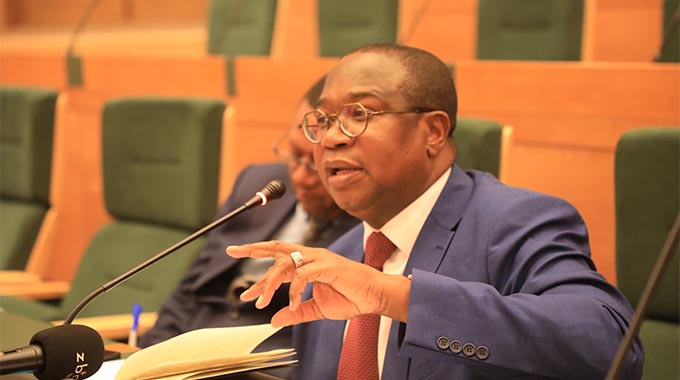
Zimbabwe’s progress towards clearing its arrears, which requires a complex mix of restructuring debt and making all debt live rather than being in arrears, is now moving ahead on a straight course that should see the country in the good books of the global financial community early next year.
The twin programme now about to start sees the International Monetary Fund (IMF) putting in place what it calls a Staff Monitored Programme.
This is a sort of continuous audit, and Zimbabwe will then use the resulting clean bill of health from the IMF to close deals with sponsors, other countries, global financial institutions or finance houses. This will result in the restricting of the debt arrears.
Once that has happened, Zimbabwe will no longer be listed as an arrears debtor, which cuts the costs of ordinary financing as the perceived risks are much lower, and opens doors to very careful development financing at very low interest rates through global development agencies.
Finance, Economic Development and Investment Promotion Minister Mthuli Ncube was upbeat at the weekend that the more than six years of fiscal discipline he has been directly responsible for will be bearing fruit as President Mnangagwa’s debt arrears clearing initiative enters the final stages.
Under an SMP, the IMF gets to see how Zimbabwe manages its State finances from the inside for nine months.
It already has been checking out the national finances periodically since soon after the start of the Second Republic, and its annual reports on Zimbabwe have been getting better each year as it sees inherited problems being successfully sorted out.
So the more detailed monitoring about to start for the rest of the year is not really anything new, just more detailed.
Zimbabwe, at least under President Mnangagwa, has never had a problem with accredited outsiders seeing how the Government runs the country. We have nothing to hide as can be seen by the ever greater information given to Zimbabweans as well as outsiders.
Transparency and openness are seen as virtues, citizens being entitled to this and it being very useful when outsiders can see that Zimbabwe is now a well-managed and low-risk country.
This should be confirmed by the IMF as its staff monitoring programme reports in.
However, like all auditors, it never gives a 100 percent mark, but it can and will measure the high levels of fiscal discipline and integrity of Government payment systems.
As Prof Ncube noted, that report is what the likely sponsors will want to see.
Discussions with potential sponsors have already begun, and while there is definitely sympathy for Zimbabwe, and an interest in helping the country, the potential sponsors just want to be reassured that everything is on the up-and-up and the figures are as good as we say.
Which is fair enough since they would obviously prefer to sponsor and reinforce success rather than failure.
The Arrears Clearance and Debt Resolution programme has been championed by African Development Bank president Dr Akinwumi Adesina and former Mozambican President Joachim Chissano.
Dr Adesina retires from Africa’s top financial job in August but is keen to continue championing the Zimbabwean programme, which by that stage should be entering the final batch of timelines.
Having high-calibre outsiders of integrity has meant that others who might have been reluctant to look at facts have been at least willing to listen and look at the figures.
At the very least they will not oppose a sensible and rational programme of clearing the arrears and many might support it to varying degrees.
The European Union, as it cast off the last sanctions against Zimbabwe, with just a symbolic arms embargo left that does not affect trade and other ties, did note that the continually improving relations were to a degree driven by the determined Zimbabwean effort to have the arrears cleared.
As we have noted, when you look at the voting strength of member countries in many global development agencies where Zimbabwe owes money, any attempt to stop a sensible and rational Zimbabwean clearance programme will require European countries backing the remaining sanctions countries.
European support for Zimbabwe would be ideal, but even abstentions would work.
Arrears clearance will require from Zimbabwe more than just promises.
We will have to be on what would be a payment plan for an individual, and so those who are willing to back that sort of plan would want to make sure Zimbabwe is both serious about any agreed plan, and that it can keep up with its conditions, hence the IMF staff monitored programme.
Any such plan also has to allow Zimbabwe to continue growing at fast rates, rather than cripple the economy, and so the details will need to be carefully worked out.
Having an agreed set of facts, and the IMF having certified those facts will be exceptionally useful.
It will mean a proper arrears clearance programme can be implemented and Zimbabwe can return to the normal financial and trading world where it belongs.