Online Reporter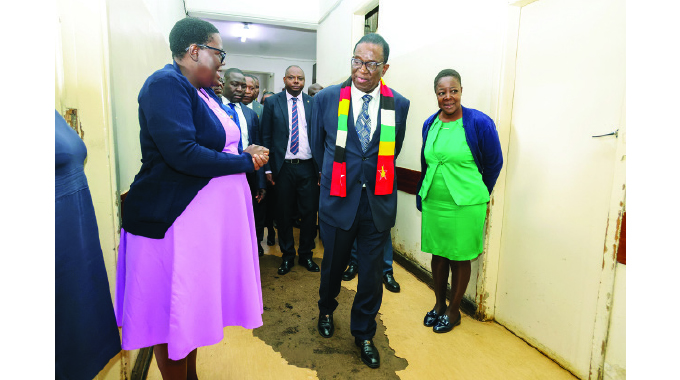
LIFE expectancy is a fairly crude measure and often has little to do with how long an older adult might live, rather it manages to combine into a single measure a whole range of health issues, from infant mortality to the sort of life the elderly might have to live.
It is an average, and like all averages it will include the data that is below average as well as the data that is above average. But major shifts in this average do track how well we are doing, and at the moment, life expectancy in Zimbabwe is rising fast, having jumped from an average of 61 in 2021 when we launched our accelerated programme of economic growth, NDS1, to 65 just four years later as a whole range of programmes kick in.
While there might not be any obvious single reason, the general upgrade in health and nutrition across all generations, from small children to old people coping, will have been pushing up averages, including the overall average, the life expectancy itself.
A lot of the easier jumps in life expectancy came after independence, with the major primary health care programmes culminating in a wide range of former killer diseases being brought under control and almost eliminated through infant vaccination. When you take out those who used to die from measles, polio and other provable diseases, you automatically push up your life expectancy.
We had a noticeable decline in life expectancy late last century and early this century as HIV infections grew and until we had set up our programmes using anti-retro viral medication, many of those infected died within five to 15 years of the retrovirus taking hold. This is in some ways tended to create two life expectancies, one for those infected with HIV who tended to be in their 20s or 30s when they died, so pushing down the average, and a more normal life expectancy for the rest of us.
But the build up of our programmes to deal with this dreadful infectious illness has seen huge changes and rising life expectancies as the vast majority of those infected with HIV now live normal lives and die of the same sort of illnesses and complaints as others do, at roughly the same sort of ages and times.
Having been among the first African countries to reach the 95-95-95 targets or better, we no longer see HIV and Aids shortening and twisting our death rates.
The 95-95-95 means that more than 95 percent of those estimated to be infected have been tested and know their status, that more than 95 percent of the known infected are now on ART medication, and that more than 95 percent of those on medication are no longer infective, thus raising the likelihood that we can eliminate HIV infection sooner than we had hoped.
Considering what we were faced with just a quarter century ago, this is remarkable and shows that we must never give up working out programmes that can overcome so much illness and death.
The Second Republic’s special contribution to upgrading health standards comes from a range of programmes. First of course, we have been upgrading our hospitals, making sure that they are properly staffed and that the staff has the access they need to medicines, consumables and equipment.
While there has been some significant improvement, we are not there yet as President Mnangagwa has noticed in surprise visits to major hospitals.
But just going back to before Covid-19, we can see the changes.
The President and the Government needed to make major upgrades and accelerate progress when Covid struck, and President Mnangagwa not only saw the public sector taking a lead, but brought in the whole of Zimbabwean society in a general push to make sure we weathered this storm together.
It was not the first time the President used a disaster or potential disaster to bring us closer together and get us to work together, and once again it worked and showed us that Zimbabweans can do a great deal when we work as a team.
At the same time we have seen the continuous upgrade of rural health facilities, with new clinics, upgraded clinics and ever more effective services. A lot of this has come from devolution, the Government programme of transferring the choices for much of the social capital budget to communities and local authorities. The rationale is that the communities on the ground have a much better idea of what is needed than a civil servant in Harare.
A lot of rural communities know fairly precisely just what sort of new clinic or extra clinic they need, they also know where it should go so that people, especially the elderly ill or mothers with young sick children, have far easier access to proper care.
The Government programmes see the rehabilitation of district hospitals and medical centres as filling the vital gap between the growing number of clinics and the formal hospitals, again making sure that a decent layer is in place near where most people need a hospital.
Besides the maintenance of child health and vaccination programmes, with the improvement in curative services we are now seeing, the upgrade in health is also built around improvements in nutrition and food supplies. The Government’s programmes go far beyond making sure no one goes short in drought or when facing other emergencies.
Decent nutrition means that people have better diets and more varied diets, and this has plugged into the general farming programmes launched by Government. Some of these programmes also see some of the better and extra food being produced for sale, but that simply means that others beside the farmers can get better food and their families can live more healthily.
And generally speaking, at least on the lower rungs of the ladder, the more a family can spend on food the more healthy they will be, and having more money for health generally means that a person and a family can make decisions earlier, and so deal with infections and other medical problems.
Related stories
Health sector gains buoy life expectancy
Editorial Comment: Mortality statistics show us new social, community needs