dyton mupawaenda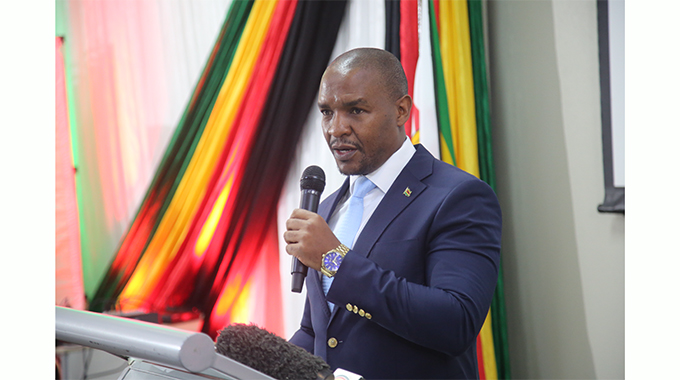
THE major causes of road traffic accidents and deaths are speeding and driving while under the influence of alcohol or other mind-impairing drugs.
Drugs and alcohol abuse are among the major contributors to almost 95 percent of accidents where driver error is the cause.
Zimbabwean road traffic laws are good and follow best international practice when it comes to laying out the legal parameters for safe driving. The penalties, which include suspensions or loss of licences as well as fines and in extreme cases jail sentences, also act as a major deterrent.
The problem has been enforcement.
The police have roadblocks on major highways to check vehicles that look as though they are unroadworthy or overloaded. The traffic section called out to most accidents is rather good at untangling the multitude of stories over what happened, working out what did in fact happen, and then assigning the blame.
What has been missing is the ability to check for speeding and check for blood alcohol levels, two areas where checks should be routine, especially when the police suspect a driver is going too fast or has been drinking before driving. Now this equipment deficiency is being addressed with modern technology allowing accurate checks at fairly low cost.
Breathalysers are new to Zimbabwe, although common in many countries, and Transport and Infrastructural Development Minister Felix Mhona has now publicly warned that these are being procured, initially for use at roadblocks.
We hope that the first units will be available for the upcoming Easter weekend, when a lot of people in a holiday mood tend to have a few drinks before driving around. The need to have all drivers on major highways, with their high speeds, in full control of their own bodies is obvious. If drivers know that they might be pulled over for a breathalyser test, they will probably be more careful about how much they drink before setting off.
We have seen reports where even some bus drivers were suspected of drinking while driving but the police until now have been unable to test or prove such allegations. Speed traps have the problem that if drivers know there is a trap camera at a road block, they slow down; but they cannot remove the alcohol from their blood as they approach a roadblock, so if tested will be caught.
We would also suggest that the traffic police units investigating accidents are also equipped from the first batch of breathalysers and routinely test all drivers involved in an accident, regardless whether the driver is the innocent or guilty party since in the early stages it is often difficult to work out who contributed most to an accident.
As time goes on and police become ever better equipped, then patrols can have this handy equipment and if they see someone swerving all over the road or driving in suspicious ways they can stop and test.
There will be probably some legal tests in the courts over breathalysers with some wanting to argue about their accuracy.
Modern equipment is remarkably accurate but if the courts are dubious then follow-up blood tests can be routine. In any case, Zimbabwean standards on alcohol blood levels are sufficiently strict that the police could easily give drivers that are say 10 percent over the limit the benefit of the doubt and still keep those whose driving is more seriously impaired off the road.
Such a policy would be even more effective if the borderline drivers were kept at the roadblock for a few hours so their alcohol levels decreased to well within the legal limits.
Zimbabwean law lays down a sensibly strict penalty for a driver who exceeds the limit of 70mg of alcohol per 100ml of blood. The fine is modest, but the driver loses their licence for a year, that is for a first offender. There is no mechanism for suspending licences in Zimbabwe so magistrates, when such cases emerge, simply cancel the licence and forbid the driver from taking tests to obtain a new one for a year.
This is somewhat better than a pure suspension since it also requires retesting for both the road knowledge in the provisional test and driving ability in the road test, and that might be useful.
One peculiarity about someone breaking traffic laws is that people actually boast about breaking the law. You frequently hear drivers proclaiming how fast they did a trip, with the times meaning they went frequently over the speed limit, or even boasting that they drive better after half a dozen beers. The same people would never think of stealing even ZiG1, or committing most other crimes.
Those who feel that obeying road rules is not really contributing to safety should consider the statistics. In 2023, 2 099 people were killed and 9 955 were injured in 51 924 road accidents while last year the figures were similar with 2 015 people killed and 10 074 injured in 52 288 road traffic accidents.
One country where enforcement of road rules is very strict is Britain. In that country there is probably a 50-50 chance of being caught if you’re over the alcohol limit, with the same mandatory 12 month driving ban. Speeding drivers are often caught with many police officers carrying speed cameras as part of their normal equipment.
With a little over four times the population of Zimbabwe, and probably about 30 times as many cars, Britain managed to record just 1 624 fatalities in the 12 months to the end of June 2023, and 1 607 in the next 12 months to the middle of last year. The number of accidents and injuries were higher than Zimbabwe, but nothing like as in proportion to population let alone the number of vehicles. So fanatical enforcement does pay big dividends.
The major effort underway to upgrade our highways and catch up on years of missed maintenance has the danger that accidents will be more serious as drivers will be able to drive faster and take more risks when they are impatient. This is another reason to build up our enforcement so that we can have decent roads without the downside.
We also need to make sure all drivers keep up to date on road law and the Highway Code.
Most drivers study that excellent publication once in their lives, when swotting for their provisional licence, yet each new edition has excellent and updated advice and includes all the new road signs and other changes.
Certainly those involved in even a minor accident should have to resit a provisional exam, so they will at least read the latest Highway Code, and as time goes on resitting the provisional test could become routine every 10 or so years to ensure that all drivers keep up to date. Such retesting would be a cheap way to make sure drivers were more aware.



 Online Reporter