admin
admin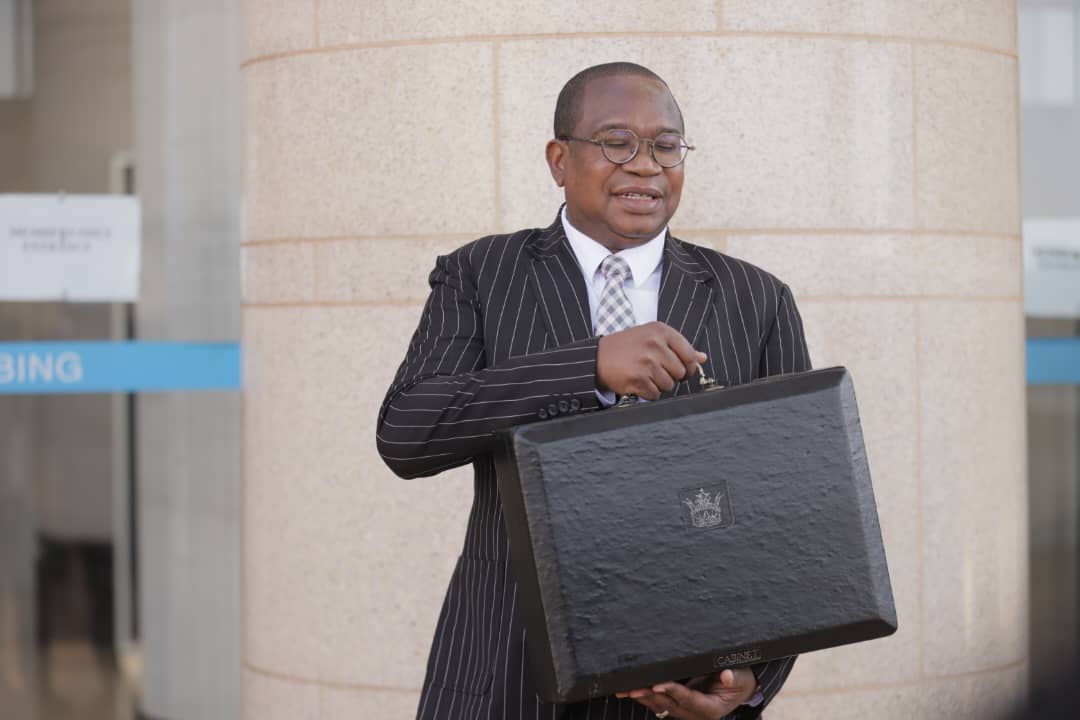
THE national Budget set every year is the major and most critical tool for the Government finances, setting out the expected revenue and the taxes needed to meet almost all that revenue, and detailing how the money will be spent, ministry by ministry, department by department.
While there was sloppiness in the past, almost to the extent that the Budget was a wish list rather than the precise programme it was supposed to be, the Second Republic from its very beginning six years ago, has made it clear that the Budget is locked in by the required Parliamentary approval.
This is set in the two annual finance Acts, one on revenue and one on spending and through Parliament, the people have the right to know during the year how the Government is managing its finances.
So to follow that Constitutional requirement, the requirement that Governments cannot raise money or spend money without Parliamentary approval, the Minister of Finance, Economic Development and Investment Promotion has to give a detailed mid-year statement as soon as possible after the end of the June over just what has happened, and seek any adjustments that are needed.
Finance Minister Professor Mthuli Ncube did this last week with his 2024 Mid-term Budget and Economic Review using the actual real data from the first six months, so showing for a start that the Government and national accounts are being kept up to date in real time, an important point in itself.
This review was exceptionally important this year with two major changes. First, Zimbabwe saw an exceptionally bad drought, which we all knew had slashed agricultural output although we were waiting for the details, and was going to increase the Government’s social service spending on food aid to ensure that no one went hungry, and the finances had to be explained.
The other major new financial factor was the dumping of the old Zimbabwe dollar roughly halfway through the six months and its replacement by a new and far better and supported currency, the ZiG, which if nothing else required the entire budget to be reset in this new currency, but which had other ramifications.
Parliament would want to know if the change was working and if it was beneficial to the Government finances, as well as the nation as a whole.
Minister Ncube gave the required detailed figures and analysis, and rather remarkably managed to forgo the need for a supplementary budget, although there are measures to tighten up on tax collection to make sure everyone who is supposed to pay taxes does in fact pay.
The drought did hit the national economy. Agricultural production dropped 21,2 percent in value. But everything else went up, critically mining, the major export earner, by 5,2 percent, manufacturing by 2,5 percent and “accommodation and food service”, in other words tourism, by a huge 12 percent.
The net changes mean that the economy still grows this year, although by only 2 percent instead of the predicted 3,5 percent if there was just a “normal” El Nino.
That growth is important, since when all the taxes are combined the Government is looking at around 22 percent of the gross domestic product in revenue, so a growing economy does increase revenue. That national growth and rising revenue is why Minister Ncube was able to avoid a supplementary budget.
The growth in exports has in terms of foreign currency inflows more than balanced the growth in imports largely triggered by the need to import grain, largely by the private sector, to make up part of the grain deficit, with the accumulated reserves carried forward from last year taking up a fair slice of what was needed, and those reserves already paid for.
In fact, with all inflows factored in, Zimbabwe saw a positive net inflow of foreign currency in the first six months, compared to the net outflow in the first six months of last year, and will despite the food imports have a net inflow for the whole year. So that fundamental is positive.
The rigid fiscal discipline that is a highlight of the Second Republic has been maintained and will be maintained. The budget deficit in the first six months was ZiG4,8 billion, and will be kept at ZiG5,6 billion for the full year as more taxes flow in.
The Government spending in the first six months was just under 45 percent of the whole-year budget, so there is a bit leeway there.
A reasonable chunk of the extra social spending comes from an insurance payout thanks to the Government insuring part of the harvest against drought.
That means that a lot of the cash grants to Zimbabweans who need to buy more food comes from insurance, not taxes, so reducing budget stresses.
The social spending does, however, mean more support for school fees through the BEAM scheme. But generally Minister Ncube is coping, maintaining the budgeted capital expenditure on infrastructure and ensuring that all services remain fully funded.
The ZiG has been a major help. Minister Ncube is now able to borrow at an average of just under 10 percent to cover his small deficit, and believes that can be reduced further, while still giving lenders a real interest rate, once longer-term lending is resumed by the pension and insurance sectors who still only commit just under a third of the 20 percent of assets they are supposed to hold in “gilts”.
The very low ZiG inflation rates mean that ZiG debt lending is now rational.
The Minister announced a range of measures to support ZiG use through the percentage of taxes he wants paid in ZiG. He will be pushing the informal sector to use ZiGs even harder than the formal sector, by wanting all VAT from that sector in local currency, as well as collecting more VAT through a presumptive tax.
Tuckshops and others will now be allowed to buy from manufacturers and wholesalers, even if not registered for VAT, but if they cannot produce a tax clearance certificate their suppliers have to add a five percent presumptive tax, implying a 33 percent mark-up at the final retail stage.
While collecting taxes from several thousand little businesses is difficult, collecting it from a couple of hundred large formal businesses is simple and cheap, so the review does advance the Government policy of making sure everyone who has to pay taxes does pay.
The one tax concession he made was to abolish the VAT on meat and poultry imposed at the beginning of the year, that being done on public health grounds with butchers moving slaughter from inspected abattoirs to informal slaughter poles to avoid the tax.
But as two thirds was not being paid anyway this is not a loss, although it should remove one excuse from butchers who want to raise prices.
Generally, the underlying strength of the Zimbabwean economy and the tight fiscal discipline has meant that the budget approved last year can be maintained, despite the drought and the rise in social spending, and that again is a highly positive development.



 Online Reporter