admin
admin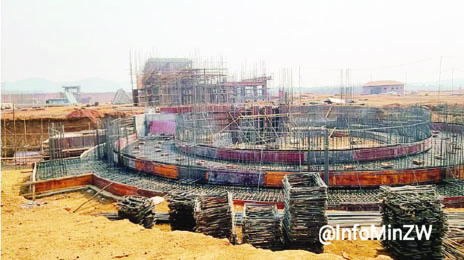
The business sectors have generally welcomed President Mnangagwa’s re-election and are expecting that the pro-growth, pro-investment and pro-business policies that he introduced when he took office for his first term will continue.
Obviously, when Government policies lead to high rates of economic growth all in all, business sectors win, especially when the Government is keen on the private sector being the major driver of economic growth, with the Government proving a suitable framework, and taking direct action in its support of the small-scale sectors so that these can move large numbers of people into the sunlight of a decent standard of living.
The pro-investment and pro-business policies of the Government are not open ended. While a lot of work has been done to make it ever easier for anyone to invest in Zimbabwe, and ever easier for a Zimbabwean to open a business, there is also a general policy that investors and businesses need to be fair.
So there has been Government action to ensure the private sector does not manipulate exchange rates and use pricing formulas that fleece their customers and produce mega-profits, and there is an underlying expectation that the private sector will be fair to its own labour forces and to its customers, pay the moderate taxes, and be at least modestly active in the communities where companies operate.
This cannot hamper any business that wishes to operate in Zimbabwe and make profits for its owners, and the policies can only act as a caution for those who wish to profiteer or make their money illegally or through arbitraging on pricing and currency manipulation.
The respectable and honest business community have a large area to operate in and a very wide road on which to advance.
Investors have never complained about Zimbabwe’s immigration policy. Basically the country, like most but a handful of countries, is not desperate to increase its population by attracting skilled immigrants.
But a major investor has little trouble getting the permits to live in the country and can bring in fairly large teams temporarily to set up a mine or factory or steel plant, although there is the expectation that local talent will be hired and trained to take over most of the functions.
In fact most foreign-owned companies have trivial or even zero foreign staff, preferring to hire Zimbabweans as quickly as possible on pure business grounds.
There is a large pool of skilled and experienced Zimbabweans now in place and this is growing every day as the education system is transformed to increase the percentage of graduates with technical qualifications.
Local staff are cheaper, even when properly paid, since they do not require expensive “home leave” or expensive school fees for the education of their children “back home”.
And they also know the ins and outs of the society and communities where they operate, so are usually more efficient.
Disco, the large steelmaker building its first phase near Mvuma, is fairly typical. It has brought in a team of engineers from its Chinese holding company, but each has Zimbabwean understudies who will be doing most of the work once the plant is commissioned.
There are some gaps in the private sector, however, that need filling. The secondary and tertiary sectors are fairly well established, but the primary industrial sector is decidedly on the small side, and Zimbabwe has to import far too high a percentage of a wide range of raw materials for the secondary industries.
A lot of the primary sector that did exist had closed for a variety of reasons, but now significant investment is flowing in.
Besides Disco recreating the steel industry using modern technology and processes, we have the new owner of David Whitehead bringing in the modern machinery to spin cotton and weave fabric, restoring what is normally a major industry in most developing countries, especially those with raw materials on hand.
With a decent source of fabrics and the like, the next level of manufacturing, making the clothes and other products, becomes a lot easier and that level is normally dominated by a wide range of factories and even small businesses.
They in turn can feed the retail sector. But they need the guaranteed source of fabric, and the spinners and weavers need the farmers to grow their raw materials, the cotton, and they in turn need the fertiliser and the finance.
The chemical industry is starting to grow again with Zimplats, for example, needing sulphuric acid and building a plant that can supply others.
These are all steps in creating the solid base of a decent manufacturing sector, a base we will need if we are to be competitive as the African Continental Free Trade Area becomes ever more active.
Importing vast quantities of raw materials from other AfCFTA members, making something from them and then sending them back is never really going to be way to do business competitively.
We need to convert an ever growing percentage of what our farmers grow and our miners dig up into the products we can sell throughout Africa, and that requires the sometimes missing links between these primary producers and the final manufacturing factories.
As the business sectors know, this requires sensible Government policies to expand the energy sector, and make it easy for major investors who wish to expand the primary industries to do their stuff.
President Mnangagwa’s record in his first term in this area, from effectively more than doubling the output from Hwange Thermal Power Station to negotiating the major investments into mining and steelmaking is what the private sector wants to see continuing.
There is no single route to a prosperous country, but President Mnangagwa got it right in his first term of having the proper Government policies in place so the business world could push in all its different directions to grow the economy, and creating a lot of new jobs while it did so.


 Online Reporter