admin
admin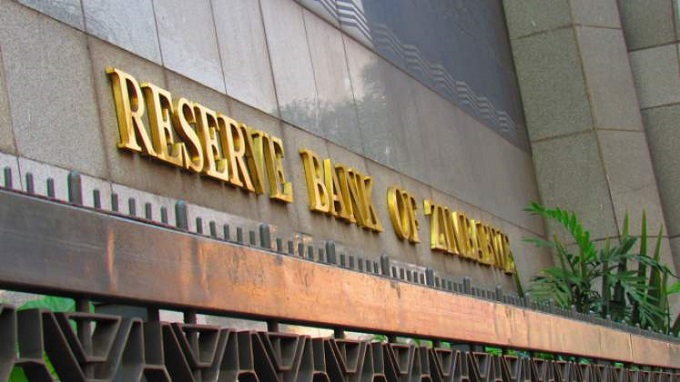
THE decision by the Reserve Bank of Zimbabwe to ban, with immediate effect, all cash-in, cash-out and cash-back transactions should be understood in the context of the suffering of ordinary Zimbabweans who have had to endure extortionate rates from dealers taking advantage of the prevailing economic situation. These transactions, which had also become a source of price instability as traders were now charging up to 60 percent if one was making an electronic transaction, were fuelling inflation and feeding the illegal trade in foreign currency.
Of late, Government has been clamping down on illicit trade in foreign currency which is the chief driver of instability on the market with some firms identified as the kingpins in fuelling the black market trade in foreign currency, having their accounts frozen. This followed a dramatic fall in the value of the local unit — the Zimbabwe dollar — against the United States dollar last week. Government had to act fast because a depreciation of the local unit is swiftly followed by a spike in prices of goods and services as retailers and wholesalers track the exchange rate in pegging their prices.
Cash hoarding for speculative purposes has progressively driven bond notes off the market and into the private vaults of dealers resulting in a serious shortage from which the same dealers seek to profit. There is rampant indiscipline in the market and we are glad that monetary authorities are beginning to act decisively to deal with the rot.
While the ban on cash-in, cash-out and cash-back transactions might seem harsh on companies such as Econet, NetOne and Telecel that have thousands of agents that depend on these facilities, authorities had no choice but to take the drastic measures in the face of extortionate and illegal activities of dealers.
We therefore have no sympathy for their illegalities and applaud the decision by the RBZ which was taken in the interests of the public and restoring sanity in a financial services sector that had simply gone rogue. Granted, there is an argument to be made on the level of cash in the economy in relation to money supply.
Economists say for Government to effectively intervene and bring order to the market, it needs to understand the chief drivers of these speculative behaviours. In its Mid-Term Monetary Policy Review, the RBZ indicated that the desired levels of cash in the economy should be between 10-15 percent of money supply. With the current money supply level of around $15 billion, cash in circulation should be between $1,5 and $2,25 billion, they say.
Presently, there is about $600 million cash in circulation, which is way lower than the required amounts. But this argument falls away when one considers that Zimbabwe is slowly moving towards a cashless economy in line with international trends.
The majority of transactions conducted by ordinary people are electronic, leaving speculators as the main drivers of cash transactions. There is no plausible reason why there is so much demand for cash other than for speculative activities and the black market trade in foreign currency.
For instance, the RBZ has noted that there has been a practice of buying and selling of cash through mobile money agents at high rates above the approved charges for cash-in and cash-out with some agents not banking cash sales under the guise of cash back services.
This, among other malpractices, had the effect of distorting pricing of goods and services and Government had to act. Explaining the decision to ban the cash-in, cash-out transactions, Finance and Economic Development Minister Professor Mthuli Ncube said it was motivated by the desire to reduce the burden on citizens who were needlessly losing value for their money.
“The feeling here was that on the cash-in, cash-out transactions, there was an implicit exchange rate that was applying because of the discounts that these agents were applying; discounts as high as 55 percent or 60 percent on RTGS balances.
“That’s what (brought) that directive from the Reserve Bank of Zimbabwe. That is what it is trying to deal with, to make sure that it (discounts for cash) does not become yet another rate,” said Prof Ncube after Monday’s Cabinet meeting.
He said the country was going back to multiple exchange rates and the RBZ ban seeks to try “to close that gap”.
“Then over time, obviously cash in circulation will be increased; so we should expect that to happen,” said Prof Ncube. We commend the Government for timely intervening to protect the most vulnerable Zimbabweans against a predatory clique of speculators out to profit from the suffering of ordinary people.
We feel the entire chain of speculators should be dismantled and this includes parallel market foreign currency dealers, cash dealers and those feeding them. Their activities are a direct and immediate threat to the economic security of the country.



 Online Reporter