

 admin
admin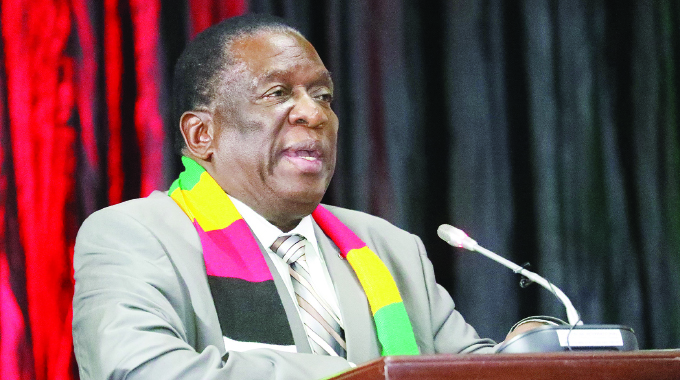
President Mnangagwa is clearly becoming more worried about substandard unplanned urban development, urban sprawl and the quite inadequate response of some urban authorities, and in particular to those of Harare, the largest, to sort out the problems that are largely of its own making.
In his weekly column in The Sunday Mail he clearly sees the need for more central Government action before there is a health and environmental disaster.
Already in the Hare Metropolitan mess, the central Government has been active, with a well-co-ordinated effort by six ministries to sort out the planning disaster in an around Harare that saw land barons creating fortunes by selling off undeveloped farm land as housing stands.
This effort is concentrated on mapping the actual stands, regularising where possible, and then granting title to those who were taken for a ride by the land barons so they can access finance to put in the basic services themselves that the barons neglected, things like proper roads, a sewer network, water supply and electricity distribution grid.
He now appears to see that more direct Government action may be required. While a fairly large block of the unplanned and undeveloped settlements did have at least sketch layout plans, some of the land barons sold off the sites needed for schools, recreation and health facilities and it was not unusual for some of the barons to sell off wetlands as commercial and housing stands, and this might well require some buyers to have to move so they can at least be dry in the wet season.
At the same time, the missing development will have to be overseen so that everyone is involved and the basic services are put in place as soon as title is granted, and that everyone is contributing to what is needed.
Normally a proper city or municipal council would do all this automatically as part of its job.
If Harare City Council had been even half-way efficient it would have been able to block building on the land-baron land until the services were first in place and would then have been able to ensure that these services were of an adequate standard and that the buyers had approved building plans to continue their own investment.
That never happened. The maximum effort the council made was to say “oh dear” and just let the land barons rip up the laws and the by-laws without even trying to take action.
Since then there has been zero effort to see what should be done, and must be done. The same, on a smaller scale, exists in other parts of Harare Metropolitan and in some other cities and towns.
Again in theory there could be some legal hassles with central Government moving in. Under our law local authorities, and especially municipalities which include city councils, have a lot of autonomy.
This makes sense, with the councils elected by the ratepayers and then using the rates they levy from those same ratepayers to do the work they are expected to do.
Urban authorities should be able to do most of this without central Government support, since they have a high density of ratepayers, so there are a lot of people paying money who live along a trunk road or a trunk sewer.
Rural district councils need more support, since a rural road of just 10km might have less than hundred ratepayers living along it, and they will not be able to carry the full cost.
This autonomy has proved a problem when there is a council as inefficient as Harare. The Government can get around the autonomy issue in certain emergencies.
It has stepped in when a health disaster threatens, as it did with a cholera outbreak, largely the result of broken Harare sewers with the President even shown the broken sewer, but without any municipal staff fixing or replacing it, and as it did when it declared urban roads in a state of disaster, so it could take over most of the responsibility for fixing them.
The Government also used health concerns to expand the borehole drilling programme to critical areas in urban authorities, including some Harare suburbs, since ensuring people have access to clean water is a natural right, and Harare allowing its water treatment works to get ever smaller, instead of ever larger to cope with expanding populations, was obviously not doing its job.
President Mnangagwa in his column did note that the unplanned settlements, without sewers and water supplies at the very least, were a health disaster waiting to happen, even with the efforts made by residents. Old planning laws enforced sewers on all development where stands were smaller than 4 000 square metres to ensure that overflow from septic tanks and even their normal seepage would not be a health hazard.
Land baron plots are smaller, sometimes a lot smaller, and so need proper sewers before the effluent from tanks builds up.
At the same time there is the problem of serious urban sprawl. It can now take two hours to go from one end of Harare Metropolitan to the other, and we cannot keep converting farms to suburbs and still eat. The Government has made it clear that we must go up with blocks of flats taking the strain, instead of those land-baron suburbs that just spread out everywhere wasting land. President Mnangagwa also wants some proper planning in the new towns growing in rural areas, so that they can be established and grow without creating unplanned sprawling disasters.
This requires rural district councils to be ready and willing to take action promptly, both to attract the development that they want and need, but also to ensure it is done so well that it simply creates wealth and jobs and decent living conditions, not problems within a few years.
Here the Government can help, since it has its own planning staff that local authorities without a battery of town planners can use, so a lot of the work for the new towns can be done as a triple partnership between developer, council and Government.
It just needs the three to all use the same system, before anyone starts laying bricks, and make sure we create this new string of liveable towns properly.
The President noted the new towns needed to be compact, so a lot of housing in the form of flats, but that also means the farms will still be there growing the food and providing a good environment for the townsfolk.
We think the President is right, that in the end the central Government is going to have to go a lot further in those urban councils where disaster threatens, which is a pity, but when local democracy is not working then national democracy has to step in, before we need to cope with major outbreaks of disease.



 Bongani Ndlovu
 Online Reporter