Online Reporter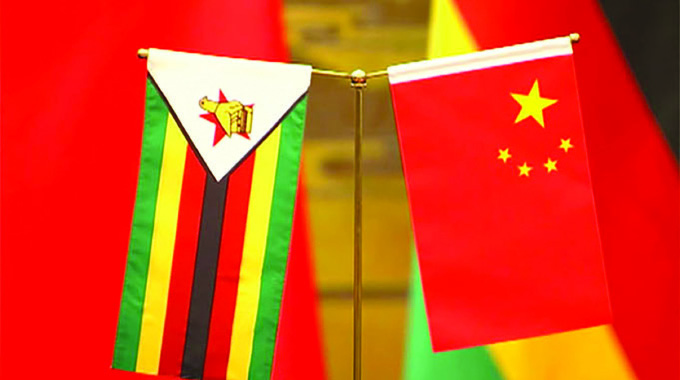
YESTERDAY, China hosted memorable activities to commemorate its victory over Japan in World War II.
President Mnangagwa was one of the 26 Heads of State in attendance from around the world, including the guest of honour, Russia’s Vladimir Putin and North Korea’s Kim Jong Un.
The exhilarating festivities captivated the world, particularly the military parade, where thousands of soldiers showcased advanced equipment and demonstrated their formidable skills.
As it commemorated its 80th anniversary of the Chinese People’s War of Resistance Against Japanese Aggression and the World Anti-Fascist War, China showed that it is increasingly a capable, consistently responsible and reassuringly reliable partner for Zimbabwe and Africa.
China not only learnt vital lessons from World War II, but has also become a vocal proponent of them, exporting its model of stability and development to other countries, including Zimbabwe.
The giant Asian country currently holds the distinction of being the top contributor of troops to the United Nations Peacekeeping Forces among the UN Security Council’s permanent members. This significant investment in blue helmets demonstrates its growing commitment to international stability and multilateralism, cementing its role as a key player in global security architecture.
In his speech at yesterday’s ceremony, President Xi affirmed his nation’s unwavering commitment to championing global peace and security for all humankind.
“Today, humanity is once again faced with choices between peace and war, dialogue and confrontation and win-win cooperation and a zero-sum game. The Chinese people firmly stand on the right side of history and the progress of human civilisation. We will remain committed to the path of peaceful development and join hands with all peoples around the world in building a community with a shared future for humanity,” he said.
China has repeatedly shown that it is a responsible partner for African countries by maintaining the position that expansionism and hegemony only breed fresh turmoil.
This is why China has never invaded any square inch of land and never perpetrated any proxy war in Africa. It steadfastly respects the sovereignty of African countries in a world characterised by turbulence that often involves global powers.
China’s strategy of fostering South-South co-operation through mutually beneficial economic partnerships is vividly illustrated by its deep engagement with Zimbabwe.
President Mnangagwa’s ongoing visit to China has already revived a major US$600 million agreement with China Railway Group. China has firmly established itself as Zimbabwe’s most important trading partner, with two-way trade surpassing US$3 billion annually. Beyond trade, strategic Chinese investments and joint ventures across key sectors, including mining, agriculture, infrastructure and many other sectors, are driving a profound transformation of the Zimbabwean economy, boosting its productive capacity and facilitating integration into global supply chains.
China’s position is that all countries must practise genuine multilateralism, firmly opposing its instrumentalisation and selectivity in its use and preventing it from being reduced to a tool serving the interests of a few.
Before yesterday’s festivities, President Xi unveiled the Global Governance Initiative at a grand gathering with leaders from the Shanghai Cooperation Organisation on Monday.
The GGI stresses China’s readiness to work with all countries for a more just and equitable global governance system.
In explaining the initiative, President Xi pointed out that the Cold War mentality, hegemony and protectionism continue to haunt the world, and “global governance has come to a new crossroads”.
He emphasised five core principles guiding the Global Governance Initiative, which are: commitment to sovereign equality, adherence to the international rule of law, the practice of authentic multilateralism, championing a people-centred approach, and a focus on tangible action.
“We should maintain that all countries, regardless of size, strength and wealth, are equal participants, decision-makers and beneficiaries in global governance,” President Xi said.
The statement is a direct rebuttal to the legacy of a global order that has often marginalised the African continent. Historically, some international institutions were designed in a post-WWII era, where most African nations were not independent actors.
Their governing structures often grant disproportionate power and veto rights to a few wealthy nations, systematically placing African countries in the role of “rule-takers” rather than “rule-makers.”
Advocating for equal participation is thus a call for structural decolonisation of global governance, seeking to dismantle systems that perpetuate historical power imbalances.
This demonstrates that China’s desire for what is best for Africa is rooted in the practical necessity of making the continent a decision-maker in global affairs, not in abstract idealism.
At the SCO summit, President Xi also said: “We should promote greater democracy in international relations and increase the representation and voice of developing countries.”
President Xi has been unswerving in making a compelling appeal for the comprehensive reform and modernisation of the global governance system, arguing that it must be restructured to guarantee that the citizens of all nations are not merely passive subjects, but active architects and primary beneficiaries of global decision-making.
While commemorating the 80th anniversary of its World War II victory yesterday, China reaffirmed its role as a capable, responsible, and reliable partner for Zimbabwe and the wider African continent.