Online Reporter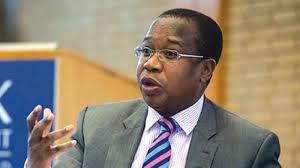
WITH ZiG monthly inflation now below one percent and annual inflation soon to hit single digits when the last few higher monthly rates are overtaken, a lot of pay rises in both the State and private sectors start to become real increases, rather than just salaries chasing rising prices.
This will be new for many, with single digit annual inflation in local currency last seen in 1997, almost 30 years ago.
Only some older staff in the State and formal private sector, the people who are paid salaries and allowances, can remember the norm.
The eras of hyperinflation, and even the periods under dollarisation when pay packets were not based on real revenue, but on imaginary figures, created a complex system of pay for the formally employed.
The Second Republic over almost eight years has been ruthless on restoring fiscal discipline, that is the Government will not spend more than it receives in taxes with just a handful of exceptions for certain capital items where a new revenue stream is immediate and direct.
The national Budget was converted from a wish list to a precise management document as a result.
Since even in an inflationary environment, tax revenues in nominal terms tend to rise, the Second Republic did introduce and maintain a policy that the percentage of the national Budget devoted to paying State staff would remain roughly the same.
But this tended to mean before economic growth of more than 5 percent started becoming the norm that the frequent ad hoc pay rises were simply keeping civil servants roughly where they were.
Improvements came as temporary allowances, such as the Covid-19 allowance and a few others, rather than being part of permanent pay, but they did allow the Government to check on affordability as well as keep the staff in State service functioning.
With sustained high growth at an underlying 5 percent, so it falls in a drought year and rises in the following recovery year, annual ZiG inflation now being pushed down to single digits, and the perennial shortages of foreign currency now reduced to just a watch list to avoid waste.
A series of measures have been taken to clean up the pay scales in the civil service, something the private sector is also doing.
This in the State sector has seen some of the most important allowances turned into part of the salary. Since the allowances tended to be same for all, whether a permanent secretary of the junior clerk in the office, this has also tended to lessen the gaps between the top and bottom rungs of the pay ladder.
A spate of management changes in the private sector has seen the same move away from the most extreme inequality, largely an inheritance of the old colonial days when “white” jobs and “black” jobs were paid so differently.
Now the Government is moving to the next stage. In the first quarter of next year, there will be a pay rise in the State sector, not large as Minister of Finance, Economic Development and Investment Promotion Mthuli Ncube hastened to warn Parliament last week, but still there.
Some of that pay rise will fill the gap created by the very low inflation of recent months, but even the small pay rises promised by the Minister are likely to do a bit more, and start giving civil servants a real increase in their pay, even if it is only a small real increase.
But this starts the movement that must take place over the next five years as Zimbabwe moves towards its Vision 2030 of being an upper middle income country.
That status also requires the population, including the civil servants, of being upper middle income.
The Government has already done a lot to ensure that farmers, the largest single group in the population, have growing income as far better farming systems are introduced and multiple streams of revenue are created for the small scale farmers.
That in turn is pumping money into manufacturing and commerce, as these farmers spend that extra money. It might not yet be a large sum per family, but with 3 million families the totals are very respectable.
Civil servants have tended to look at the last US dollar salaries from dollarisation, even though those were not sustainable and were a major reason for the eventual collapse of dollarisation.
The new policies of the Second Republic, spending only what is actually in the tax accounts in the bank, has been sustainable.
It is likely that if the policy of retaining the salary bill as the same percentage of the national Budget over the next five years that real increases in pay will automatically come through as the economy grows.
The percentage of gross domestic product that is taken up by taxes remains roughly the same the way the tax system is constructed.
Even with essential gaps in the civil service filled, this should allow a continuous rise in real value of pay and standards of living, especially as so much of the heavy lifting has already been done in cleaning up pay scales.
But the movement cannot be completed in one year. It needs that steady rate of high basic economic growth over several years and continued low inflation.
The Government has now sorted out the fundamentals, converting the fiscal and monetary discipline to permanent processes, and that in turn has allow the private sector to push growth as a sustainable and obvious set of policies.
The next five years allow the results of that growth and low inflation to push up standards of living across the country, and that includes the civil and uniformed services.