admin
admin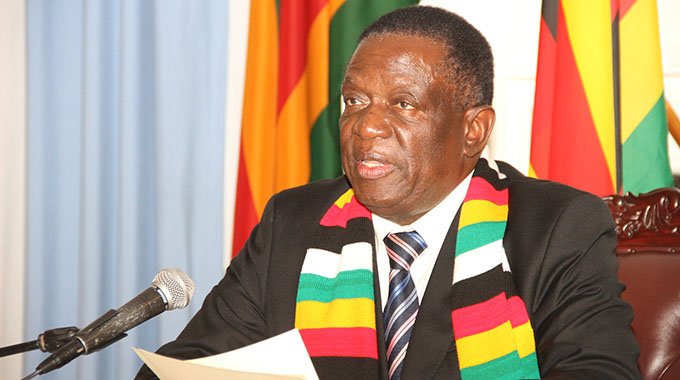
The United Arab Emirates (UAE) was among the first countries to respond to the Government’s appeal for help to assist victims of tropical Cyclone Idai in Chimanimani and Chipinge districts in Manicaland which were the hardest hit. The other countries were China, South Africa, Tanzania, Botswana and Britain.
The United Arab Emirates were back on Thursday with another consignment of equipment and surgical sundries worth about US$ 12 million. Receiving the consignment, President Mnangagwa applauded the UAE for its commitment to support the country’s health sector.
He said he was happy to learn that the UAE wants to set up a pharmaceutical plant in Zimbabwe to manufacture the drugs that the country needs.
President Mnangagwa said the pharmaceutical plant will improve the availability and accessibility of medicines in the country.
He said on its part Government was accelerating the health sector reform agenda, expand the range of health care services and improve affordability and accessibility of pharmaceuticals. President Mnangagwa said Government was determined to narrow the gap in quality of services offered in rural and urban areas.
“The cost of drugs to our people should come down. I am happy that besides the UAE, we are also receiving co-operation from India,” said President Mnangagwa.
Countries like UAE and India are committed to improve the welfare of Zimbabweans and we want to implore those in the health sector to complement such efforts by charging affordable health care fees. Private health institutions are reported to be charging exorbitant fees thereby denying most people access to health care services.
Some private hospitals were demanding as much as US$700 deposit and up to US$250 per night for patients admitted before Government removed the multi currency regime in June. These same institutions are now charging the equivalent in local currency and there is therefore an urgent need for Government to put mechanisms in place to control the fees charged by health institutions.
Some of the fees being demanded by private health institutions are so prohibitive that even those on medical aid cannot afford. Some medical aid societies have asked members to reduce their visits to doctors and hospitals as a measure to control costs but such a move compromises the health of members.
The hospitals are there primarily to save lives and not to profiteer as what we are witnessing. We are very cognisant of the need for hospitals to operate viably so that they continue providing the services but what is obtaining on the ground is that private hospitals are now fleecing patients taking advantage of their desperate situation.
Families and individuals are being forced to sell properties to raise money required by hospitals thereby reducing the sick and their relatives to destitution. There is a need for all in the health sector to complement Government efforts to provide citizens, both urban and rural, affordable health care services.


 Online Reporter