

 admin
admin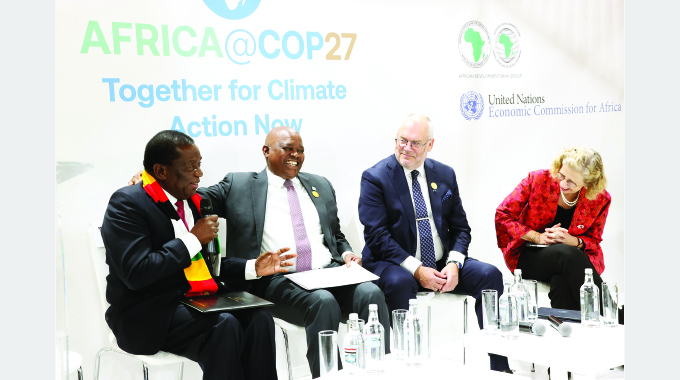
The COP27 UN Climate Change Summit in Egypt is far more important than many countries have been assuming, and needs to convert the available global financial resources and technology to provide the practical solutions that the world requires to drastically reduce carbon emissions under tighter deadlines to avoid a global collapse.
Basically it needs a global agreement and a global effort to save the planet, and global means that everyone needs to be involved, rather than some countries, often the major carbon emitters, trying to tell others, largely the industrialising and developing countries, not to industrialise and develop.
For several years, the world has been discussing at the COP Summits how to perform the double, of giving every person on the planet the option of a decent life while ensuring that the correct technologies are used to generate the energy to do this while reducing carbon emissions.
Most technical solutions have been worked out, everything from far greater use of renewable energy sources, carbon sinks to suck up the carbon that is emitted, a revolution in transport as the world switches from petroleum-based transport to electric-based transport, and better planning for existing and future cities that increase the quality of life while reducing the demand for carbon-based power.
Even the financial solutions, the mobilisation of vast resources for the required investment, have largely been worked out, including some serious transfers of finance so that the poorer parts of the world can afford to develop differently from how the richer parts developed, but still attain the same standards of living and quality of life.
The main problem is how to implement the technology changeover, and fundamentally how to mobilise the financial resources.
In fact, in the end, global warming is one of those problems that need a lot of money thrown at it, and if that money is available then the scientists and engineers have the solutions.
But while everyone nods in agreement when the financial resources are discussed, there has been very modest movement to making those resources available, and instead we have seen people trying to minimise both costs and carbon emissions by, in effect, suggesting that the developing world slows down its development, or finds its own capital resources to do this at far higher cost than the developed world spent to do the same job.
Africa, as President Mnangagwa explains, is ready. As the least developed continent it has low total carbon emissions and, with its forests and other resources, has vast natural carbon sinks that make many African countries, including Zimbabwe, negative net emitters of carbon. Africa has vast renewable energy resources, primarily solar and hydro although countries on the extreme non-tropical ends can also look into wind power.
But the investment problems to develop these resources are vast, more than double those needed for coal and gas power.
That gap needs to be filled and expecting the poor villagers across Africa to pay a lot more to have a light and a factory job is not really realistic.
There are other problems. Much of the available hydro capacity is in the DRC, a country that could become the world’s largest producer and exporter of hydro-electricity, but a country that does not wallow in the billions of dollars needed to develop that potential and those distribution lines will not be cheap.
Solar has the problem of not being a constant source of supply.
The sun does not shine at night and sunlight is generally weak at the early morning and later afternoon peaks in demand.
Storage solutions, from batteries to hydrogen production from water exist, but the technology can easily double the considerable investment already needed to simply buy and set up the panels.
Suggesting that no new coal stations are built, and that even natural gas stations, which have about half the carbon footprint of equivalent-sized coal stations should be limited is not really a solution unless a lot of money is made available to fund the gap between the cost of the cheaper carbon stations and the zero-carbon renewables with either long transmission lines or expensive storage.
Besides power, transport is the other major carbon emitter. Africa is using ever more vehicles, both commercially and in private use, and there are ever more assembly and manufacturing plants on the continent with more to come.
Like most of the world, Africa is wired into the global companies, less than dozen headquartered in Japan, China, India, about four European countries and the United States.
Manufacturing is far more spread, but the factories are generally subsidiaries or licence holders of the global giants.
Switching to electric vehicles is an obvious solution. Along with the fact that a lot more electricity can come from renewables, electric batteries and motors are far more efficient than internal combustion engines, to the extent that even using coal-fuelled thermal stations to generate the electricity for electric vehicles would see a very large drop in carbon emissions if the world switched over.
Again it needs those dozen or so vehicle manufacturing giants to switch over for Africa to win.
The continent tends to use imported technology in this area, as do most countries, but the deadlines for switchover to electric vehicles, in the sense that no new internal combustion engines will be made, has been pushed back and we are now talking about the mid 2030s, when it should be a lot earlier.
Africa’s voice is getting louder, and one reason is that the continent is being hit harder by climate change and would be in far better shape if there was a lot less climate change. While the global community does provide some of the relief finance to combat the climate change disasters, it would in many ways make more sense to spend more on preventing them in the first place.
Africa needs to develop. Its people cannot be expected to live in poverty or close to poverty forever.
It can grow the continental economy rapidly, and with its natural resources can do this in a sustainable way, so long as the gap between following the traditional development paths and using the latest technologies can be funded.



 Online Reporter