Online Reporter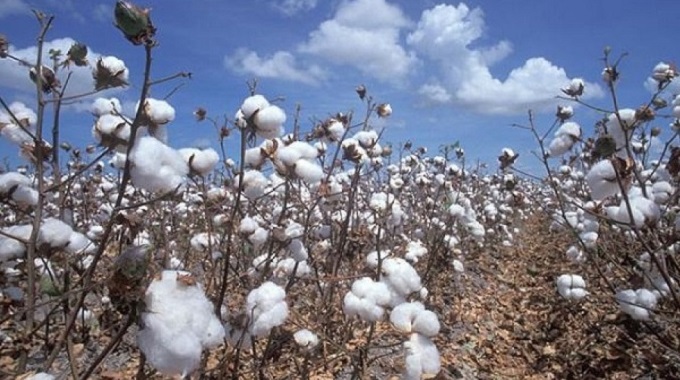
COTTON was once a major driver of rural development and even today it is an important smallholder crop although there is a lot of work that needs to be done to restore it to a central position in the rural and national economy.
The issues that need to be sorted out can be divided into the financing and marketing of the crop on one side and catching up on the latest research and new varieties on the other. Both are important.
In addition, as the crop is secured and volumes grow, there needs to be a better industrial base to process the fibre and build up a textile industry, rather than just export fibre.
The Ministry of Lands, Agriculture, Fisheries, Water and Rural Development, through the Cotton Research Institute, has been instrumental in looking at genetically-modified hybrids and is now in the process of evaluating hybrids that should be far more pest-resistant.
There will be other areas where research needs to be done to continue building up yields and quality of the crop to maximise value. This is done for all commercial crops, both our grains and our tobacco, to make sure we grow more of what sells and what people want.
Cotton is a double crop, producing both fibre and oilseed although the revenue from fibre is usually higher. Already cotton seed has been brought back into the blending of cooking oils in Zimbabwe. This is relatively easy as the factory processing of cotton, soya and quite a lot of sunflower into cooking oils is almost identical, using the same equipment and methods.
Cotton does need a simple and well-understood process to remove a particular toxin, and it was this discovery that turned the seed into a major food crop in the United States, rather than just dumping the seed in huge piles of rotting vegetable matter next to the ginneries. From there the processing methods spread around the world.
One particular attribute of cotton seed oil is that it is a non-drying oil, that is unlike most vegetable oils it does not oxidise on exposure to the air although for many oils this process is slow.
But this particular attribute of cotton seed oil means that it does last longer, and blends that include it usually make it clear that they are the longer-lasting oils. In many countries it is the cooking oil of choice for commercial deep fry restaurants because of this property.
Zimbabwe has always had a reputation for higher quality fibres, partly because so much of the crop is still handpicked, although maintaining that lead does require that we continue with our research so that we are not overtaken by major producers who are upgrading quality.
This still leaves the marketing. In the days of the monopolistic parastatal marketing boards, the Cotton Marketing Board was the most innovative. During the colonial era it was the first to move into the communal lands and build up a reputation with black and smallholder farmers for fairness and support.
One marketing innovation was to use farmer clubs to get round the problem of financing smallholders having no bankable assets. The club members would guarantee each other and the CMB found this a very effective way of ensuring that it was backing both quality farmers and communities with very low risk and default.
The dual nature of the crop meant that farmers received two payments each delivery season. Soon after cotton was delivered there was the initial payment, largely built around what the CMB was getting from the oil processors and local textile industry sales. A second “bonus” payment followed some months later as export revenue started flowing in.
Privatisation in the 1990s had a mixed record and the commercialisation and privatisation of the CMB as the Cotton Company of Zimbabwe did see some negative changes. One problem, not seen at the time, was that the entry of other companies into cotton marketing damaged the business relations built up with farmers by the old CMB.
Some of these new buyers were not doing much financing, and were more interested in attracting farmers into side marketing and that fairly quickly reduced the amount of potential financing. Cottco itself ran into delays in payments and a lot of farmers eventually either gave up cotton altogether or cut back their production.
The Second Republic wanted to bring the crop back to its glory days. It has put cotton into the Presidential Inputs Scheme so small-scale communal and resettlement farmers can plant most plots. The complications of the Cottco cash flow are being resolved by what amounts to a partial renationalisation with debt for equity swops as the Government builds up its percentage shareholding.
In the end it might well need to go for full nationalisation again along with a fairly tight supervision of the management of the entity while it is built up. There are signs that some more responsible and modern private enterprise could also be interested in contract cotton farming although this will require either a pair of collaborating companies who process oil seed and have a textile base, or a single larger conglomerate that operates in both sectors needing raw materials.
The re-establishment of a cotton-based textile industry and clothing industry will give cotton farmers a large local market and this open doors to contract farming arrangements for expanding financing and markets.
Possibly, some sort of regulator like the Tobacco Industry Marketing Board will be needed to license contractors and farmers, ensure the system is fair and runs smoothly, and make sure research is done and is financed.
The TIMB model appears to be an exceptionally effective way of allowing a major agriculture sector involving cash crops and private businesses and farmers to work effectively. While the TIMB does not finance, produce or market tobacco, it has been a very effective referee and has kept all within the industry honest and operating fairly. Perhaps the time has come for a CIMB, a Cotton Industry Marketing Board.