

 admin
admin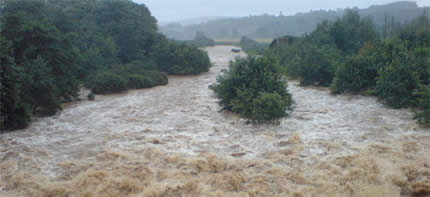
Zimbabwe obviously needs to up its disaster preparedness game, especially when it comes to effective and sustainable strategies to mitigate the effects of flooding which we face year after year.
Currently, areas as far flung as Masvingo, Muzarabani, Mberengwa and Gokwe are facing serious challenges due to flooding.
Lives have been lost in Masvingo where a bus plunged into a river because a portion of the bridge had collapsed and was washed away.
No doubt lives have also been lost in other areas far removed from media glare.
For some of these areas the problems are perennial.
Every year people die, children have their lessons disrupted, farmers lose their crops and a lot of money is lost through the destruction of infrastructure, homes and other property.
With all that on record, the Civil Protection Unit should have gone beyond issuing the usual verbal flood warnings which they regurgitate almost by rote at the start of every rainy season.
We should be at a point where mitigation has already been put in place.
For example, people in low-lying areas should have been relocated a long time ago as part of the land reform and resettlement programme.
There is no reason why scarce resources should be spent year after year to rescue communities that are virtual sitting ducks to flooding.
It is not enough to keep on repeating that people must move to higher ground without then enabling the citizens to move through designation of land to resettle with the provision of all requisite amenities like roads, schools, health centres, and other services.
The CPU also needs to look at the state of the bridges in the country and actively advocate their refurbishment or for the construction of new ones nationwide, even in the most humble of areas.
While we appreciate that it would be impossible to do all this at once, effort should be seen to be made with resultant marked progress.
The usual cry is that there is no money, but when disaster does strike, there is no option but to make sure that the affected people receive immediate assistance.
Thus at the end of the day the money is pumped out anyway, but for short-term programmes with no sustainable results.
Affected people are treated like refugees for a short while then end up returning to the wreckages of their homes in the same flood-prone areas because they have no alternative.
There they piece together their lives until the next deluge, and the cycle continues.
With efficient planning those same resources could be used to ensure that expected problems like flooding cause minimal disruptions.
The CPU should come up with a clear programme on disaster mitigation.
One cost-effective strategy would be to have community-based disaster preparedness teams that are trained and ready for action at any given moment in all areas.
Such teams can monitor things like water levels in rivers and dams, and thus provide accurate advice on what should be done to protect lives and property.
They could also be responsible for creating temporary homes for affected people with pre-planned sources for basics like food and water, bedding and sanitation.
This could be linked to the Zunde Ramambo concept in rural areas.
A key part of the strategy would be the strengthening of the CPU through making sure that they have the legal muscle to ensure local authorities carry out their recommendations within a specified time to reduce the effect of natural and man-made disasters.



 Online Reporter