Online Reporter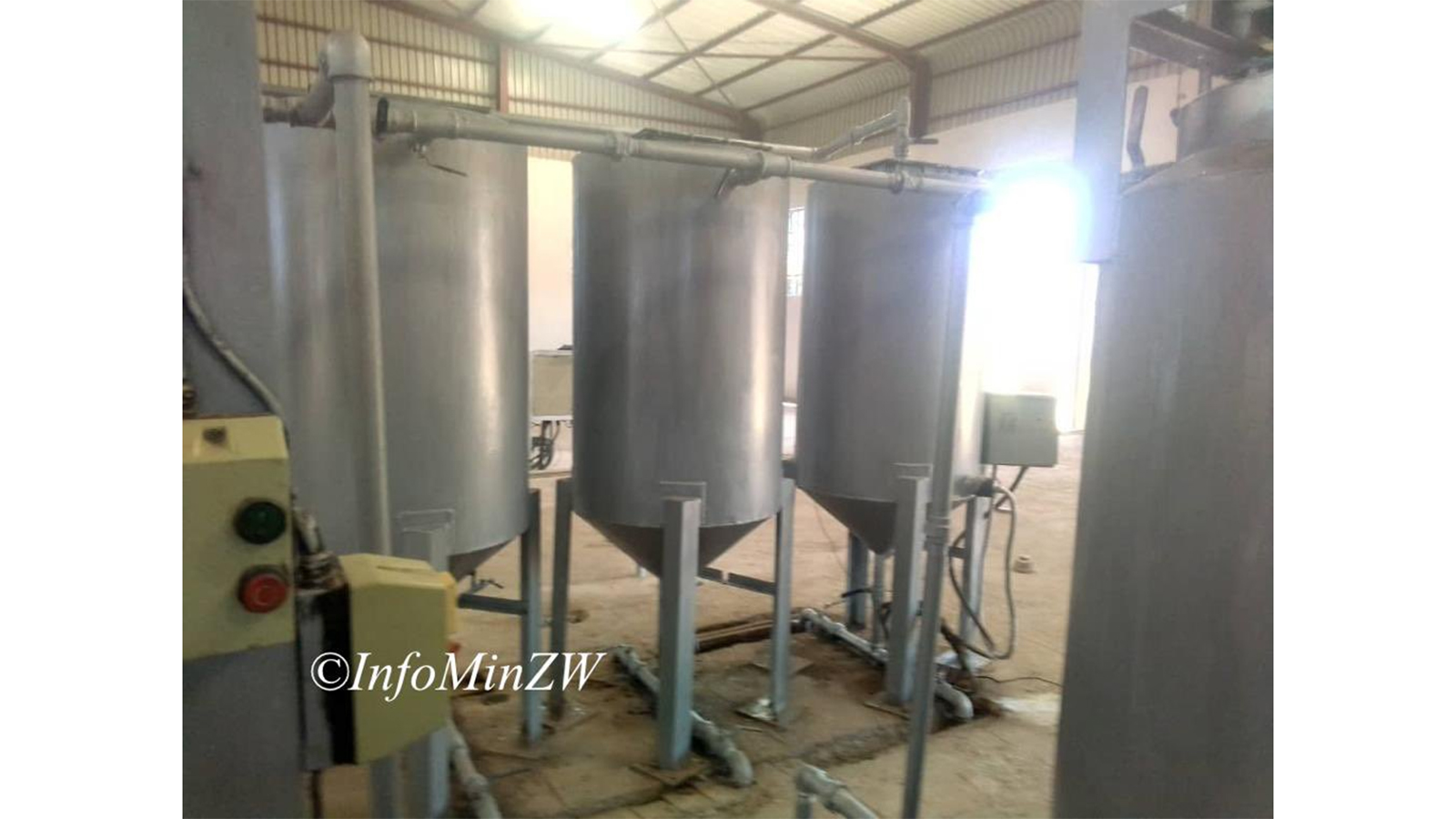
A LOT of the agenda for boosting agricultural production and increasing the range and volumes of products made from raw materials supplied by farmers has multiple benefits, making Zimbabwe more self-sufficient, cutting imports while increasing exports and giving farmers extra streams of income so they can upgrade their standard of living.
Each of these benefits is important and new development cannot be put in a convenient box or silo when the thrust is not just improving farmer incomes, but also employment and industries in rural centres and generally upgrading the whole economy by creating new wealth and then ensuring that the benefits are spread so a lot of people win.
When we talk about a more stable economy, we mean one where there is a significant positive balance on the current account, that is our foreign currency inflows are greater than our foreign currency outflows.
We achieve this at the moment through the inflows of Diaspora funds, despite the fact that our exports are less than our imports.
However, long term stability requires a positive balance of trade, that we sell more to the world than we buy.
For a developing country, where our exports in services will be on the light side, this means we need to mine, grow and make things for export and to replace some of our imports.
As we move up the value ladder our trade in services will build up although we still need to be careful not to ignore real goods.
Economists have noted that while we now do have a stable local currency and are maintaining the fundamentals, we still need to ensure this positive trade balance for some time to make sure that our high rates of growth are sustainable, and that the local currency is well secured within a proper economy.
Petroleum fuels are our largest single import and while they are largely funded directly and indirectly through Diaspora funds, which is one reason why they are allowed to be sold for US dollar cash, this is not ideal in the long term and at some stage we need to bring petroleum into the general trading businesses.
Two biofuels have been introduced over the years, to both stretch our petroleum imports and to provide guaranteed markets for sections of our farming community.
Anhydrous ethanol is now well established as a part of the blend using biofuel that has replaced petrol.
There are limits as to what can be done, but all petrol products now must legally contain set and safe percentages of ethanol, that do not require any changes in the technology of the engines or other equipment.
The ethanol comes from cane grown under contract in the Lowveld, giving farmers an extra source of income and justifying the investment in the private sector ethanol distillation and extraction.
Biodiesel after a difficult start early this century as now under the Government be regularised, with the Ministry of Higher and Tertiary Education, Innovation, Science and Technology Development setting up Finealt Engineering on the fringes of Mutoko Centre and applying the lessons and concepts of Heritage 5.0 education to making sure that a proper plant is built, run and expanded.
Finealt is already producing 3 000 litres a day of biodiesel from jatropha seeds, and the concept is clearly viable and working.
Now an upgrade wants to see this expanded 25-fold to 75 000 litres a day, and taking over a significant block of the diesel market.
Jatropha was planted fairly widely when the idea first took root, and those plantings are available to farmers and groups of farmers for harvest and delivery.
The plant would also be producing clean and semi-processed vegetable oils for other industrial uses.
This not only allows cut backs in some imports, but also ensures that there a growing number of jobs created in the Mutoko area, and long-term jobs based on processing agricultural raw materials produced within the area.
The farmers and land users in that area will also have an extra source of income, from a plant that usually takes up little room.
A lot of the rising farming wealth of smallholder farmers in Zimbabwe is built around a farmer not specialising, but continually adding new crops and new sources of income, similar to what small-scale farmers in many developed countries do.
Going around French or Italian small-holder farmers you will see people on what are these days good standards of living growing and processing a wide range of crops and building up individual and community rural industries.
This is our model rather than those huge expanses of monoculture spreading cross an American prairie.
The Mutoko factory has a large element of flexibility. It can, for example, process sunflower seed into vegetable and cooking oil and has built up a retail market down Mashonaland East.
Sunflowers have returned a major oilseed crop under the Second Republic, after being ignored for a few decades, but there is still a lot of room to increase production.
We are a major importer of edible oils and fee rather good when we only need to import enough for half our demand.
There was a time, 40 to 50 years ago, when we produced most of our own cooking oil, and while per capita demand has increased with what amounted to racial rationing abolished, the idea that using a wide variety of source seed can help us be self-sufficient is obviously worth pursuing.
Somehow we became trapped into single seed supply lines, especially being over-reliant on soya, when there are so many other possibilities.
Once you encourage each group of farmers to produce what they can produce best, and then back them with inputs, contracts and markets, a completely different system arises and the variety becomes a positive extra when selling to consumers as not everyone wants exactly what their neighbour has.