admin
adminZIMBABWE has been hit by one of the worst droughts in the country’s recorded history. It is everyone’s prayer that the current wet spell stretches for another week so that the natural pastures grow and water reservoirs fill up.
It is true though that the current rains, which started on Friday in Manicaland have done very little to revive the food crops which have been irreversibly damaged food crops, but brought with it a fair share of jubilation to livestock farmers. The province last received rains mid-January and what followed was an arid spell which destroyed the early planted staple maize and pastures.
In Manicaland, the severe weather vagaries’ impact is being felt most in the southern districts of Chipinge, Buhera and Mutare districts, and the southern part of Makoni district where some could not till their land because it was not worthwhile.
The communal agricultural system of production the province is mixed – incorporating crop-livestock, with crops playing a major direct economic role in the high rainfall areas of natural regions one and two while livestock assume a prominent economic role in the lower rainfall areas of natural regions four and five. This is not the first time for Zimbabwe to be encumbered by drought.
The country experienced the catastrophic droughts of 1999/92 and 1993/94.
Farmers should draw some lesson from that period so that they can change the approach to handle drought.
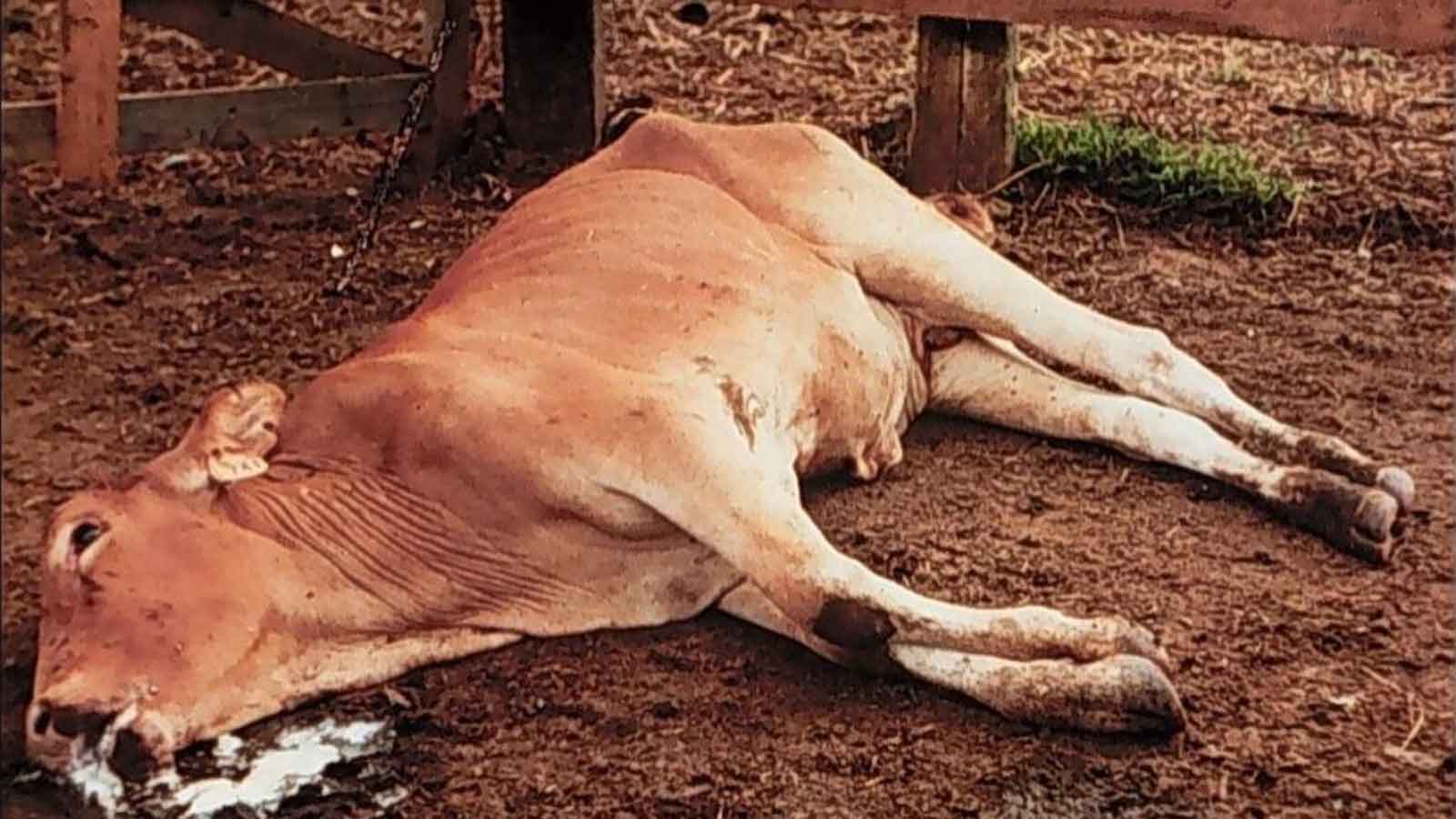
To date at least 16 000 cattle have died in the country and 6000 in these severely stressed part of Manicaland. The major drivers of these cattle deaths include pastures and water shortages.
Cattle farmers need to plan and drought management strategies since drought directly affects cattle production through reduced pastures and water.
The decrease in available feed often results weights and lower revenues, which can ultimately impact livestock profits and equity.
Poor dipping and disease wreck havoc on a poorly nourished and unhealthy herd, making it critical for livestock farmers to “do everything” to save their animals during this critical phase.
Given the criticalness of the situation, the most sustainable approach to drought mitigation is establishment of “strategic fodder reserves” through harvesting of grass, crop residue like stalks and conservation of forages and storage for use at strategic times.
Another option available to farmers is to take advantage of local crop residues, such as maize stalks and green grass and by-products from local breweries or ethanol plants.
Another potential option that farmers can utilise is the calf/yearling strategy, which allows them to sell yearlings early in the year if pastures production is low.
This issue of feed production caused by drought conditions can also be minimised by purchasing additional hay.
Farmers need to act now because the cost of hay increases with future demand as the drought become widespread.
In the near future hay prices will likely increase dramatically. Farmers should be more responsive to drought and start to cull and sell some stock. Farmers can also lease grazing and hand feeding animals for survival.
It is also more profitable for farmers to sell older cattle now when prices are still high and rebuild breeding stock when prices are lower. Strategic liquidating of some of the herd is one sure way farmers can also reduce the nutritional demands of their herds. However, full liquidation is not advisable. Some may fail to replenish their herds.
Partial liquidation is also attractive in that it reduces pressure on pastures and allows them to recover quicker once the drought is over.
This also allow for immediate revenues from culling activities. Another option available to farmers is early weaning of calves, which lowers nutritional requirements of the herd as lactating cows have the highest nutritional requirements.
This option alleviates some pressure later in the grazing season when forage production is usually at its lowest of the season.


 Online Reporter