

 admin
admin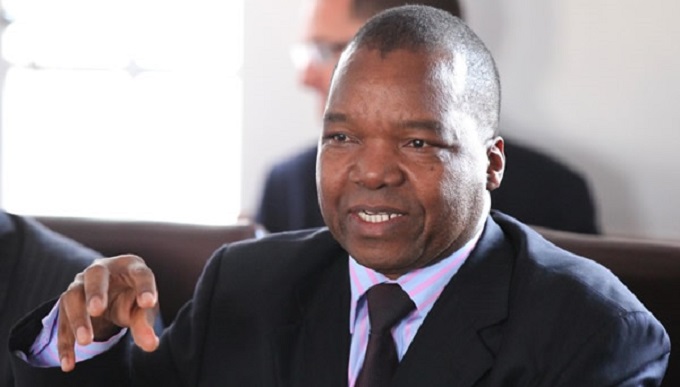
GOVERNMENT’s decision to remove the 1:1 foreign currency exchange rate for the procurement of fuel by oil marketing companies, which will result in the interbank market being used, should be understood in the context of ongoing austerity measures and the need to cut out rent-seeking behaviour in the petroleum industry.
The move should therefore be seen for what it is. Government is walking the talk on reforming the economy and opening up the operations of the once opaque fuel industry to more players.
In the long run, competition will stabilise prices while ensuring that the commodity is widely available in the country. Government also moved quickly to reduce duty on fuel from $2.30 to $1.15 (petrol) and $2.05 to 90 cents for diesel.
This adjustment was factored into the new fuel prices which came into effect yesterday.
In announcing the move to remove subsidies on fuel on Monday, Reserve Bank of Zimbabwe Governor Dr John Mangudya said this was being done to promote the efficient use of foreign currency and to minimise and guard against incidences of “arbitrage” in the economy.
Fuel procurement was among Government’s major priorities, gobbling a large chunk of foreign currency generated by the country.
It remained a protected sector even when Government scrapped the 1:1 rate between the United States dollar and the RTGS$ in February.
To keep fuel prices low, the Government maintained that parity for fuel companies, ensuring that they accessed foreign currency at relatively cheap rates.
But that came at a cost as the allocation of foreign currency was fraught with allegations of corruption with the country reportedly losing millions of US dollars to cartels that controlled the industry.
This means that the entire nation was at the mercy of these cartels who could determine availability of the precious commodity at their pleasure. Fuel shortages have persisted despite Government availing funds for the product and hopes are that by liberalising the sector, the RBZ is dealing with the twin scourges of corruption and speculative tendencies in the petroleum industry.
Now that all oil companies will compete for foreign currency on the interbank market where it is traded on a willing-buyer willing seller basis, there will be little room for speculative behaviour.
Before announcing the latest measures, Government first secured a US$500 million line of credit from international financiers which it began drawing down on Monday to supplement the country’s foreign exchange receipts and underpin the interbank market.
By capacitating the interbank market, the RBZ is promoting the formal trade in foreign currency and eliminating the parallel market whose rates had galloped last week. F
ollowing the US$500m injection, the black market rates began plummeting on Monday and are likely to converge with the interbank market rates soon.
Cognisant of the impact of the latest measures on fuel prices, Government yesterday moved swiftly to warn oil companies against increasing fuel prices while dissuading them against hoarding for speculative reasons.
Government has also announced contingencies to cushion the poor and vulnerable in society.
With effect from Monday, the Government slashed Zimbabwe United Passenger Company bus fares by 50 percent, for both urban and rural trips, a situation that will see local urban travellers paying 50 cents from $1 for a distance within a 20km radius.
A distance of up to 30km has now been pegged at 75 cents from $1,50 while a distance of up to 40km been reduced to $1 from $2.
Finance and Economic Development Ministry Secretary, Mr George Guvamatanga, said Government was now pursuing procurement of additional buses to complement those on the road.
“We expect a consignment of more buses to come next week. Our expectation is that because of reduced fares there should be increased demand on the buses. So the focus now is increasing the number of buses available, for both urban and rural populace, we have actually realised that transport costs have been a major challenge that the travelling public has been facing,” said Mr Guvamatanga.
We welcome the Government’s decision to provide a safety net for the vulnerable members of our society given the likely impact of the latest measures on fuel prices. We also note that the move to subsidise transport costs has been planned for meticulously and is unlikely to disrupt ongoing efforts to stabilise and grow the economy.
Government’s economic blueprint — the Transitional Stabilisation Programme — is anchored on a raft of austerity measures aimed at curtailing spending, increasing revenue and maintaining fiscal discipline.
It also seeks to encourage productivity in key sectors of the economy such as mining, agriculture and the manufacturing sector. So far, Government has managed to stop the hemorrhaging of the economy by reining in expenditure to the extent that a budget surplus has been achieved.
The latest decision to liberalise the fuel sector should be understood in that context. There is no prosperity without austerity.



 Online Reporter