admin
admin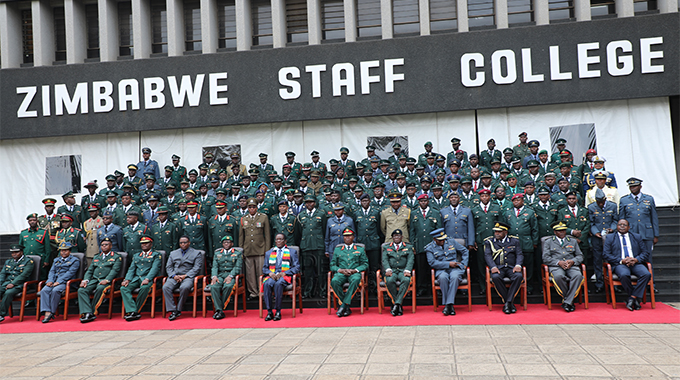
Zimbabwe Defence Forces Day being celebrated today comes just after Heroes Day for a very good reason: the defence forces are there to prevent external enemies from taking away the independence, democracy and freedom that the heroes won.
At the time when Zimbabwe Defence Forces Day was gazetted as a public holiday, the apartheid regime in South Africa was active throughout the region sponsoring, training and arming bandit groups and trying to destabilise its free neighbours to prolong its rule over South Africa and to try and persuade its own people that life would be worse in the chaos it had created beyond its borders.
So the threat of external enemies was real. Within the regional solidarity that was already being implemented Zimbabwe had to be highly active militarily in Mozambique to keep open our rail, pipeline and road links to the sea, and had to be active along most of our eastern and northeastern border areas to protect our own citizens.
In the end, the politicians and diplomats were able, thanks to those efforts, to work out a peace deal for Mozambique that actually worked.
These were the traditional military and political roles, the military preventing those who wished to use violence to impose their own ideas, and so creating the space for innovative politicians to find a real solution that works.
The Zimbabwe Defence Forces, the Zimbabwe National Army and the Air Force of Zimbabwe, we must remember are national military forces, owing their allegiance to the nation as a whole.
They arose from the amalgamation of the two liberation armies, that operating as part of the two nationalist liberation movements had fought and won the liberation war, along with the more professional and non-political elements of the Rhodesian forces, much of which had been highly politicised as the liberation war progressed.
So the new armed forces were built on some solid roots, bringing in the experience of those joining them, but also determined to press as hard as possible for competence, professionalism, ability and promotion on merit.
New traditions were created along with the new units, and all units were new units although their members came from a variety of sources.
The early days were tough, especially with the apartheid regime’s interference, helped by some ex-members of the Rhodesian forces who had fled south and wanted to take revenge for losing.
But those problems were overcome with relentless pressure for ever-better training and ever-better professionalism, and that in turn led to the remarkable National Unity Accord that cemented so much of that in place.
This professionalism and training, backed by a new determination to ensure that the defence forces were national, were of the people and with the people, produced incredible dividends in the next challenge, the banditry in Mozambique that did result in threats in eastern Zimbabwe as well.
The operations of the Zimbabwean forces were highly successful and highly praised by the people they were protecting.
The assistance to the Democratic Republic of Congo at the end of the last century again showed that the triple thrust of advanced training, high-end professionalism and a determination to protect the people was the secret of success.
Although there was criticism by ill-informed and unfriendly people in positions of power in some countries, that intervention by several SADC states created the required military stalemate that then allowed the diplomats and politicians to move in.
The intervention was not designed to impose a government, but to create the conditions where for the first time in more than 30 years the adult citizens of the DRC could simply line up outside the polling stations and choose who they wanted, not anyone else, for their Parliament and Government, rather than have political change imposed by assorted ad hoc military groups. So the intervention was successful.
One important part of Defence Forces Day is the proceeding period each year when the defence forces make a special effort to work with communities and in communities. Skilled personnel help communities build classroom blocks and clinics, and the run-up to the public holiday has seen the latest additions being handed over.
Defence forces medical teams have offered free treatment in special programmes and generally there has been the normal effort to make sure that soldiers and air force personnel realise that they must be with the people and that the people realise that the defence forces are part of the people and part of the nation.
One interesting point came across when one chief at one of the handover ceremonies complained that some in his district were reluctant to volunteer for an army or air force career, and so his area’s quota in the latest recruitment was not filled.
He was encouraging them to apply, but his remarks also made it clear that the defence forces want to recruit everywhere. That is important for practical as well as idealistic reasons.
The public holiday today, and the national and provincial ceremonies and parades, are important as they keep alive the links between the national as a whole and those citizens who have chosen a career in the defence forces, a career which carries the commitment to defend the people, and by that they mean all the people.
Our defence forces have built up their professional standards to what is generally regarded as the highest regional level.
When SADC met to discuss the problems in north-east Mozambique and decided to help, the Zimbabwean contribution was seen to be obvious, a major training role so that the expertise and professionalism of our forces could be passed on to those who needed to do the operations. It worked and the threat has greatly receded.
This continuous pressure comes in all areas.
The National Defence University has tailored degree courses for military needs and we have seen, for example with the latest group of pilots graduating in the air force, that we are fast moving to the position where almost all commissioned officers will be graduates, along with many of the technical staff.
Standards can always rise to ever higher levels.



 Online Reporter