

 Online Reporter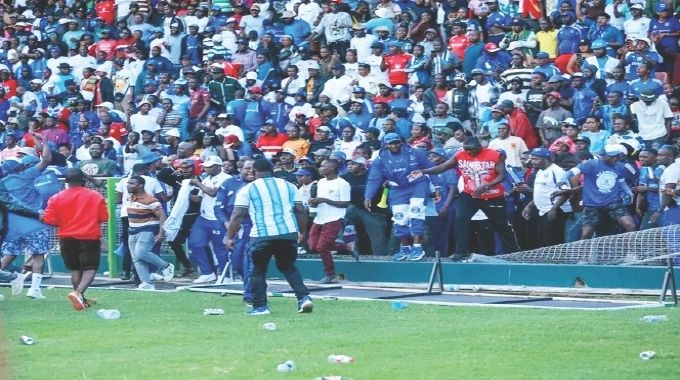
WHEN did we become this angry with our own progress?
That is the question many Zimbabweans were left asking after ugly scenes at Chahwanda Stadium during the abandoned Castle Lager Premier Soccer League match between Hardrock and Dynamos on Sunday.
Yes, football is emotional.
Yes, controversial decisions will always divide supporters, but nothing justifies the destruction of infrastructure built through sacrifice, vision and personal investment.
The Zimbabwe Republic Police confirmed that stadium infrastructure was damaged during the crowd trouble.
Turnstiles were destroyed. Perimeter barricades and fencing were breached. Reports suggest thousands of supporters outside the stadium forced entry before kick-off, while sections of the crowd later invaded the pitch during the chaos that brought the match to a halt with less than 10 minutes left.
What unfolded in Kwekwe was not passion. It was recklessness. It was selfishness. It was the ugly side of football culture that believes anger gives people permission to destroy what belongs to everyone.
What makes the scenes even more painful is understanding what Chahwanda Stadium represents to Zimbabwean football.
For years, Zimbabwe suffered the embarrassment of failing to host its own international matches because of lack of proper infrastructure that meets minimum CAF standards.
The Warriors became nomads. AFCON qualifiers and World Cup qualifiers had to be played in Rwanda, South Africa and elsewhere because Zimbabwe did not have approved facilities to host continental football.
Our clubs suffered the same humiliation.
Ngezi Platinum Stars had to play CAF Champions League matches in Zambia. Simba Bhora played continental games in Botswana. Dynamos also hosted CAF Confederation Cup matches outside Zimbabwe. Home matches became home-away-from-home fixtures.
That is the real cost of poor infrastructure. So when people like Shepherd Chahwanda raise their hands and invest millions into community development, Zimbabwe should protect those efforts, not destroy them.
This is not just a stadium in Kwekwe. It is part of a national attempt to restore dignity to Zimbabwean football.
The facility was built with a vision bigger than one club or one afternoon’s result. It was meant to bring top-level football back to local communities.
It was meant to give Midlands supporters access to modern sporting infrastructure. It was meant to help Zimbabwe close the embarrassing gap that has left the country relying on foreign venues for major matches.
Instead, a few angry supporters chose to attack the very progress Zimbabwean football has spent years begging for.
And that should worry every Zimbabwean. Because this goes beyond broken barricades and damaged turnstiles. The real danger is the mentality behind it, the belief that public infrastructure can be vandalised whenever emotions boil over.
Zimbabwe cannot develop with that mindset.
Government officials have repeatedly described Chahwanda Stadium as part of the Second Republic’s infrastructure drive and its “leaving no one and no place behind” philosophy.
Deputy Sports Minister Emily Jesaya publicly praised the project as an example of development reaching communities outside Harare and Bulawayo.
The message has been clear. Infrastructure should not only belong to major cities. Communities like Kwekwe also deserve modern facilities, investment and opportunities.
That is why the scenes at Chahwanda Stadium were so disappointing. A stadium that had become a symbol of progress suddenly became a symbol of destruction.
There is another uncomfortable question Zimbabwe must confront.
What message do these scenes send to other investors?
Businesspeople are watching. Community leaders are watching. Potential investors are watching.
There are Zimbabweans with the financial capacity to build schools, sports facilities and social infrastructure who are asking themselves whether such investments are worth the risk.
If a man pours his resources into national development only for people to destroy his work during moments of football anger, what incentive remains for others to follow the same path?
Zimbabwe desperately needs more people willing to invest in infrastructure. Government alone cannot build every stadium, every hospital, every school and every community facility.
National development works best when private citizens also contribute towards rebuilding the country.
That is why the slogan “Nyika inovakwa nevene vayo” matters. A country is built by its own people.
But building also requires protection.
Supporters have every right to protest poor officiating. They have every right to demand better organisation and safer crowd management. Authorities must also answer serious questions around ticketing systems, overcrowding, crowd segregation and security preparedness at high-risk matches.
Those issues cannot be ignored.
But once supporters start tearing down infrastructure, they cross a dangerous line. Football frustration can never become a licence for destruction.
Zimbabwe’s AFCON qualifying campaign begins again in September ahead of the 2027 tournament to be hosted by Kenya, Uganda and Tanzania.
The country still desperately needs CAF-approved stadiums. Clubs chasing continental football still need proper home venues. Local communities still need facilities that can stimulate business, tourism and sporting growth.
That is the bigger picture.
The tragedy of Chahwanda Stadium is not just what was damaged. It is that some people failed to recognise what they were damaging. They were not only breaking fences and turnstiles.
They were trampling on sacrifice, national progress and the very infrastructure Zimbabwe has spent years desperately trying to rebuild.



 Bongani Ndlovu
Zimbabwe by its nature has a population that gets angry at progress. Look at our politics! So why are we surprised by what happens in our football?