admin
admin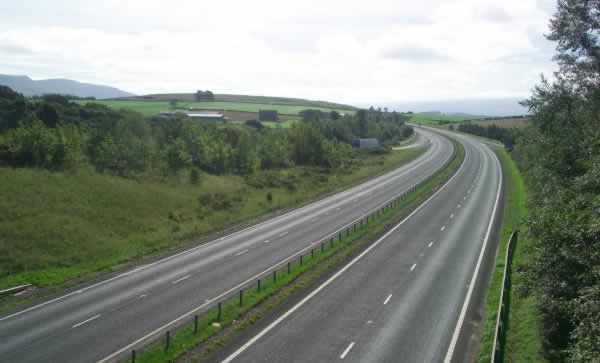
The primary purpose of dualising a highway is to allow more traffic to flow more freely; it has the useful side benefit of helping to make a road safer, since head-on collisions become very rare, but does not make the road safer in any other way. Drivers still have to obey road rules and behave sensibly. We have seen this over the last fortnight, on a fairly short stretch of newly dualised highway linking the Mabvuku turn-off with Ruwa.
Two people have died in four serious accidents at the bridge along this stretch and the police are certain that all four accidents were caused by drivers going faster than the limit or the conditions allowed.
We see many other accidents on dual carriageways and four-lane highways. There is one along Sam Nujoma Street Extension almost daily, and fairly recently a teenager died in a tragic crash. Accidents are not unknown along that long stretch of dual carriageway from Msasa in eastern Harare to Norton, or that other long stretch from the city centre to Chitungwiza, or the young man’s favourite night race track, the Borrowdale Road.
In almost all cases excessive speed is the cause.
There is no doubt that dualising a road does allow higher speeds. This is frequently seen in speed limit changes.
A road that was hardly safe at 60km/h can cope quite well with a 70km/h or 80km/h limit after dualising, and the open road 120km/h limit is usually safe on a dual carriageway outside built-up areas, at least when the road is dry, the sun is up and traffic is not too heavy.
Far more beneficially, dualising a road allows the average traffic speed to rise. As traffic becomes heavy on a stretch of single-lane highway it slows to a crawl.
One brick lorry, one slowish car, and hundreds of other vehicles are forced to a snail’s pace.
Dualise that stretch and average speeds rise, although interestingly to a little below the limit; those who have tried some serious weaving between lanes during rush hour and ignoring the limit find, in the end, that they arrive at roughly the same time as the driver who keeps the limit and changes lanes only to overtake.
But when we talk about speed we also need to look at what other countries have done. The US has had its freeway system for 60 years. Most of Western Europe have had motorways under various names for almost as long.
And everywhere, beyond a diminishing stretch in Germany, the limit is 120km/h in Europe and a little less in the USA. And this is on roads a good step beyond the Zimbabwean dual carriageway.
Experience shows that these limits are the best compromise between safety and convenience.
And these countries with vast networks of modern freeway rigidly enforce their limits. A favourite is a simple unmanned radar and camera “box” parked on the side of the road and moved when necessary. They catch many speeders.
Highway patrols, manned speed traps and the like keep up the pressure.
It looks as though Zimbabwe is at last modernising its road network with an ever-growing length of dual carriageway, and we need to remember that the plan is to dualise the whole of the Chirundu-Harare-Masvingo Beitbridge and the Mutare-Harare-Bulawayo-Plumtree highways, that we too will have to put in place measures that allow us to keep the many advantages and diminish the remaining risks.
Speed is one. The other, that decreases efficiency and increases frustration, is bad lane positioning. We all know the tension generated by a brick lorry in the left lane (where it is supposed to be) and some driver exercising his legal rights in the right lane at the same slow speed.
All drivers need to be taught, and retaught, that they should keep to the leftmost lane that is comfortable for their traffic speed. Many freeway authorities ban overtaking on the left (to cut out lane weaving) but make this tolerable by enforcing the rule that a driver must not block the right lane.
Zimbabweans have more to learn, but by smart enforcement, the setting of sensible speed limits, and traffic officers giving advice as often as tickets, we can learn.



 Online Reporter