

 admin
admin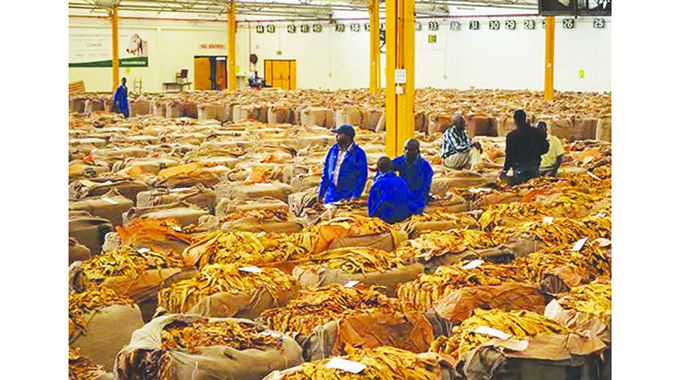
Tobacco is the major cash crop in Zimbabwe for both small-scale and large-scale growers and one of the top export earners, so it is important for the national economy, for communities and for growers creating national wealth and ensuring that several tens of thousands families are moving into the middle income groups.
Unlike most crops it is pure private sector. Even the recent decision by the Government to capitalise some of the bank lending is done at arm’s length, the banks taking the decisions of who to lend money, expecting the money back, with the interest, and ensuring that the capital base grows.
Following land reform, when there was a fall in production with the exit of a fair slice of larger-scale growers, the whole industry was rebuilt from the ground up, with the major buyers and merchants realising that they had to be far more active, not just expecting the farmers to find or borrow the money, grow the crop and only make contact with buyers and merchants when the auction floors opened.
So the contract system was developed and that could have led to vast problems, a lot of cheating and even if cheating was low-level a lot of distrust.
Enter the referee, setter of standards and the enforcer of the standards, the Tobacco Industry Marketing Board.
The TIMB does not mess around. It does not finance, grow, sell, buy, grade, process or export tobacco. But everyone in that chain is licensed by the TIMB, contracts are inspected for fairness and then enforced and those who breach the rules and standards find themselves in the cold. Even the seed and seedlings are managed for type and variety.
So we now have eight contractors suspended, following the suspension of two others earlier in the season. These are contractors who were not paying the farmers on time or in the right way, largely because they did not seem to have the cash on hand, cash they assured the TIMB they had or could find.
TIMB will be making alternative arrangements for farmers under contract to these potential deadbeats unless they rapidly sort themselves out, like immediately, so the farmers do not suffer.
At the same time, the TIMB enforces the contracts from the other side. So far this season 438 farmers have been “deactivated” for suspicious trading.
Side-marketing has been kept very low in this industry through rule enforcement and the fact that buyers can only buy what they have contracted, or on the auctions, and the auction floors can only take in self-financed tobacco, and that is checked.
While the auctions set the prices it is interesting that the top price this season, by a fair margin, has been paid to a contracted grower, showing that the quality in this sector can be the best.
This standard-setting and enforcement function is critical. Without it the whole industry could collapse.
Most importantly it is a system that needs to be extended to other crops and other sectors in the agriculture industry. We have a model that works.
We have seen a number of problems in other crops that we do not get in tobacco. Cotton farming at one stage collapsed.
First there was side marketing, then the buyers had no money and started paying late, and then not at all. The Government stepped in, but there are still some earlier debts floating around.
Cotton, maize, wheat, barley and soya beans came under a set of statutory instruments to control side marketing and those bound to repay loans, granted by banks to larger-scale growers although guaranteed by Government, sometimes going through complex manoeuvres to avoid repayment and so damaging the whole financial system.
Many self-financed growers, and they are an important part of the system especially in wheat, resent the monopoly of the Grain Marketing Board where there were no pure contracts seeing inputs supplied directly even if the self-financing arises from bank loans guaranteed by Government.
One obvious problem is that the main buyer or contractor is also the regulator, and the regulator tends to be keener on regulating farmers rather than themselves, and it needs the Government, at the moment the main funder, to step in.
But the policy is that the agro-industrial companies will eventually become an ever more important funder through contract growing.
In fact they are supposed to be pushing for funding at least 40 percent of their requirements in grain and oil seeds. These are the millers and the oil expressers in general.
To make this work we need something like the TIMB for the other crops. The standard-setter, the person who writes the rules, and the referee cannot play in a team jersey. The Government itself does not do a bad job, but the TIMB, with a board representing the entire industry from farmers all the way to the final processors, has shown that an independent rule writer and referee works more smoothly.
Admittedly we are still in the early stages of the resuscitation of many of these production systems with the Government having to play a major role in input schemes and provide a large slice of the funding, to ensure that we can eat and can get to the stage where we first have self-sufficiency in all these crops and then have surpluses.
But considering the policies and the long-term goals, and the need to move all farmers into the commercial sector, we need to start now creating the systems that we know will work.
Even if the free inputs for very small-scale growers are maintained, these are limited. An A1 farmer wanting to expand production from the maximum of small plots with the free inputs will need contracts for funding the extra production so they can access mechanisation and the seed and fertiliser.
So the Presidential inputs schemes and a more commercial system can operate together as we push forward in our goal of more production, rural development by ensuring all farmers can grow more and families can make money, and the continued conversion of small-scale farmers into proper middle-class rural families.
The TIMB and the system it has created for tobacco is not perfect, and this is acknowledged as the rules and standards are updated, sometimes with Government intervention along with Government funding, but generally they provide a good model that, with the necessary adjustment, could drive our production forward to the next levels.
That would benefit the farmers, the buyers, the agro-industrial companies and the nation at large.



 Online Reporter