admin
admin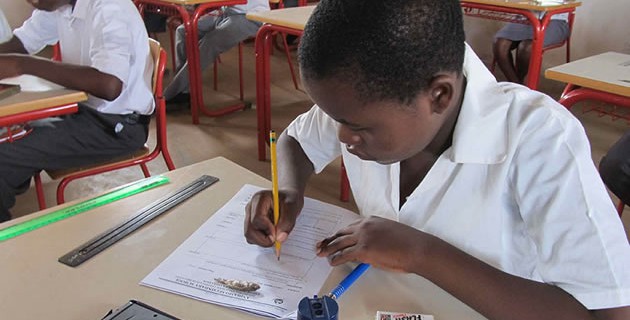
 The high number of pupils who dropped out of school and failed to register for public examinations last year must get us to rethink the cost of taking the important tests. Also, it must move us to seriously consider the general cost of education in the country in the context of the difficult economic environment.
A national analysis by the Ministry of Primary and Secondary Education shows that out of 200,897 pupils in Form Four last year, 156,591 registered for five or more subjects under Zimsec. This means that 44,306 pupils did not write national examinations. At Advanced Level, 32,635 pupils were in Upper Sixth last year but 29,536 took the examinations and 3,099 didn’t.
The 47,605 pupils who dropped out of school and didn’t take their final examinations excludes others who may have discontinued their education while they were in non-exam writing classes — Forms one, two and three and Lower Sixth — as well as at primary school level. Thus the total number of children who dropped out school last year is definitely higher than the figure captured in the ministry’s analysis that focused on Upper Sixth and Form Four only.
Figures for this year are unavailable yet but it is unlikely there was a positive change as the militating factors of last year remain.
However, we must indicate that registering fewer than five subjects at O-Level or one at A-Level is only a problem if the pupil is writing his or her first and last public examinations. It is critical this point is highlighted as some pupils may have passed some subjects prior to 2014 and were just writing one or two, often Maths and or English to achieve a full O-Level certificate and others at A-Level. There are thousands of such pupils, and adults, every year. They influence the total number of pupils not writing five-plus subjects at O-Level and more than one subject at A-Level as the ministry put it.
Be that as it may, the big gap between the total Form Six and Form Four enrolment and those who sat for examinations last year is a sobering illustration of the impediments our people face, and fail to overcome, in their quest for education. In Zimbabwe’s exam-centred education system, every pupil goes to school with the fundamental objective of passing the public examination and obtaining the certificate to enable them to proceed to college, university or seek a job. If he or she fails to write the examination, chances of them doing well in their future lives are greatly compromised. The quality of our education suffers as well.
Yes, the ministry proffered possible reasons why so many children failed to take their final tests but it is clear that poverty is the biggest of them.
Money is tight. The government itself is unable to meet the full cost of educating the people, particularly the resource-poor who cannot help themselves. It is struggling to meet demand under the Basic Education Assistance Module, thus donors contribute a greater proportion to the facility.
Furthermore, the government is failing to meet demand under the cadetship programme. Resources are unavailable for the government to provide adequate textbooks and other teaching and learning materials, hence donors chipped in under the Education Transition Fund.
On the other hand, parents and guardians are financially handicapped too amid job losses, low and delayed salaries.
The net effect of this is that many obligations suffer; most regrettably, education is one of them.
The challenge is greater in rural than urban areas, a pointer to growing rural poverty, thanks to successive droughts. The Zimbabwe Vulnerability Assessment Committee 2015 Report corroborates this. The study says there has been a 23 percent decrease in the national household income average in rural areas this year from the 2014 estimate.
We understand the difficulties. Parents are already making huge sacrifices to get their kids in school but education is so important that we implore them and the government to make more sacrifices for children to not only access education but also gain certificates to prove it.
The government has done extremely well by permitting parents and guardians to stagger exam fees payment. The move, to take effect from 2016 onwards, is an acknowledgement by authorities of the difficulties parents face in having to raise the money at once in the first term of every year.
For Grade 7 examinations, parents can start payment when their child is in the second term of Grade 6. Parents with pupils in Form 3 now can start this year paying exam fees for next year; the same applies to those in Form 5.
The arrangement should go a long way in making it easier for parents to pay exam money for their children, thus forestall a recurrence of the sad situation that happened last year.


 Online Reporter