Online Reporter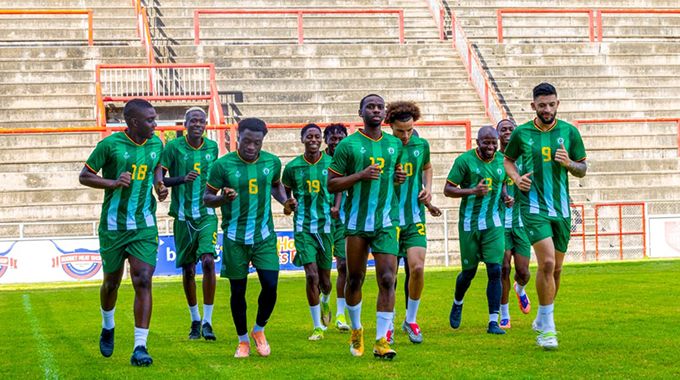
THREE days ago, Africa once again stepped onto football’s biggest stage.
South Africa walked out for the opening match of the 2026 FIFA World Cup against Mexico, rekindling memories of 2010 when they welcomed the world to the African soil for the first World Cup ever hosted on the continent.
Just like on June 11, 2010, when the first World Cup match on African soil pitted South Africa against Mexico, the two teams reversed roles with the Mexicans being the hosts this time as they also clashed in the 2026 opener on Thursday night, which Bafana Bafana lost 2-0.
Across Africa, 10 nations earned the right to be part of football’s greatest spectacle. Their players now carry not only national hopes but the aspirations of a continent that continues to grow in footballing stature and confidence. Zimbabwe is not among them.
While there is disappointment in that reality, there is little value in dwelling on what cannot now be changed. The more important question is what happens next because while the world watches the 2026 FIFA World Cup unfold in Canada, Mexico and the United States, Zimbabwe should already be preparing for 2030.
The expansion of the World Cup from 32 to 48 teams has fundamentally changed the qualification landscape. Africa now enjoys more places than ever before, making qualification a far more realistic objective for ambitious football nations.
The dream remains difficult but it is no longer distant. For countries willing to plan, invest and prepare, the pathway is clearer than it has ever been.
Zimbabwe, therefore, has a choice.
We can view the 2030 World Cup as another tournament to watch from afar, or we can begin building a serious campaign to ensure that the Warriors finally take their place on football’s biggest stage.
The first lesson from the failed 2026 qualification campaign is obvious. Playing home matches away from home comes at a significant cost. For years, Zimbabwe’s national teams have been forced to host opponents outside the country due to the absence of a CAF-approved stadium.
The loss has not simply been financial.
It has meant surrendering home support, familiarity and the emotional advantage that comes from playing before one’s own people.
The National Sports Stadium is now moving steadily towards full international readiness, and that development alone will significantly strengthen Zimbabwe’s prospects in future qualification campaigns.
Yet football also teaches an equally important lesson.
Infrastructure matters, but infrastructure alone does not qualify nations for World Cups. Organisation, preparation and leadership play a major role.
Indeed, Haiti’s qualification for this year’s tournament serves as a reminder that adversity need not become an excuse.
Many expected them to pull out of the tournament but they played all their 10 qualifiers away from home and are now competing at the global showpiece. Nations that plan properly often find ways to overcome challenges that appear insurmountable.
Zimbabwe must adopt that mindset.
The next World Cup qualification cycle is expected to begin after the conclusion of the current tournament, with CAF set to announce qualifying dates and conduct the draw. That means preparation cannot wait until the fixtures are released.
The groundwork should already be underway.
One issue that requires urgent resolution is technical leadership. Since the departure of Marian Marinica, Kaitano Tembo is serving in an interim capacity. While interim arrangements can provide stability during periods of transition and turbulence, World Cup campaigns are built on certainty.
Players, supporters and administrators all need clarity.
Whether there will be a decision is to appoint Tembo permanently or pursue another candidate, Zimbabwean football requires a settled technical direction around which a long-term programme can be built.
The next qualification campaign cannot be approached on a match-by-match basis. It requires a four-year vision, a clear roadmap and clearly defined milestones that stretch from the opener to the final qualification match.
To be honest and fair, there are encouraging signs emerging within Zimbabwean football. The current ZIFA leadership has spent much of its tenure working to restore order and credibility to a game that, for years, was characterised by instability and administrative uncertainty.
Efforts to regularise refereeing structures have demonstrated a willingness to tackle difficult governance issues.
Increased engagement with the Zimbabwean diaspora has expanded the talent pool available to national teams, the introduction of the Munhumutapa Challenge Cup has created additional competitive opportunities, while greater emphasis on international friendlies has provided valuable exposure for the Warriors. At grassroots level, initiatives such as the Roots Impact programme point towards a recognition that sustainable success begins with youth development.
These are important foundations.
They deserve acknowledgement but foundations are only the beginning and the next step is converting those foundations into competitive advantage.
The Warriors need a clear football philosophy that survives beyond individual coaches. Player identification systems must become more aggressive and more sophisticated. Sports science, performance analysis and player welfare must become central pillars of national team preparation.
Most importantly, Zimbabwe must enter the 2030 campaign believing that qualification is achievable, not as a slogan or as a dream. We have had our fair share of “Dream Teams’’. That belief must be set as a realistic objective supported by deliberate planning and execution.
The significance of 2030 should not be underestimated. Morocco will co-host the tournament alongside Spain and Portugal, bringing football’s biggest event back to African soil after 2010 in South Africa.
For Zimbabwean football, that cannot be allowed to pass as simply an interesting trivia fact, it should be a challenge and a source of motivation. It should be a reminder that African football continues to rise and that Zimbabwe must rise with it.
As the world’s attention remains fixed on the World Cup, Zimbabwean football should already be looking beyond it.
The next qualification draw has not yet been made and the first qualifier may still be some distance off but the decisions that will determine Zimbabwe’s fate are being made now.
The appointment of a coach, the development of a football roadmap, the strengthening of player pathways and the continued restoration of confidence in the game.
Those decisions will determine whether Zimbabwe spends another World Cup watching from the couch as we have begun doing this week or finally earns a seat at football’s highest table.
The road to 2030 has already begun. Zimbabwe must be prepared to travel it with the urgency that the moment demands.