dyton mupawaenda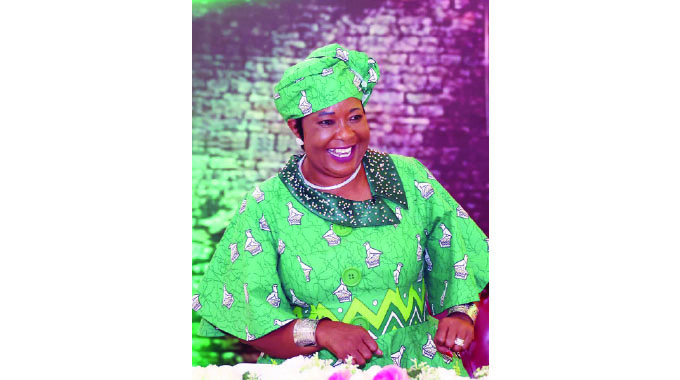
TOMORROW starts the yearly 16 days of activism against gender-based violence, a time to renew the focus on the scourge and bring it into the forefront of social activity.
Obviously we need to tackle this every day, not just the 16 special days, but the special period set by UN Women every year does give us a chance to concentrate ideas and action, and does give us a chance to see what progress we are making.
A critical point is that the 16 days concentrates on activism, rather than talk, that is on what we are doing about gender-based violence and what we are doing about eliminating it.
The reason for the continual pressure is regrettable. All societies in all parts of the world are afflicted. All saw nothing serious, or even something meritorious, in gender-based violence, although most admittedly thought some people went a bit “too far”.
It was not recognised anywhere as a serious indictment on all societies, and on the sort of values we all hold in common, values we breach perhaps far more often than we observe.
We have also seen in all societies to some degree that some of the older systems that at least ameliorated the problem, extended families willing to take action, religious leaders making it clear that this was a bad idea, have weakened, although there were times when sometimes families were in the forefront of the violence, a religious leader turned their back.
What we have been seeing in recent decades is a movement away from the sort of thinking that lasted for so many millennia that gender-based violence was inevitable, often acceptable and sometimes even praiseworthy so long as it was constrained.
We are now seeing everywhere that it, like all violence, except in extreme self defence, is wrong and that it cannot and must not be tolerated. So countries have the laws, apply the laws and have put in at least an outline of the needed systems. But we still have a long way to go. A major problem is that too few of those subjected to gender-based violence take advantage of the legal changes and systems we have in place.
Too many women, and almost all men who fall victim to this sort of violence, are ashamed of going to the police or feel that the relationship they are in demands that they accept the downside of violence or feel that there is nothing they can do.
In some cases, fortunately becoming less common but still there, we have people who wonder if they deserve a beating, having been wrongly taught at some stage that they under the absolute rule of another person or a different gender.
So that now that the laws are in place, and in Zimbabwe we have specially trained victim-friendly police officers who can take complaints and can follow up with the criminal law action and tell the victims how they can seek protection from the civil law, at zero cost, we need to get people to use these laws and use these systems. They do not have to accept violence.
In many cases family, friends and neighbours need to be more active, rather than “minding their own business”. People who will as good citizens move swiftly to help if someone was being robbed will hesitate if they hear neighbours being assaulted by spouses or lovers, even though those assault might well be worse.
Most gender-based violence occurs when a stronger male assaults a weaker female, and the here we have physical differences that make the wrong attitudes more dangerous and sometimes deadly. But we do have other cases, of a strong woman unwilling to stop an assault, and men who are also beaten up. This is all wrong.
The need for changes in attitude, for everyone to accept that gender-based violence is simply unacceptable, is obviously paramount and needs to be there at the forefront of the battle all the time, even as we make it easier for people to get help if they are assaulted and to get help to stop more assault.
People also need to speak up and make it clear where they stand. Sometimes in some all-male social occasion you can hear comments and expressions of belief that are totally unacceptable, and even hear of assaults that have taken place.
This is one reason driving those groups of men who are trying to make a difference by making it clear that there are better ways, and that real men do not commit assault. They need to become the majority.
We also need more facilities for those who have violence threatened or inflicted. It is not always easy to go to the nearest police station at midnight.
First Lady Dr Auxillia Mnangagwa has opened a call centre based in her office, where someone can phone at midnight and action can start to be taken and advice given. We probably need more so that help is closer.
We need to be able to assure victims of the violence that they can be moved to a place of safety, with their children if necessary. There are some safe houses normally set up by church and other groups of people who care, but probably more are needed.
We need to keep far better track of the violent people than we do now. Even as people are more prepared to go to the police, as a matter of practicality most minor assaults result in an admission of guilt fine and a warning. As with many other such fines, those for domestic violence and gender-based violence need to be listed in a data base, so that the next time a violent person is summoned there is a record, and court action can be initiated and more protection put in place.
As a society we need these 16 days every year to concentrate our minds on what has been done, what is being done and what needs to be done. We have the opportunity to bring into the front of social action the serious problems involved.
And we all need to make the private and public commitment that we will do something about it, and not just wait for someone else.



 Online Reporter