

 dyton mupawaenda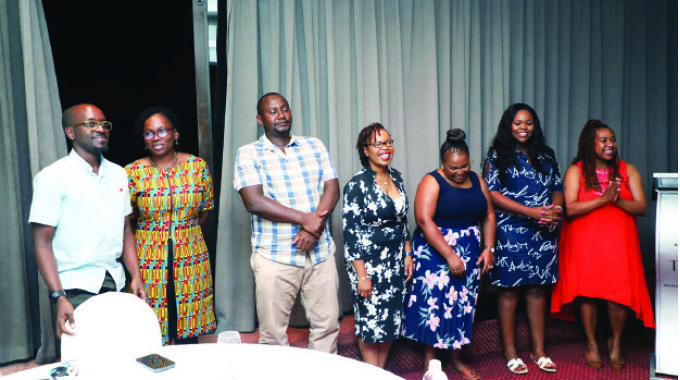
Rumbidzayi Zinyuke-Senior Reporter
More support for the training of doctors in the field of anaesthesiology is coming from Government to boost the number of specialists in the country, and ensure quality critical health care.
Zimbabwe, like other countries in Sub-Saharan Africa, has an acute shortage of anaesthetists and this has been cited as a flaw in the delivery of surgical care.
The country launched the national surgical, obstetric and anaesthesia strategy which is part of the overall National Health Strategy and puts emphasis on surgical care and surgical service delivery.
Speaking at the College of Anaesthesiologists of East, Central and Southern Africa (CANECSA) graduation on Wednesday, Health and Child Care Minister Dr Douglas Mombeshora said although the region had reported a notable increase in the number of anaesthetists, numbers were still below the minimum recommended figures for low and middle income countries.
“Recognising this as a significant challenge, I acknowledge the responsibility that comes with my office,” he said.
“Yet, I also bring this challenge to all of you, seeking collaborative efforts to explore the most effective ways of bridging this gap. As a tangible step forward, I personally commit to contributing to the fulfilment of this objective by providing sponsorship support to a yet-to-be determined number of qualified trainees who will commence their training in 2024.”
Dr Mombeshora called for engagement with partners to make similar commitments as this would further amplify the collective impact.
He commended the graduates for their commitment to the provision of quality care to the populations in their countries.
Dr Shingai Nyaguse, a specialist anaesthetist, said Zimbabwe still had a low number of anaesthetists despite the training programmes being offered.
“We remain severely understaffed. The World Health Organisation and the World Federation of Societies of Anaesthesiologists recommends a density of 5 per 100 000 population, but at the last count, we were at 0,56 per 100 000 specialist anaesthetists in Zimbabwe,” she said.
“We have been hit by brain drain and we are left with around 94 nurse anaesthetists. At some stage we were almost at 140 to 150 but they have fallen below 100 again. In terms of anaesthesiologist specialists, we are again around 89.”
CANECSA president Dr Mpoki Ulisubisya said the shortage of specialist service providers in the East, Central and Southern Africa needed to be corrected.
“One of the challenges that our region is confronted with is the dearth in the number of service providers at the level of specialists.
“We have many nurse anaesthetists and clinic officer nurses in various countries but at the level of the physician anaesthetists, the numbers are very few so these graduates are going to contribute to the growth of experts in the field of anaesthesia and critical care in the region,” he said.
He said CANECSA was a college without walls as individuals were recruited in the place of their work and trained as they were working, and this would encourage more trainees to take up the course.
One of the trainers, Dr Harunavamwe Chifamba, said the training for anaesthetists was hands-on and allowed doctors to be able to deliver safe anaesthetics. “We work with the trainees in our day to day work and as we are working with them we are also training them on how to deliver a safe anaesthetic until they are able to deliver even the complex anaesthetics. We also teach them to look after critically ill patients, some of whom need organ support while they are being treated in ICU,” she said.
Full story on: www.herald.co.zw
Seven of the anaesthetists who graduated on Wednesday were funded by Smile Train, an organisation which focuses on offering care for children born with cleft lip and palate, under a fellowship programme aimed at elevating the quality of surgical care in the region.
Smile Train vice president and regional director for Africa Mrs Nkeiruka Obi said their model hinged on building local capacity.
“That is why one of the key things we have done in the space of surgical anaesthesia care is to elevate the quality of care.
“By doing so, we are empowering the medical professionals within the cleft ecosystem with training, funding resources, in terms of equipment to be able to provide quality care to patients in the communities all year round,” she said.
“For us, working with colleges like CANECSA, is a milestone because we now have seven qualified specialists that have joined the team of anaesthesia providers on the continent. This also means that now as those children with clefts go under the effect of anaesthesia they are in safe hands.”
The graduates were happy at completing the course and becoming fully qualified anaesthetists.
Dr Tomanya Kenneth from Uganda said the training had been gruelling but worth it.
“This is the end of a long journey of about five years of rigorous training full of long days and long nights but the training has brought us to today,” he said.
“I am ready to take the next step in my career. Sub Saharan Africa suffers from an acute shortage of anaesthesia providers so I feel that I am the next foot soldier and I am next up in the fight (to provide quality care).”
Zimbabwe’s Dr Ruvimbo Barna said: “It has not been easy, but it has been fruitful.
“Every time I have a patient in my hands and they wake up and go home, it is a plus for me and it reminds me why I decided to be an anaesthetist.
“I am grateful to Smile Train, CANECSA and everyone who has taken part in moulding me.”


 Online Reporter