

 admin
admin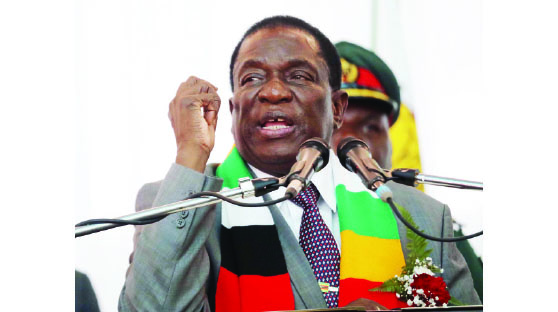
THE $500 million budgeted for the drug and substance abuse mitigation fund shows the seriousness of the Government to deal with the menace, and its determination to do this properly rather than just have the window dressing of crime statistics.
Announcing the budget in Bulawayo this week, President Mnangagwa stressed that the money was largely for treating those whose lives have been damaged by addiction and use of drugs, and to stop as many as possible from joining their ranks.
In other words it is user orientated, with users seen largely as victims who need help.
This is sensible. The battle against drugs has to be three-pronged: find and prosecute dealers, producers, smugglers and suppliers; clean up the mess that the drug trade leaves in its wake; and try and persuade as many people as possible to give experimentation with drugs a complete miss.
The police and other security agencies are now operating against the dealers, growers, manufacturers, smugglers and suppliers of drugs, arresting ever more of them and interdicting their supply lines.
This has to be largely a police operation, although communities and users need to come forward and name those they believe or know are supplying drugs.
We know that there is co-operation from other agencies when we hear that police have managed to catch a drug mule at an international airport with a large quantity of serious drugs, while “acting on a tip off”.
Hitting the supply chains is important, and every arrest at this level can take out the supply needed to damage 100 or more users and so is incredibly effective.
Increasing success will probably never actually totally cut the supply chains, but certainly as the risks increase, as more and more drugs are taken out of circulation before they are sold to users, so prices are likely to increase and make drug abuse less attractive.
The mess that drug use leaves, with addicts and many more with psychological or physical damage is a crucial part of the anti-drug programme.
This is where a caring Government needs to care and the sort of budget announced by the President starts putting serious money into the wide range of programmes and services needed to clean up addicts and restore drug users to becoming useful members of society once more.
It gives them that vital second chance.
Some jurisdictions see large numbers of arrests for using, and some silly smug satisfaction as a result.
But the global problem, and Zimbabwe’s problem, are so severe that arresting just a tiny percentage of users is not really going to fix anything. What is needed is stop them using, and hopefully get them to detail where they buy the stuff so that the police can go after the dealers and supply chains.
This has been done in the past, with ministers of religion for example after having parishioners confess privately or after a heart-to-heart talk with a follower, would walk into a police station with a bag of drugs surrendered by the user, and quite often a name of a dealer.
The police were happy to see stuff taken out of circulation and were grateful for the tip-offs. They were correctly far more eager to arrest a dealer than a young person who succumbed to temptation, although they hoped the religious minister would be able to keep the user off drugs in future.
But effective support for addicts wanting to walk away from drugs, and even for some more occasional users who are in constant temptation even if they have not reached the more harmful addiction stage, needs good backing, hence the budget.
The President’s announcement of a major upgrade in the services offered, and that includes making them easily available to drug abusers everywhere, shows what is required is being delivered.
Better help on offer also makes it easier to persuade abusers to take that step of seeking help as they put their lives back together.
The final prong is making potential users, and those just starting their journey into drug abuse, miss out on all the damage.
This requires education, a lot of positive peer pressure, and proper information being disseminated. Most importantly it needs to show young people that there are far better routes to true happiness than just getting stoned on some drug.
For those who are not convinced that campaigns to block user abuse can work need to think about legal tobacco smoking.
The campaigns, health warnings and the like have seen a dramatic slump in cigarette smoking, with this now being rare among young people who rarely miss the opportunity to berate middle-aged relatives who smoke.
We might even have more young people who have tried a mbanje cigarette than have tried a tobacco one.
So society attitudes can change and the younger generation can show a great deal of common sense for self-preservation when shown the dangers and the like in a clear, unemotional way, without blame being dished out, but with proper medical and other advice taking the lead.
We cannot pretend that drug and substance abuse is going to go away if we do nothing or just preach at users. It will not. We have to be far more serious than that and the Government sees this in both theory and practice.
We have a decent budget, we have the strong separation between dealers, whom the courts can handle, and the users who need social services, and we are mobilising our communities so that the police hear a lot more about dealing, with names and addresses, while users are persuaded to put their life back on course and potential users are advised to give the whole thing a miss and ignore the false sales talk that “this will not harm you and is fun”.
It will harm and it provides nothing more than a very brief period of fake, transient fun that will soon lead to growing health problems and despair.



 Online Reporter