Online Reporter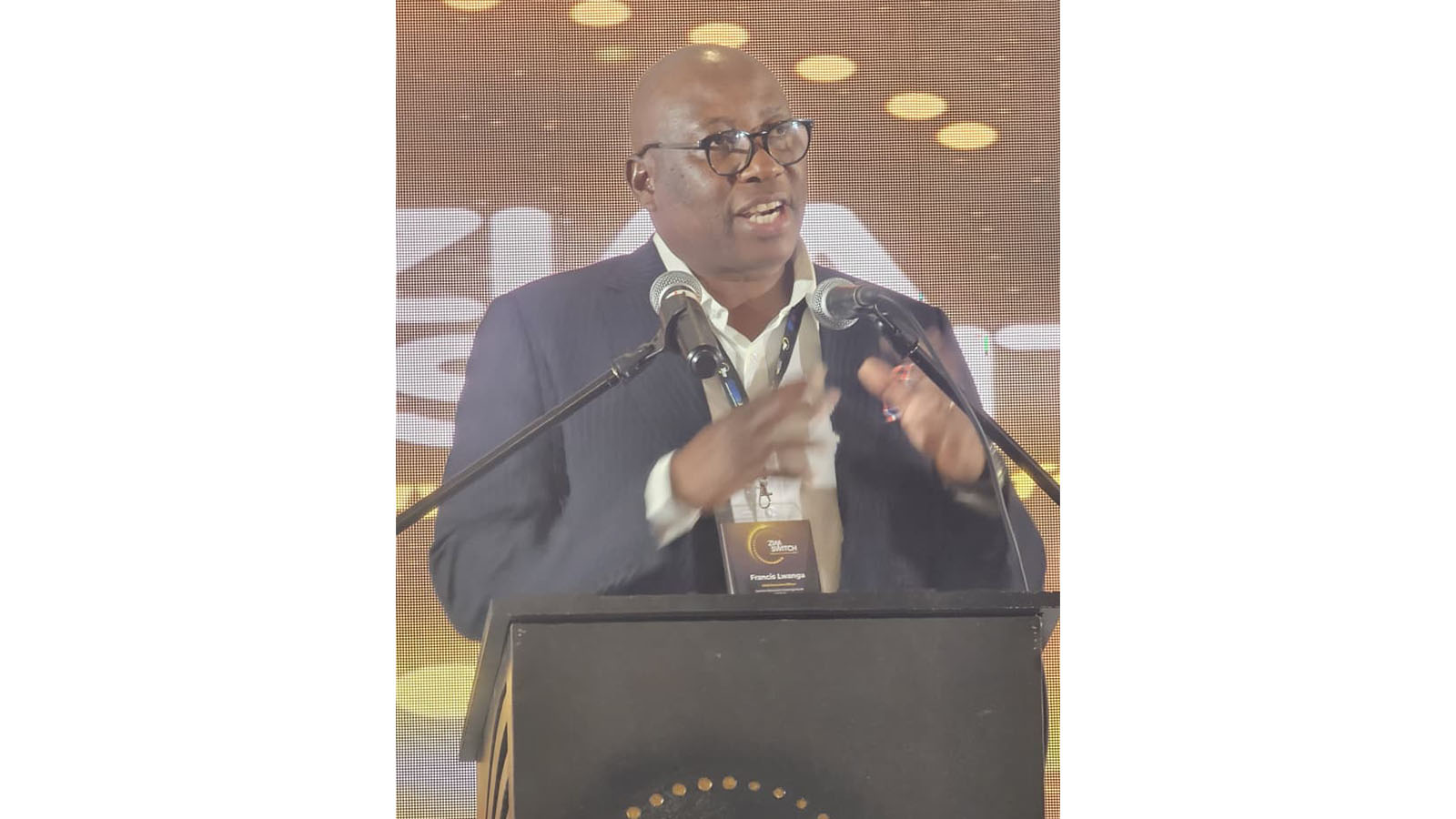
Business Reporter
Partnership is not optional but the path to future-ready, inclusive, and efficient financial systems, the chief executive of Zambia’s electronic clearing house has said.
Dr Francis Lwanga, CEO of Zambia Electronic Clearing House Limited (ZECHL), told delegates at the Zimswitch Payments Conference in Victoria Falls that integration efforts in Zambia have demonstrated how collaboration can transform access.
“Partnership is not optional. It is the path to future-ready, inclusive and efficient financial systems,” he said.
“In Zambia, integration efforts have demonstrated that collaboration can transform access. Global insights confirm that the system strength and ecosystem strength define the mainland in the payment space. But I can tell you that you cannot lose that in the payment space. Everyone is the mainland at the end of the day.”
Dr Lwanga said the key to success in scaling digital payments is interoperability through the national financial switch.
Before this, each bank had bilateral agreements with payment system providers and mobile network operators, despite being connected to the national financial switch.
“A directive was issued that eliminated all those bilateral agreements and enabled everyone to connect to the switch,” he said.
Dr Lwanga highlighted a challenge facing fintechs and payment service providers, which are required to have a sponsor bank to be onboarded into the ecosystem.
“Here the fintech is bigger and better in terms of advancement. But the requirement is that they need a sponsor bank. Because of their size, you find that there are very few banks to be approached to be sponsors,” he said.
He said the strategic bank-to-fintech alliance is mostly about distributing risk and capital, as well as massive retail distribution across the country.
“Fintechs tend to be more commercial, with less focus on corporate equity and compliance structures,” he said.
He noted that banks, fintechs, and other system providers operate in the same financial marketplace but are regulated differently.
“The level of regulation being different means the other guy has more leverage and can speak to the market because the regulation is big,” he said.
“The discussion is how to ensure that we also relate to the level where there is confidence in the markets. Those discussions are ongoing. I remember in Kenya and Tanzania having the same discussions over the market,” he said.
Dr Lwanga said the Zambian government is developing a Government Service Bus offering a range of services including insurance, vehicle fitness, driver’s licences, and land titles.
“So what’s happening now is that if you are a citizen of Zambia, you can pay for all these services digitally,” he said.
Dr Lwanga explained why financial inclusion is central to the discussion.
“Financial inclusion is key to this discussion because in cities there is saturation in terms of onboarding of clients to be involved in the payments ecosystem,” he said.
“In order to achieve meaningful financial inclusion, we must reach the underserved populations in rural and peri-urban areas, not just those in urban centres where saturation has already been achieved.”