admin
admin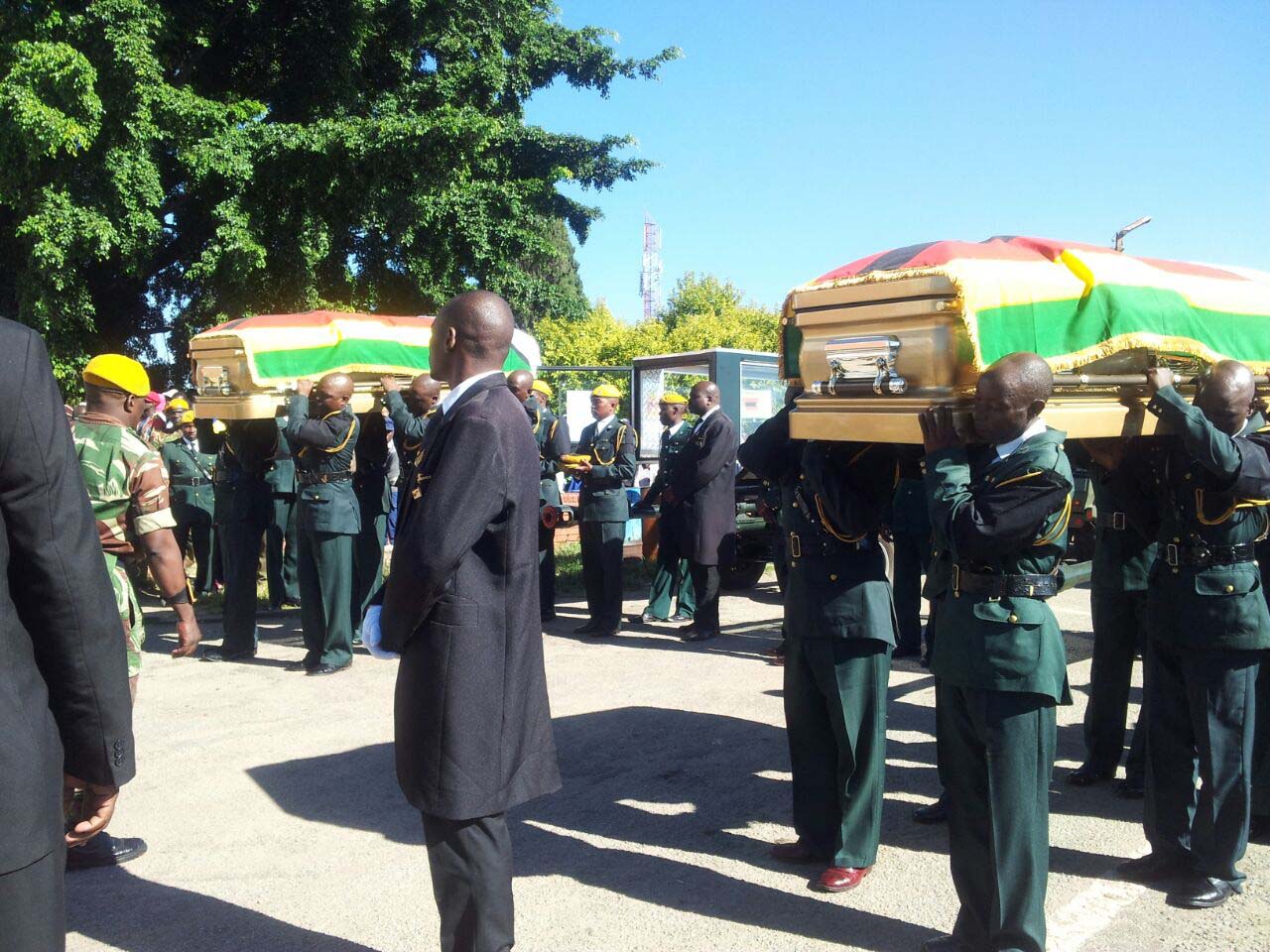

YESTERDAY, the National Heroes Acre witnessed the interment of two gallant daughters of the soil, Cdes Victoria Fikile Chitepo and Vivian Mwashita whose Chimurenga name was Kundai Mabhunu.
Following their demise on April 8, the two heroines were accorded the nation’s highest honour, national heroine status and were accordingly buried at the National Heroes Acre.
Cdes Chitepo and Mwashita became the seventh and eighth heroines, respectively, to be buried at the national shrine since the first heroine Cde Sally Mugabe was laid to rest on February 1, 1992.
She was followed by Cdes Joanna Nkomo (Mama Mafuyana (2003); Julia Zvobgo (2003); Ruth Chinamano (January 2005); Sunny Ntombiyelanga Takawira (2010) and Sabina Mugabe (August 2010).
The two women lived illustrious lives that should serve as an inspiration to millions of girls not only in Zimbabwe, but the world over, unfortunately they have largely gone with their life stories with destiny decreeing that they pass on the same day and are laid to rest side-by-side at the national shrine.
This introspection is through an African genealogical saying: “When an old man dies in a village, a whole library burns down”. Others also say that “when an old woman dies, a school burns to the ground.”
It means that; “African oral history is especially valuable and suffers a great loss with the death of each elder.”
As their caskets were being lowered down, we were only too aware that not only have two libraries been burnt to cinders, but these are also school libraries that have gone up in smoke.
Why do we say so? These heroines went with their collective memories about their experiences before and after Independence.
It is a collective memory that cannot be retrieved because we have not found it important to record that memory in books, documentaries, films and other formats.
A Zimbabwe that boasts highest literacy rates on the African continent, is failing to record its own narrative, but would rather have benefactors with ulterior motives come and do it for them.
Should it then surprise us when the hollowness in ideological orientation displayed by some in the revolutionary party becomes the wannabe for the country’s young people?
The youths cannot shoulder the blame alone because there is no literature to refer to. The oral nature of information they have about the liberation struggle/revolution, the party and the country are not sustainable.
A good example is recorded in the Bible. Joseph rose from being a slave to prisoner and finally the second in command to the Egyptian Pharaoh. The book of Exodus articulately records that later, another Egyptian king arose who did not know about Joseph and the consequences for the Hebrews were catastrophic.
Right now, some of us, the educated especially, are busy reading what the Rhodesians are writing and in the process are aiding and abetting their hidden agenda to re-frame the liberation struggle and our Independence, when we comment ad infinitum about their revisionist historical accounts.
We talk the Emperor and slowly, but surely, the latter is erasing our institutional memory about the struggle.
This means that we did not get our priorities right and there is a heavy price to pay. The Togolese say, “Wherever the heart is, the feet don’t hesitate to go.”
When we don’t dare do this very important element of our history, then it will remain difficult and undoable.
It is shameful that when they die, our veterans’ memories, experiences, pain, laughter, desires are buried with them.
Indeed, we are burying more than bodies.



 Online Reporter