admin
admin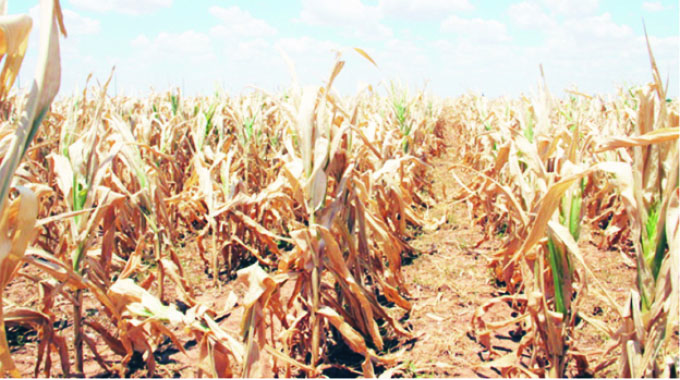
AS Zimbabwe copes with the drought that hit the country last season, the expectation of better rains in the coming cropping season has seen a commitment for a ZiG22 billion (US$1,6 billion) summer plan to regain and expand the progress made under the Second Republic.
Weather experts see the very severe El Nino that caused the Southern African drought being not just of short duration, but probably being succeeded as soon as this coming season by a La Nina.
This should produce above normal rainfall in the region, although even normal rainfall or something close to normal would be enough for record harvests of food and cash crops.
One of the growing strengths of the Zimbabwean economy is that the large investment needed in inputs, mainly fertiliser and seed, will have a majority component from the private sector, with around 60 percent of the total.
This is important as it shows the growing normalisation of the economy and the success of Government policies.
This also allows the Government to direct its own available finances where they are needed most, largely among the farmers who cannot at present obtain private finance and do not have their own resources.
The Government, with its 40 percent, will be concentrating on the smallholder communal and resettlement farmers, most of whom will be recovering from a very severe season and having negligible resources of their own, although willing to do the hard work required to put in a new set of crops.
The Government is maintaining both the promise to back those small-scale farmers who are serious about farming, and at the same time wanting to see proof of that seriousness by the needed land preparation demanded in the Pfumvudza/Intwasa programme.
Every single farmer who digs the plots and gathers the mulch will be getting their inputs. In other words, the Government will be backing the hard-working and committed small-scale farmers, but only those small-scale farmers.
The old and other extremely vulnerable households might need help, but that comes through social security measures, not farming.
The decision to back the real farmers also means that attempts to divert and sell inputs will be largely ineffective, because the real farmers will complain bitterly if they see any such moves. Fertiliser companies are building up their stocks, and a new operator has joined the older companies manufacturing in Zimbabwe.
Fertilisers made in Zimbabwe these days will use around 50 percent local raw materials. The potassium salts and a large block of the ammonia still need to be imported, although in time, the Muzarabani gas strike should allow Zimbabwe to become an ammonia exporter.
The seed houses have enough maize seed in stock, and the Tobacco Industry and Marketing Board has the correct varieties of tobacco seed available. In cotton, there has been growing use of hybrid seed, promising far higher yields, and this is likely to continue.
The exceptionally rapid growth in planting and harvesting traditional grains and sunflower, now seen as becoming the main oil seed crop, has been straining the seed companies and once again there will have to be imports of some of the required seed.
Traditional grains, which have tended to be the poor relation of the grain world since the 1920s when maize became dominant, are now being pushed hard by the seed houses, who have already started the breeding programmes that should see commercial hybrid seed available within a couple of years.
Traditional grains are indigenous to Africa and were domesticated on the continent. So there are hundreds of potential varieties.
Most importantly, the crop evolved already adapted to African conditions, and in particular the problem of rainfall breaks within the growing season.
When there is a long dry spell in the growing season, maize wilts and dies. The traditional grains just stop growing, and when rain falls again, they start growing.
They are also more drought-resistant, but they do need a minimum of moisture, which is why they can die back in a severe drought, but generally they will give a crop, while maize simply dies.
This is one reason why they have been pushed so hard for the drier ecological zones, and encouraged in the other zones.
There are still problems with the fact that modern research tended, until recently, to largely look at varieties suitable for stockfeeds, although the latest research is also looking at the taste and other tests of acceptability as a crop for a healthy diet.
The major input of First Lady Auxillia Mnangagwa and others interested in traditional nutrition and recipes has also seen demand for traditional grains building up among urban and middle income households, so it has been shedding its previous “poor person” image and becoming a desired crop. Better breeding programmes should see a return of the varieties that formed the basic Zimbabwean diet for thousands of years.
We would hope that the intensive breeding programmes of the seed houses, looking at high-yielding hybrids, will produce the desired varieties, ones that are drought resistant, high-yielding and have exceptional taste. It should be possible to tick all three boxes once the minds of research workers and companies are correctly directed.
The determination to go flat out on the next summer season also brings up the need for irrigation. There has been a lot of work done recently to ensure that we develop, and maintain, our irrigation infrastructure and now the Government has invited investors who can help capitalise the sector and form public-private partnerships where the Government lays on the water and the private sector gets it to the crops which need it.



 Online Reporter