

 admin
admin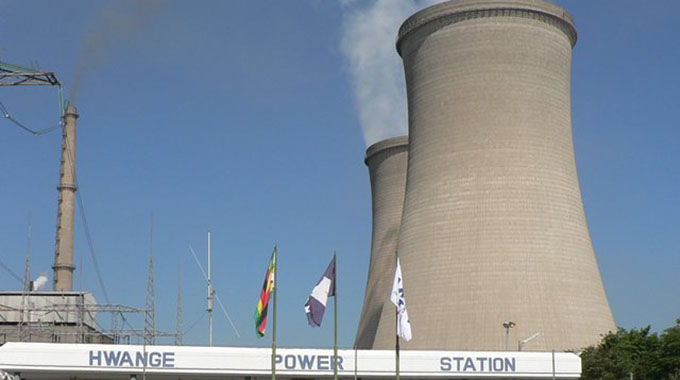
The rehabilitation of the original six units at Hwange Thermal Power Station, now firmed up to start as soon as the latest two 300MW units are commissioned next month and in the first quarter of next year, becomes the quickest way of adding another large block of secure generation, around 500MW, to the grid.
The confirmation that the Export-Import Bank of India is prepared to advance US$310 million, which should cover at least the better part of the replacement equipment, was very good news.
The station is old, and rehabilitation means the replacement of a fairly large chunk of the equipment, not just fixing a bit here and a bit there. The skimped maintenance over the last two to three decades means that a lot of things that would normally be replaced or completely overhauled routinely as they failed was not done, and so all this has to be done in one fell swoop.
The original four units at Hwange, known as Hwange I, each of 120MW were commissioned in the mid-1980s between 1983 and 1986 as the then new post-independence Government bought and installed the mechanical and electrical equipment into the substantial civil engineering works put in place by the UDI regime and then mothballed when sanctions prevented imports of that equipment.
Work on the second phase, a pair of 220MW units, started while the first phase was still work in progress so was commissioned quickly between 1986 and 1988. While the new station had a design capability of 920MW, the cooling system was not adequate and so maximum output was only just over 800MW, but this in practice should not have been a problem as for much of its designed working life one unit at a time would be under maintenance, preventative maintenance, and so the other five could operate at full blast.
There was a lot of nonsense being said a few years ago that a coal-powered thermal power station only had a lifespan of 25 years. There are many coal stations in many parts of the world, for example in South Africa, which are a lot older than that.
No one abandons them so long as the coal mines that feed them are still operating. But to some extent that quarter century figure does reflect that over 25 years most of the mechanical and electrical equipment in a boiler-turbine-generator-transformer unit will need to be replaced or rebuilt during routine maintenance.
Bits fail at different rates and at different times. In most coal stations the coal feed and the boilers wear out faster than the steam feed, the turbines and the generators since the “dirty end” of the unit of the unit has to cope with the abrasion of the pulverised coal fuel and no matter how well that is designed and maintained there is more wear than at the “clean end”.
But power station operators expect this. The first six units of Kariba South were commissioned in the very early 1960s and over the decades almost everything has been replaced at least once, and that is in a station which intrinsically suffers less wear since water is a far cleaner and less troublesome “fuel” than powdered coal and high pressure steam.
However, at the same time maintenance was more rigorous by Capco in the first two decades and Zesa in the last four. In fact Zesa tends to do the required annual routine maintenance at around this time of the year, when demand comes down from winter peaks, pulling down one unit at a time to give it a thorough going over.
Hwange maintenance has tended to be more ad hoc, fixing something when it breaks. We saw this at its worst a couple of weeks ago when all four units that were running went down with different sorts of fault over a few days. These were fixed.
Indeed, over the years a fair amount of the fixing has involved extensive replacement of totally worn-out parts and equipment and even a major overhaul of sections of each unit, but we are long past the stage when the full rehabilitation overhaul was needed.
This was recognised right at the start of the Second Republic when a lot of intrinsic problems were sorted out, in particular the costing of power to consumers so finance flows were finally available for proper maintenance.
Unfortunately, the mid-1990s decision to rely on growing imports rather than build new power stations at regular intervals meant, as much of the surplus capacity in the Southern African Power Pool was absorbed, that a lot of things had to be done simultaneously and forcing the old equipment to run as well as possible was the only solution as new generation capacity was added.
Kariba South Extension, commissioned early in the Second Republic, gave Zesa a lot more flexibility to use the same water ration from the Zambezi River Authority to generate more power at peak periods while cutting back sharply at Kariba during off-peak periods, when Hwange should have been able to shoulder the load.
The Hwange Extension was planned to take up that burden sooner, but Covid-19 delays meant this was delayed to what is basically now.
But within a few months the rebuild of those first six units can finally start. Much of the preparation has been done, with a consultant now just checking the planning calculation and making sure everything is included, normal in this sort of operation although the Zesa engineers will have done the heavy lifting. Zesa is planning to do the rehabilitation on pairs of units at a time, which should speed up progress.
While things will continue to be bit tough, although a lot better than now, even with the extra 600MW from Hwange III we get ever growing breathing space from the day the first pair of rehabilitated units are recommissioned.
But Zesa also has to follow laid down maintenance schedules both at Kariba South and especially at Hwange in future as the new and rebuilt units come on line, rather than wait for something to break down.
And it needs to operate its two major stations following best practice, which means Hwange units are not switched on and off several times a day while Kariba South carries base load, but are kept running while the hydro station, which is really good for this, copes with peaks and variations.
That operating system was done to reduce costs, since Kariba power is cheap and has no fuel costs, while a thermal station needs continuous supplies of coal, but switching on and off all the time wears out equipment faster at the thermal. Even when the new 600MW comes on stream the percentage of cheaper hydro power in our energy mix will be lower, and when Hwange is up to 1 520MW the percentage will be lower still, and regrettably there will be the finance costs of having all our thermal percentage coming from new or newly rebuilt units, so costs will rise. The fuel and the need to repay loans will ensure that.
Zera, the regulator, will need to go through Zesa figures carefully when approving the new tariffs, but most consumers will understand and, with a sigh, pay more in return for 24/7 power supplies. If nothing else Zesa power will still be a lot cheaper than generators, candles and gas, and more convenient. But we are talking about 24/7 to justify any rises and that places the ball in Zesa’s court.



 Online Reporter