Online Reporter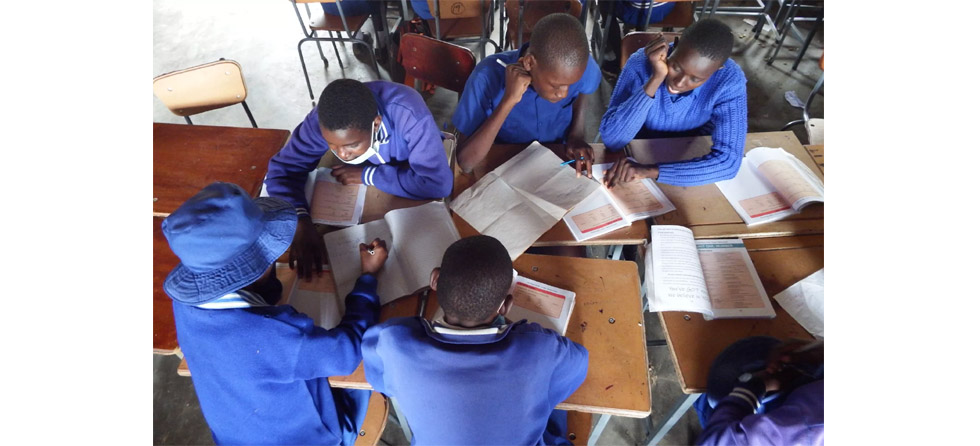
ORDINARY Level pass rates are rising under the reforms of the Second Republic, now exceeding 35 percent, the highest since the advent of universal secondary education after independence and allowing all children to sit O-Level.
As resources are added to the system, with more teachers, better equipment, better infrastructure and hammering away at the inequalities inherited from the past, so no school, no area and no pupil is left behind, we can expect continued improvement.
Part of the reforms are the stress on quality, especially in the basics, rather than just on numbers in the national budget.
It does not matter how many, extra teachers you employ unless they are willing to do their level professional best to raise standards and help each and every child.
Fortunately this appears to be what is happening, with a lot more community and parental support encouraged, wanted and coming forward.
Pass rates across schools can still be high variable, but to a large degree this is a result of parents choosing a school and school heads being keen on getting reasonable numbers of the higher graded Grade 7s.
Such selection usually means that a chosen child has the intrinsic ability to pass, given a reasonable environment and decent teaching.
But overall, looking at all O-Level candidates each year across all schools, it is obvious that while more can and is being done, the inherent nature of the O-Level examination means that pass rates are unlikely to exceed half once the variations based on initial selection in schools are taken into account.
This is still better than what the original designers of O-Level were looking at. It was never intended to be a universal examination although, as school leaving ages were raised and teaching improved in a comprehensive environment, such as we have in Zimbabwe, that it needed to be coupled with another less-academic examination so that most children could show what they were capable of.
Colonial Zimbabwe was an oddity. Secondary schooling for black children was severely restricted with well under a quarter allowed to sit O-Level, and the numbers going each year on to A-Level measured in scores. This meant that the O-Level and A-Level classes had exceptionally high pass rates.
The advent of universal education after independence saw many parents and, for that matter, many others in society, assume that similar pass rates were possible when everyone moved forward. And quite often there has been serious disappointment. More importantly this has tended to divide school leavers into two groups, those who made it through the O-Level system and those who did not.
Two major system reforms of the Second Republic have eased that gap. Vocational colleges are now well established and being expanded into every district. This allows a lot more people to achieve the practical skills they need to move forward into earning a reasonable income, and not just condemned to the dichotomy between O-Level certificates and earning a living with a shovel.
The second reform is the advent of the heritage-based Education 5.0, which while retaining the necessary background of theoretical knowledge, places demands and stress on how that knowledge is used, and over a lifetime is added to.
These two reforms, plus the general increase in quality, would seem to allow the introduction of the lower level examination that so many countries have found useful. The fact that most school leavers are going to have to earn their own living, rather than finding someone to hand out a monthly pay packet, means that they need to be far better prepared.
The Education 5.0 stress would seem to allow two levels for the theory part, but perhaps just one for the practical part. Vocational centres could almost certainly upgrade their own teaching, as they will in any case have to with most children entering them already knowing a lot of the old syllabus, to take into account the theoretical background of those applying.
This in some ways is how the old polytechnics got started, before they upgraded to technical colleges, and one can foresee that the continuing education of the vocational centres is following similar lines as they have something firmer to work with.
When we come down to it, education is not about certificates framed on the wall. It is a process that helps children become productive adults earning a good living, in fact an upper middle class income if Zimbabwe’s Vision 2030 is to mean anything outside the national statistics and national averages.
This means that over the four-year basic entitlement to secondary education that every child receives, the task is to make sure they benefit fully and, in any case, benefit enough so they can move into skilled work in farming, mining, home industries and major factories.