Online Reporter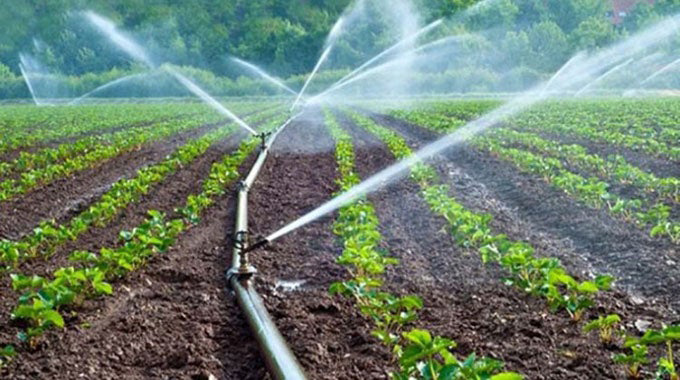
Irrigation is the obvious way forward for Zimbabwean agriculture, and many bright ideas are being implemented to ensure all farmers benefit.
Correct irrigation techniques are essential to preserve production costs and secure the best profit margins.
This involves far more than the 37 percent jump in functional irrigated areas from 173 000 hectares in 2019 to 237 417 hectares last year.
Capacity is the starting point, but it must be continually expanded.
Equally important is helping farmers to read market forces, developing markets for desirable crops, and ensuring that the extra water adds significant value to Zimbabwean agriculture and farmer incomes.
Everyone is aware of how rainfall patterns are changing with climate change.
It is not just the risk of more droughts, but also distortions in rainfall.
While enough rain may fall in a season, uneven distribution can leave fields waterlogged for weeks and then stressed by dry spells.
This has always been the case, but it is becoming more pronounced, and this is where irrigation proves useful.
Farmers with irrigation equipment and water supply have often advocated supplementary irrigation of summer crops, rather than the full irrigation needed for winter crops such as wheat.
This approach reduces spending on water and energy, while allowing partial irrigation of larger areas with the same equipment and inputs.
Supplementary irrigation is used for earlier planting and seed beds, but farmers also aim to maximise the use of free rainfall.
Additional water from irrigation naturally increases crop value, leading to better prices and higher volumes for sale.
If much of the water input is still natural rainfall, the farmer benefits twice: higher prices and lower costs.
We now need to accelerate the development of flexible irrigation among smallholder farmers.
Irrigation schemes are being developed and allocated to this sector, giving smallholders access to irrigated land.
However, flexibility remains limited, with few options for farmers to maximise the value of both dryland and irrigated plots.
President Mnangagwa partly addressed this last year with his smallholder irrigation programme, under which a farmer receives equipment and rights to manage a hectare initially, repaying costs through crop sales.
The farmer can then expand capacity and progress further.
Since then, farmer‑driven research has produced affordable, practical solutions that can be used by competent smallholders without requiring specialist expertise.
Another critical area is market development.
Pfumvudza/Intwasa was more than just well‑researched farming techniques, well‑prepared fields, and input supply.
It also guaranteed that whatever the farmer produced, the Grain Marketing Board would buy at the prevailing price.
This eliminated unscrupulous middlemen and provided a stable market, even in times of surplus.
Similar support and guarantees are needed as more irrigated grain and other crops reach markets.
Farmers must calculate the level of inputs, including irrigation, that will yield the best profit as well as the best value.
For specialised crops, the private sector will play a larger role, seeking quality ingredients for food processing and export markets.
This requires close cooperation between Government, private sector and farmers to maximise value from irrigated land.
While food security remains the core priority, irrigation should not be limited to staple crops.
We have already seen Matabeleland farmers with irrigation rights producing hay and silage, either to feed their own cattle or to sell to ranchers seeking cheaper stock feed.
This improves profit margins in livestock production.
As irrigation spreads, more opportunities will emerge.
Zimbabwean agriculture will not be confined to irrigated winter wheat and dryland summer maize, but will evolve into a complex mix of techniques focused on value, profits and farmer incomes.
Ultimately, that is the true purpose of the irrigation drive.