admin
admin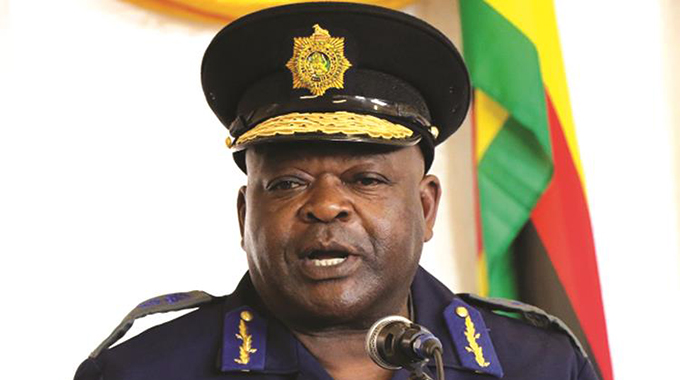
Zimbabwe has been very peaceful, at least as far as politically-related violence is concerned, so far in the run up to the elections in just under three weeks, a position that we need to preserve.
The police are keeping a close track on all violence and especially on the reports of malicious damage to property, which can include everything from a stone through a window all the way to arson and the gutting of a house.
Investigations appear to be detailed, so that if any of these incidents has a political motive, or is largely political, then this can be highlighted.
Commissioner-General Godwin Matanga came out with details this week, necessary after two serious incidents of arson that killed a total of eight people. But while these two fires are tragedies, exhaustive police investigations have linked them to “normal” crime, rather than politically motivated crime.
In one, a man was trying to seduce his adult niece, something against both traditional and statute law. She fled so he deliberately set fire to her house, sprinkling petrol.
The blaze killed himself and three of the four children of his niece, with the fourth dying of her severe burns in hospital.
It is a horrific crime, and if the man had survived he would be facing serious charges starting with four counts of murder, a count of arson and working down. But he is dead and now beyond the reach of at least earthly justice. But it was not politically related in any way.
The second fatal attack against property saw two mature women aged 65 and 70 dying with a 12-year-old when their thatched bedroom was set alight. The police investigations discovered that one of the women had been chased away from where she was living by her son, after being accused of witchcraft.
The police are now tracking down the still unidentified murderer, but after looking at all angles are satisfied that the killings and the arson were an attack by a superstitious person on someone they thought was guilty of witchcraft and, after looking at other possibilities, have ruled out any political connection.
Again we have an horrific crime that will lead to charges of murder and arson when the perpetrator is caught and tried, but again there are zero politics involved.
There were eight other incidences of malicious damage recently, fortunately with no more murders and deaths. Police are still investigating these thoroughly and there are suspicions that in some cases there could be political connections.
In one, damage to a house in Chitungwiza, the police investigations have centred on a dispute between two CCC candidates for the same Parliament seat.
We can leave the police to sort this out and while it is likely to be political in nature it does not involve violence between supporters of different parties and so has little impact on the wider society. Police think there might be at least some political connections in two other cases, the destruction by arson of some cattle pens in Chiweshe and the setting alight of 10 huts in Shurugwi.
But the two sets of investigations are still in progress and the police have not drawn any firm conclusions.
This is despite the fact that the 10 huts were owned by six Zanu PF supporters, but detectives are being careful not to jump to conclusions.
Many people support a political party and still get robbed, mugged and have their property damaged for non-political reasons that have nothing to do with which party they support. The police in this case have managed to track down and arrest two people they believe were responsible, but until further evidence comes available they are not going to jump to any conclusions concerning motive.
This sort of care we are seeing, both in finding out what happened and then launching manhunts against suspected perpetrators is what we expect from the police.
The investigations are not trying to score any points. If a crime has been committed the police want to know who committed it and want that person to be arrested and tried.
In the end it does not matter what the motive for a crime was. A crime is a crime. Motive can be at times a factor in the sentencing stage, when mitigating and aggravating evidence is considered when a court is setting the appropriate sentence.
But we cannot imagine any magistrate or judge accepting that “it was just politics” as a mitigating factor, and most may well see it as an aggravating factor, and rightly so.
There are no differences in Zimbabwean law between crimes committed for any reason or even no reason. But on the other hand it is useful to know around election time if there are any political disputes that have gone violent, so they can be hurriedly contained and revenge or other action prevented.
It would also give Comm-Gen Matanga and his force an indication of the sort of precautions that might be needed.
Comm-Gen Matanga made it very clear that the police want a peaceful election with zero violence, zero threats of violence, that is intimidation, and the voters able to assemble lawfully at polling stations and decide in total freedom who they want to be their local councillor, their MP and their President.
He urged all parties to urge their supporters to first be peaceful and secondly, if they were threatened or attacked or had property damaged to see the police, and not take any other action themselves.
Zanu PF have made this a constant at all their meetings, from the lowest council candidate to President Mnangagwa himself.
Opposition parties have been less precise, although to their credit some opposition candidates have been as vehement as the President in their exhortations for peace and order. But this should be routine at all meetings and from all candidates.
We expect all parties and all candidates to seek votes and support, but to seek them lawfully without threats and without violence.
Of course that electioneering will often bring up what could happen if the “others” get in and implement their policies, but that is acceptable, as is calling into question the competence of a party or its candidates. This is politics. But these remarks cannot go beyond words.
They may well be other disputes. But here we have the courts. We have already had a pair of civil cases brought as urgent actions in the High Court and both proceeding to the Supreme Court, from where there is no appeal.
The net result is that a candidate lost one case and a group of candidates won the other case. There cannot be universal happiness over the two final results, but the courts have done their job and we all just have to accept their decisions. There is also, as provided by law, Electoral Courts to hear petitions. The Judicial Service Commission, through the Chief Justice, has put a large fraction of the High Court judges on standby to hear petitions concerning Parliamentary elections and the judges of the Constitutional Court are on standby to hear promptly any petition involving the Presidential election.
We should all let these courts make their decisions if any petitions are presented without trying to influence events through post-election violence or threats of violence. Someone has to sort out any disputes and our Constitution states very clearly that the best people to do this by training, temperament and experience are independent judges, not groups of fanatical supporters or parties to a dispute. We wonder who could possibly disagree.



 Online Reporter