admin
admin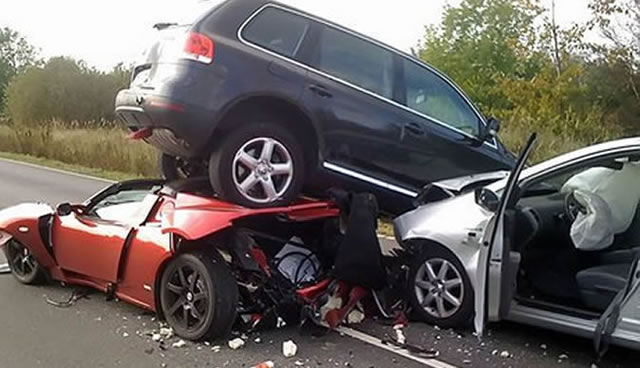
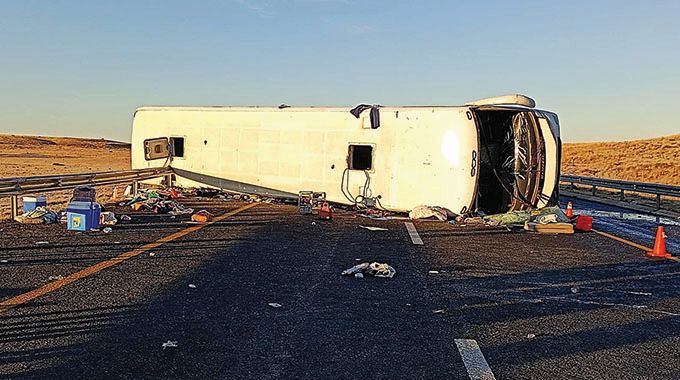
 Holiday accidents in Zimbabwe continue to be a cause for concern for both the travelling public and authorities. A total of 38 people died in road accidents during the just-ended long weekend during which the country commemorated the Heroes’ Day and Defence Forces Day holidays on Monday and Tuesday respectively.
According to the police, the accidents recorded between Friday last week and Tuesday this week also left 70 other people injured. The police attributed the accidents to the usual mistakes of speeding, overtaking errors, negligent pedestrians and an increase in the volume of traffic among other causes.
On Sunday the police had indicated that the Heroes and Defence Forces holiday traffic accidents and death toll had this year significantly dropped by 75 percent compared to last year.
But by the end of the holidays it has since been confirmed that the number of accidents actually increased from 237 crashes last year to 283 road accidents this year. During the same period last year 24 people perished in road accidents while 129 were injured.
The statistics show that there is still work that needs to be done in taming the high incidences of accidents on our roads.
It means police must continue to maintain heavy presence on the highways through roadblocks, carrying out blitz and awareness programmes prior to holidays.
We believe the awareness campaigns should become a permanent feature throughout the year and be intensified as we approach weekends and holidays.
This is because it seems drivers and other road users are continuing to make the same mistakes that lead to accidents, leaving people dead and others maimed.
The majority of accidents on our roads are caused mainly by human error and it is on few occasions they are a result of the condition of the vehicle.
Speeding, overtaking mistakes, general negligent driving and the rising number of unlicensed drivers on our roads contribute to more accidents.
This is not to say police and other authorities should relax when it comes to checking the roadworthiness of vehicles.
They should also keep an eagle eye on the condition of vehicles.
We commend Transport, Communications and Infrastructural Development Minister Nicholas Goche for warning that all unroadworthy public service vehicles risked losing route authority permits and the cancellation of the drivers’ licences.
Perhaps similar action of revoking the drivers’ licences should also be taken against drivers of unroadworthy private vehicles because they also carry passengers, whether family members or strangers offered lifts.
The country’s roads have been turned into death traps and there is no respite in the high number of crashes that Zimbabwe records on its roads.
The crashes, most of them fatal, increase each time there is a public holiday.
Recently Zimbabwe hosted the International Association of Roads Congress in the resort town of Victoria Falls, which presented the country with an opportunity to learn from other countries how to curb road accidents. The congress heard that a total of 1 986 people died on the country’s roads last year alone with human error accounting for the majority of the fatalities.
Government said in the last decade Zimbabwe has had its fair share of accidents and fatalities.
During the decade under review, 2003 recorded the highest number of deaths with 3 549 people perishing on our roads.
Four years later there was to be an encouraging downward trend when the number of deaths dropped to 1 037 in 2007 but unfortunately the country has been witnessing another rise in the number of fatalities with 1 986 people perishing on our roads last year.
The statistics are unacceptable given that the vehicle population in Zimbabwe is only around 800 000 against the country’s population of 13,5 million people.
By comparison, Sweden which has about nine million vehicles recorded less than 300 fatalities in 2012.



 Online Reporter