

 admin
admin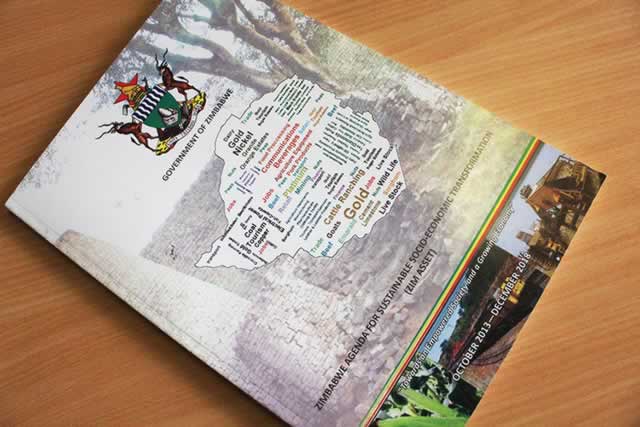
 THE ruling Zanu-PF party’s resounding victory in the July 2013 general elections meant that Zimbabweans gave it a clear mandate to lead the country for the next five years and high on their expectations was a gradual turnaround of the economy. The party’s election manifesto centred on its economic blueprint — the Zimbabwe Agenda for Sustainable Socio-economic Transformation (ZimAsset) and the Indigenisation and Economic Empowerment drive.
These two are key to government’s efforts to steer the economy to prosperity. Since getting an overwhelming mandate to govern the country, Zanu-PF has not been able to devote its collective energies towards the economy due to a number of internal matters that threatened to tear it apart.
The party had to deal with an internal revolt that saw former Vice president Joice Mujuru and her cabal seek to seize power through unconstitutional means. Granted, it has been a turbulent couple of months for the ruling party but the 6th National People’s Congress in December put to rest all the scheming and quelled a rebellion that would have torn the party apart.
With a new Cabinet in place and Mujuru and her cabal having been neutralised, it is trite that Government focuses entirely on the economy. Finance and Economic Development Minister Patrick Chinamasa has been playing a delicate balancing act as he runs Treasury with limited resources against a plethora of competing demands.
The civil service salary bill is his biggest headache and there have been calls to rationalise the government workforce because it is just too bloated. With more than 80 percent of the government revenue going towards meeting the salaries of civil servants, the situation is unsustainable. Calls by Zimbabwe Revenue Authority boss Gershem Pasi and Reserve Bank of Zimbabwe Governor John Mangudya for a salary/wage freeze are reasonable given the prevailing constrained economic situation.
As the man charged with collecting revenue for the Government, Pasi is well placed to make the call. There is very little activity in industry with capacity utilisation levels very low. However, the informal sector has managed to thrive and needs to be supported to contribute to the broader national economy. We also feel industry can contribute significantly to economic turnaround efforts by heeding calls to reduce prices.
We believe a solution can be found to the issue of price reduction through continued engagement between government and industry. Mega deals signed by Government with China and Russia are beginning to bear fruit and last week, we reported that investors are warming up to opportunities in the country and government has so far entered into agreements worth approximately $1,6 billion.
The deals include $533 million for the Kariba South Hydro-Electricity expansion project, $154 million for the Victoria Falls Airport runway and terminal building, $218 for NetOne expansion, $100 million for medical equipment and $144 million for rehabilitating Harare water and sewer reticulation that have been secured from China Eximbank. Russian investors have invested significantly in the Darwendale platinum project.
The other deals include $98 million that has been secured from Brazil for agricultural equipment, $28,6 million for Deka Pump Station in Hwange and $294,2 million from the European Union, World Bank and African Development Bank. Apart from the above deals, there are other ventures that are close to fruition and they include the Hwange Thermal Power Station Phase 7 and 8 expansion, rehabilitation of the Harare Thermal Power Station and joint venture agreements for the construction of Kunzvi Dam, dualisation of Beitbridge-Harare and Harare-Chirundu highways and the Batoka Hydro Electric project.
Hwange Colliery Company last week sealed two deals worth $31,2 million with a regional and international financial institution for the recapitalisation of the firm. The mega deal will see the refurbishment of a key energy player in line with ZimAsset which identifies power and energy as key drivers of the economic turnaround programme.
The vendor-financed transactions will see Hwange acquiring mining equipment from BEML worth $13,3 million funded by India Exim bank. The other batch of equipment worth about $18,2 million will come from mining equipment supplier BELAZ under the PTA Bank loan facility. Hwange has been operating below capacity due to use of obsolete equipment resulting in production inefficiencies.
It is also saddled with huge debts amounting to $160 million and this has negatively affected the company’s ability to access lines of credit. The new equipment will boost production at HCCL and assist it to clear its debts.
In another development, President Mugabe last week commissioned state of the art medical equipment in Harare worth $100 million, expected to overhaul the country’s health delivery system. The equipment was bought using a loan sourced from China as part of mega deals struck during the President’s 13th State visit to China last year. All this points to a bright future and optimism around prospects of turning around the economy is not misplaced.


 Online Reporter
 Bongani Ndlovu