

 admin
admin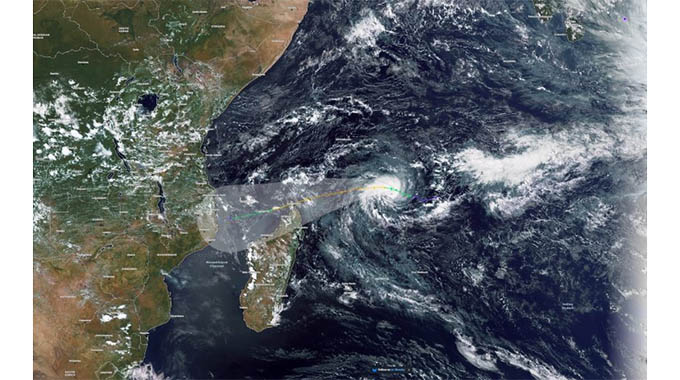
Zimbabwe has been building up its capacity to warn communities and individuals about impending potential disasters, such as cyclones and floods, and its capacity to create evacuation centres and routes and to deal with the aftermath of these extreme events.
Cyclone Idai of March 2019, the most extreme weather event for many decades, showed that we needed a significant upgrade over what had worked in the past with the less extreme weather we once enjoyed.
We were facing something new and we needed to create new systems, and upgrade some of the better older ones, to cope with the new world we are facing. It was fairly obvious when we were looking at the lessons we needed to apply, that if everyone had received a more urgent and detailed warning and if many had been evacuated or had simply fled earlier to the right places, with the right places identified, the loss of life would have been very light although property damage would still have been severe. While the flood waters would still have destroyed roads and homes, the people would have moved uphill to safer areas and relief efforts would then have been concentrated initially on providing temporary shelter, food and water.
With global warming and the accompanying climate change, and the greater heat in the atmosphere and the seas means that there is more energy to generate more intense weather events such as cyclones, we can expect these potential disasters to become worse and more frequent.
The Civil Protection Unit is now better equipped and an entire organisation has been put in place, usually using civil servants who generally have other day jobs, but move into the disaster mode when needed, to make sure warnings get out and the best possible preparations are put in place, and then to help assess and deal with the damage afterwards. As we have seen with Cyclone Chido, which was expected to have diminished in intensity significantly by the time it reached Zimbabwe, general warnings were issued through the media.
The Meteorological Services Department, while maintaining its determination to give as accurate a forecast as possible, now also warns that the weather or weather event could be worse than expected and that people should take precautions. Weather forecasting is in many ways a statistical science, calculating the odds of certain events, and so the department now correctly makes it clear that the lesser probabilities could happen.
We probably need to go further. In our present systems, individual provinces, districts and even wards can be put on alert and warnings sent to local leadership, especially the traditional leadership such as chiefs, headmen and village heads, so that warnings can be given to communities from people who are trusted, and where necessary people can be moved rapidly to safer places. Organisational plans include rapidly using the more secure shelter that is usually available, such as schools and some church buildings, and the Civil Protection Unit can get hold of buses and have stockpiled essential requirements that can be moved at short notice.
This is fairly standard best practice around the world. But recent technology advances allow more direct warnings. Britain, for example, very recently commissioned a system that allows authorities to ensure that all mobile phones in the “cells” where a major warning is needed to give a screech or siren sound, even if they have been set to silent, and the detailed warning message and strongly recommended action is displayed.
The sound warning works on all networks and all makes of phone, and the largely ubiquitous ownership of mobile phones, and at least of the more basic smart phones, means that almost everyone is warned and told what they should do and what they need to do. The system was tested for the first time a short while ago when a very intense storm threatened a group of counties in south-western England.
We almost certainly need to be more active in making sure people do not build houses and other structures on areas likely to flood, or near rivers that are likely to burst their banks. We have now all seen pictures of how powerful moving water can be, even quite shallow water, with heavy vehicles swept from low-level bridges where the water was not that deep but was moving fast. That same powerful flow can wreck even a well-built brick house.
We also need to make sure that roofs are properly designed to handle high winds, and then make sure that the required maintenance is done, so loose nails and the like do not see the roof sheets ripped off. Zimbabweans are often laid back over storm water drainage, at least until they see the results of blocked drains or even filled-in drains or no drains.
The Government has been stepping up its determination to ensure planning rules are followed, and among these rules are the security of wetlands and the need to stop people cultivating and building on streambanks. Wetlands can act as a temporary sink for floodwaters, allowing them to spread out harmlessly, and if nothing very valuable is on streambanks there is a lot less danger, and the rivers can overflow without serious side-effects, again using natural systems to minimise the dangers.
We have come a long way under the Second Republic in building up our preparations to deal with potential disasters, and increasing resources available. The Civil Protection Unit goes on alert more often than might be needed when looking in retrospect, but the alerts are given when there is a reasonable probability of danger, and if the weather event passes at lower intensity that is fine, but at least everyone was prepared for something worse.
This is why the warnings and alerts need to be taken seriously. You may be all right if you ignore the warnings, and the event passes you by. But on the other hand, it may be as bad as the warnings, or even worse, and no one can really tell precisely in advance, only give probabilities and these are in any case averages for an area. Some specific locations may have more rain and higher winds, and that is where the damage is most likely.



 Online Reporter