admin
admin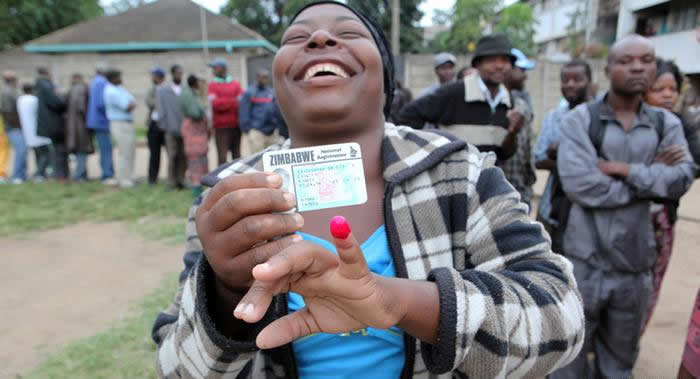
Zimbabwe and much of Africa in general have come of age in as far as running of elections and other key political processes are concerned. Elections happen to be one of the fulcrums of democracy and the way they are conducted has been used as a barometer to gauge the level of democracy in any nation.
Zimbabwe today goes to the polls to elect its President, members of the National Assembly, and councillors for local authorities.
We believe our country and much of the continent have demonstrated political maturity through the journey that the continent has travelled since the pre-independence 1950s era when the revolutionary zeal propelled several African visionaries to organise their people to fight against foreign domination.
Having gained independence from colonial rule, the African states that were riddled by violence of the oppressor, took a deliberate path of peace and ushered in universal suffrage, hence becoming the pioneers of the much talked about democracy nowadays.
Western nations, our erstwhile colonisers, have sought to disciple us on democracy when only yesterday we bloodied their noses in pursuit of that governance system to replace their oppressive and racist system.
We may need to ask these Western powers why they think Africans formed the Organisation of African Unity, the Frontline States and why much of the Developing World coalesced under the banner of the Non-Aligned Movement.
Was it not because of the injustice of the very same Western countries that sought to dictate not only how our resources were used but also how information about our territories was transmitted and distorted to project the oppressor as the saviour for the poor African and the Developing World?
It is against this background that the lobby by so-called Western foreign observers to observe our elections should be viewed.
We are happy that the Common Market for Eastern and Southern Africa observer mission has re-affirmed our position that Africa has the capacity to resolve its own conflicts without outside interference and that we should be confident of the capabilities of our own African observers instead of agitating for Western observers who have always sought to favour what they deem the “good African” among us, the one ready to do their bidding.
Zimbabwe has refused to accept observer missions from Britain, the European Union, Australia and the United States after they imposed their sanctions on Zimbabwe and Zanu-PF political leaders.
The country has, however, accredited 11 781 observers to observe the elections in addition to more than 1 000 journalists – at least 800 of them foreign – covering the elections, showing the transparency of the process.
Luckily, African observers are well aware of the attitude of the Western capitals towards African institutions. “We wouldn’t bother ourselves by what we read and what we hear. Africa is always painted differently . . . No one for example, will tell you that most of the conflicts in Africa have been resolved by the African Union itself not because of outside interference,” leader of the Comesa observer mission Ambassador Betheul Kiplagat said last week in Harare.
As the country goes through one of its most defining moments in today’s elections, Zimbabweans and Africans in general need to start to have faith in our African institutions right from the organisation of the electoral process to the observation of the elections by the African and other disinterested bodies from progressive countries around the world.
Many of these Western observer missions come into African countries with prepared scripts, having condemned the run-up to the elections, the electoral process and openly lobbying for their preferred candidates through hiding behind the need for a level playing field.
Having set the stage and prepared the electorate to dispute the outcome of the elections, the Western media and pirate stations controlled by the West, alongside the biased observers are usually quick to cry foul the moment they realise their preferred candidate has lost.
African observers should refuse to be bullied into taking the Western line when their terms of reference are quite clear. They have come here to observe at the invitation of the Zimbabwean Government. And observers, by their nature, come to observe the process, not to monitor or interfere in the electoral process.
It is the Zimbabweans that have a greater role to play in this electoral process but European and American institutions have in the past sought to influence the process. It is our electoral bodies that will protect our votes, verify and count the votes while observers will be doing just that.
As Zimbabweans we should go out in our numbers and vote peacefully since the destiny of our country depends on the outcome of the vote and not the reports of the observers, whose output is dependent on our conduct before, during and after elections.
What we have noticed in the past is that interference by outsiders in African affairs has never had progressive outcomes. Somalia and Libya are some of the countries that have suffered due to outside interference and they were left to the African Union to put right after the Western nations pulled out.
We applaud African institutions for taking the lead in observing electoral processes, mediating in conflict and seeking African solutions for African problems.
We have never attempted as Africans to impose our solutions on Western nations.


 Online Reporter