daniel chigunwe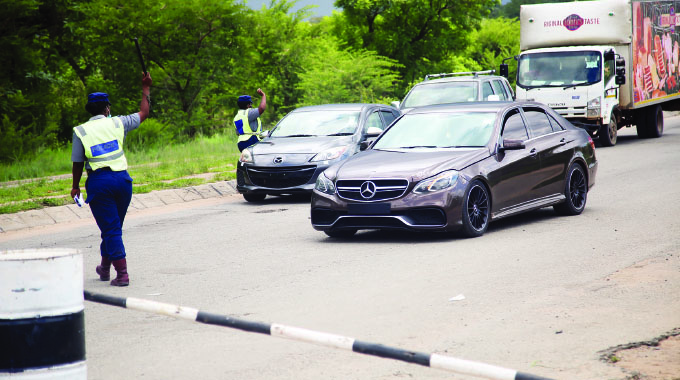
Police must be as puzzled as the rest of us over why so many drivers still insist on driving cars without number plates, or licence discs or insurance discs despite the almost 14 000 arrested by Sunday evening for missing one of these critical bits of metal or paper.
The countrywide police operation has been netting an average of around 1 440 motorists every day since it started in the middle of the month, and yet offenders are still driving around in roughly the same numbers each day.
The operation is hardly a secret. The police give their daily figures to every media house in the country and by now everyone must know that they will be in trouble if their vehicle is not registered, insured and licensed.
By now we would have expected those missing plates or licence discs would have parked their cars and gone by bus, to one of the post offices or tax offices coping with plate orders, or strolled across to their local supermarket if they just wanted to insure and licence their car in about three minutes.
Some of those stopped and arrested are driving Government cars without the plates or discs, police have noted, and while they might be sorry they will still do their duty.
Other drivers possibly feel they are important enough to be exempted, or at least have an uncle who is important enough, but that does not cut much ice with the check points.
By the look of it, that perennial problem of bribery seems to be well under control, and in any case since the check points are waving through the legal vehicles very quickly, rather than going through those old pre-November 2017 tricks to make money, it would seem more obvious for someone with money in hand to get the plates and discs.
The processes need money to pay the fees and charges rather than anything complicated.
The police check points do often seem to be somewhat easy on non-Zupco buses and kombis, so long as they have plates and valid discs. This is understandable as there are simply not enough Zupco buses readily available, even when the large franchised fleet is thrown into the balance.
But it should be possible for Zupco to be open to both new franchises and new routes that these franchise holders could serve. Many now service routes that Zupco does not serve. So we have routes such as Tafara-Southerton direct, or Chitungwiza-Msasa and other useful services with the licensed-outlaws taking the initiative.
It should be possible for Zupco to create the sort of database required to bring these non-Zupco, but otherwise respectable services into the fold.
In fact a route map for a city should have so many lines on it that almost everyone can get a bus, at least two or three times a day, within a kilometre of their home or work.
All the police roadblocks need to be doing is to make sure that the kombi owners understand that Zupco is there and waiting for them, and it would be a good idea if they went along and signed up.
The Zupco fleet is growing, with yet another 115 new buses now being cleared through Beitbridge as the Government increases both the size and frequency of its orders, but the fleet is still far from the required size.
In the early 1980s to the two related companies that were nationalised to form Zupco had between them around 1 400 buses, with another private company servicing Chitungwiza. Since then populations have grown, more housing areas and more industrial areas have been established, and as can be expected many of these are further away, so a fleet twice the size will probably be now the minimum.
Even with the new order that leaves Zupco with only one sixth of the buses it needs, and some of those Government orders are buses dedicated for Government service, taking civil servants to and from work, which is fair enough.
But Zupco, while welcoming additions to its fleet, is remarkably silent about where these new buses are assigned and what routes they serve.
By now around one in six or seven of the required fleet should be the new buses, yet anyone walking through a major city terminus would be startled to see even one loading or unloading passengers.
Looking back a couple of years we can all see the progress in public transport, but we can also note that Zupco have yet to even start a pilot scheme for scheduled bus services, almost a year after they were asked to by the Government, and there are other inefficiencies.
Individual police understand all of this, since they need to get to and from work, and while they will hammer an unlicensed mushikashika, and get really active when it is missing plates as well, they tend to be easier going on the licensed and registered kombis.
In fact, one of the most interesting things about the present police checkpoints is that they are being run the way we expect the police to operate, decently, but firmly without any nonsense.
The old style roadblocks brought the police name into disrepute. The present checkpoints show that along with all the other reforms in the last two or three years the police have made significant progress themselves, and that too is a welcome development.



 Online Reporter