

 admin
admin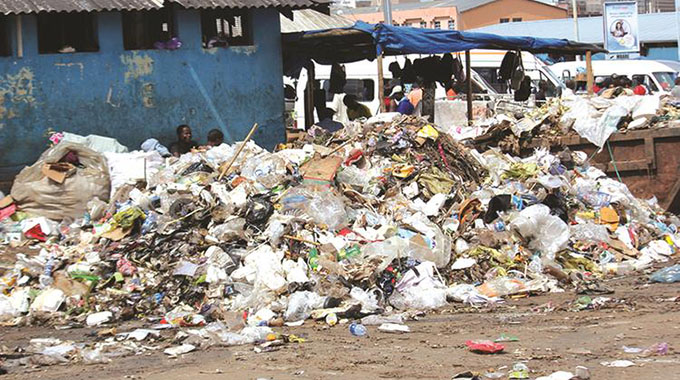
Those who keep track of the litter and rubbish strewn across our environment, the monthly National Environment Clean-up Days since December 2018 when President Mnangagwa launched the concept are in many ways a depressing occasion as so little progress is being made.
Vice President Constantino Chiwenga regularly turns out on the first Friday of each month to lend his support and show by example how all of us can contribute, by at least clearing rubbish and litter in our surroundings and better still by not dumping into the environment in the first place, and last Friday he spoke with some feeling on what still needed to be done.
Besides the need for cultural change, there is also the need for local authorities to do their job, of at least emptying public waste bins before the overflow and of collecting garbage regularly and according to the schedules they themselves set.
Corporates and others also need to get involved and clean up their surroundings and work hard to encourage their customers not to throw their packaging and other materials into the street, and better still give them some positive incentives not to become litter bugs.
One problem seen in Harare in particular, but not rare in other urban authorities, is the local authority not collecting rubbish regularly. Generally speaking, rubbish in commercial centres is supposed to be collected daily, and rubbish in residential areas at least weekly.
This is something fairly simple and had been going on for decades, yet Harare City Council in recent years has been skipping collections and this is getting worse.
The Vice President now wants the two concerned Ministries, of Local Government and Town Planning and of Environment, Climate, Tourism and Hospitality Industry to start expending Government regulations to allow central Government to bring in the private sector to collect the uncollected garbage, and then charge the council.
There is one extra source of money that could be looked at. We have anti-littering laws with set fines. No one has been fined for littering for many years, if ever, and the laws may well need updating, especially when it comes to penalties, but some decent fines could provide revenue for rubbish removal and litter baskets.
Looking at those countries where litter has ceased to be a problem, one aspect is what happens to those who through rubbish around.
Singapore was once a dirtytown. It was decided to clean it up by stopping people littering. Waste bins were set up everywhere, on every street light police for a start, but what change attitudes dramatically was the fine, the equivalent of US$100 was the starting fine.
So people stopped littering, But if they had continued then fines of that level will certainly pay to clean up the mess. Either way we win. Enforced laws with decent fines can either stop littering or make the litterbugs pay for the clean-up.
Another area the Vice President was keen to see was the corporate world working out how to stop contributing to the waste when their customers through their packaging away.
The Vice President has been out for most of the first Fridays, and as he and everyone else who picks up litter has found there is a depressing sameness of what tends to get thrown away.
The same logos and names are on the sides of the discarded boxes and packets thrown onto the streets or dumped in a park, and VP Chiwenga last week was in Harare Gardens, and the same bottles and sachets with the same labels litter our environment.
Corporates can help in several ways. First they make it worth their customers’ while to return a lot of packaging. We notice some products, generally imported, come from manufacturers who appear obliged to take back their packaging. VP Chiwenga brought this up.
We also know of countries where a lot of drink and food packaging bears a small deposit, which people can have back when the item is returned. Zimbabwe in past times had this for just about all drinks. They were in returnable glass bottles.
Many returned them, but those who did not want to bother could easily find someone more than willing to pick up the bottle and collect the deposit. They became modern, with non returnable cans, plastic bottles and cardboard boxes.
While these cannot be recycled, as can the glass bottles, they should still have a deposit so that the manufacturers sorts out the garbage problem. Some sort of similar system is needed for the cardboard and plastic boxes for takeaways.
Again, many might not want to hand them back but if they have value someone will take them in and collect the money.
This becomes ever more urgent. Fairly shortly we are going to have some heavy storms, and our streets will flood because most of our catchpits and street drains are jammed with litter.
Even when Harare City Coouncil does manage to open up the catch pits that lead to the drains and digs out mounds of filthy rotting rubbish, they fill up again in days. Much of the litter blocking drains comes from drink bottles and takeaway packets. But corporates can go further. The extremely limited number of public waste bins in Harare are almost all from the private sector. But some of the bins have been damaged for months and never replaced or repaired, as if it was a one off for ever.
But besides keep in use those we already have, we really need a lot more public waste bins. It is a free advertising space and needs to be sold more aggressively.
But no matter how many waste bins we have, or how much rubbish can be removed from the streets and taken back the producers, the fact remains that councils have to collect this rubbish, hopefully concentrated in bins or giant hoppers at take-aways.
And that requires a functioning local authority sending round a truck when needed. One point that impressed the Vice President was the diversity of the crowd with him in the Gardens. There were vendors, shopkeepers and business owners.
There is a growing group who want a clean city and are prepared to get stuck in. This is great, but we need a lot more, and we need to build that culture that sees throwing litter around as something as something that you just do not do.



 Online Reporter