

 admin
admin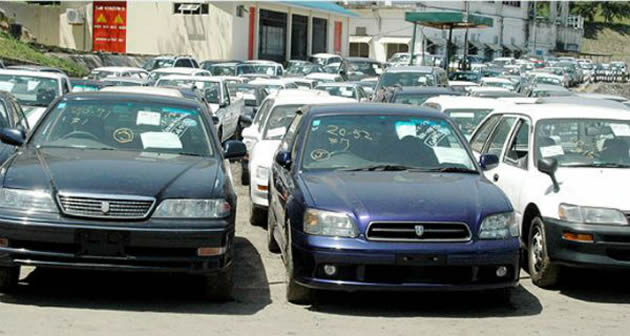
The biggest shock of the police action against unregistered vehicles over the weekend was that just two days, and non-working days at that, a handful of police roadblocks on arterial roads managed to arrest 2 238 drivers and impound most of their unregistered or plateless vehicles.
The problem was known to be severe, but few would have guessed it was that severe, amounting almost to anarchy among vehicle owners and blatant disregard for minimum standards of vehicle ownership and use.
The need for all vehicles to be registered and to carry a set of registration plates is obvious. This is how we identify vehicles and how we know who is the owner, and where that owner lives or works.
Unregistered vehicles have been involved in a swathe of crimes. Robbers and thieves like to use them as getaway cars, because even if someone sees them there is no starting point for a police investigation.
Many of the mushikashika use them to escape roadblocks, since when they do a U-turn or otherwise run away the police at the checkpoint cannot provide much useful information for a follow-up investigation.
And that group of mushikashika who rob and rape passengers certainly do not want the dumped passenger to give CID a bigger clue than “a blue Honda Fit”, which is not very useful.
There are always drivers who cause an accident and then vanish without stopping, the hit-and-runs. If the car is plateless even an observant and horrified witness can do little to help the police, and this makes bringing the driver to justice difficult.
In all these cases having the registration number is such a good starting point for a police investigation that within a few hours the name and address, or at least the previous address, of the owner is known and the police are at the premises.
Even when witnesses only get a partial number, missing one or two digits, a police officer looking for a “small blue car” with three or four of the letters and digits will assemble the five or 10 possibilities and can inspect them, clear the obviously innocent and then check out perhaps a couple of serious possibilities more rigorously.
Insurance is required. The basic legal insurance is cheap. It only covers injuring and damage to others, not to your own vehicle or your own injuries, but was introduced so the person injured or the owner of the vehicle that was hit can at least cover some of the costs quickly. Without that there might be nothing.
Then there are all the financial and taxation implications. An unregistered car is quite likely to be one where the owner has not paid customs duties or has not paid the transfer taxes.
The main plank of acceptable taxation is that everyone liable pays the taxes, so even if they are disliked they are at least fair.
Unlicensed vehicles are ones whose owners do not contribute to the roads. It costs money to keep roads in repair and to make new ones. All users are supposed to contribute.
And Harare City Parking has noted the extreme difficulty of collecting parking charges from an unregistered vehicle or identifying the owner of one illegally parked. The honest dislike paying the bills of the dishonest.
There is little excuse for the actions, or lack of actions, of some vehicle owners. Plates are now readily available, the supply chain having been sorted out, but even when times were tougher there were those temporary cardboard numbers that were issued to legal owners of legal vehicles and allowed the vehicles on the road.
To a degree, enforcement has been slack, we regret to say. While no one wants to return to the myriad of roadblocks of the last days of the old dispensation, when police were collecting fines and bribes for their own use, fairly regular checking can be done properly.
We remember roadblocks with a Zinara inspector on duty, and fairly often a ZBC licence inspector going around car parks.
There is a great deal of difference between a money-making roadblock where officers are checking the make of a fire extinguisher, and waving down a car without number plates or just making the car slow so someone can check the discs on the windscreen.
The second type might delay an honest and law-abiding driver for a minute or two, but hardly imposes any major difficulty while still reeling in those who wish to defy the law.
The publicity surrounding the Sunday operation means that a lot of those who do routinely defy the law will now suddenly wake up, keep their car off the road while they run around and get the paperwork sorted out, a matter of a few days so long as the bank account connected to the swipe card has enough cash.
That will still leave the active criminals at large, but if there are regular checks they will have to change their operational methods and at least drive identifiable cars and that will make them a lot easier to catch.
A lot of other traffic enforcement does not need a physical police officer, a process that opens temptation. Avondale police tried the experiment of a video camera at a traffic light, and it worked. Of course the cars jumping the red light need plates so the owner can be “invited” to call in and pay the fines.
Many police forces around the world now use these video cameras as a matter of routine.
There is even the system of saving labour going through hours of images and the cost of cameras by having the simple box holding a camera at every light, but only having a handful of cameras randomly placed, being moved each day or two. This deters. Others now use automatic speed traps, and these deter as well as catch the undeterable.
Technology uses police manpower far more effectively and also means that a roadblock is only needed to check if a wanted killer is driving past, or to check if the car has plates and is licensed, or to check if someone is breaking a health curfew. These are still needed, but will not cause the problems we saw before November 2017.
The Sunday operation was wildly successful, but the police now need to keep up that modest pressure to bring our vehicle fleet back within the confines of the law and then keep it there.



 Online Reporter