admin
admin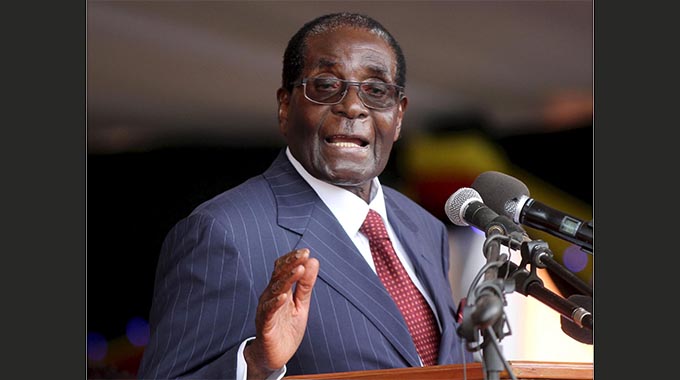
“No society can escape the responsibility for trying to plan the education of the children who grow up in it, but the more complicated a society is, the more difficult it is to make such plans and the more tempting it is to see them as somebody’s concern,” writes Hugh Hawes in Curriculum and Reality in African Primary Schools.
This has been a truism since Independence in 1980 when Government, through the Ministry of Education set up the Curriculum Development Unit (CDU), a division with special responsibility to ensure that the colonial curriculum was revamped to suit the new order.
However, nothing is static. Even the endeavours by the CDU kept evolving, and it became clear that as we were approaching the new millennium, Zimbabwe needed an education system with a curriculum ready to produce end-products that would not only fit into the new global age, but were also beneficial to national growth and development.
The 644-page “Report of the Presidential Commission of Inquiry into Education and Training” (1999) under the chairmanship of Dr CT Nziramasanga was an effort towards that goal.
So detailed and wide-ranging is the report that it remains a puzzle why it took so long to have its recommendations implemented.
Remarking on education for the 21st Century, the report noted: “Zimbabwe will soon enter the third millennium which is dominated by economic competitiveness and information and communication technologies . . . forces (that) challenge the nation to revamp its curriculum, provide all schools with electricity and the relevant technological equipment to enable students to develop the skills that are essential for a technological age.”
Although the delayed uptake of the Nziramasanga findings is now water under the bridge, we continue to commend Government and all stakeholders for eventually coming up with a new curriculum, and also for bringing together all partners in the education sector to continue to interrogate issues around this new curriculum.
This week’s 3rd Conference and Expo running under the theme, “Education and Innovation for Sustainable Socio-Economic Development” that brought together more than 7 000 senior educationists from across the country has breathed fresh life into the new curriculum, considering the uninformed controversies that have dogged it since its introduction.
It was at this conference that President Mugabe in his keynote address underlined the issues about education and entrepreneurship that he has stressed time and again.
The President’s remarks also underscored recommendations contained in the Nziramasanga Commission report. It was evident that President Mugabe was calling on all educators to acknowledge that the new curriculum has a major reference point — the Nziramasanga Commission report, and that the recommendations have to be implemented, for they are still valid to the national interest.
President Mugabe also called for a paradigm shift in how educators and the populace view education, as he emphasised that the education system must produce self-employers and not people who look up to be employed elsewhere.
“The issue of sustainability is embedded in the new curriculum which fosters entrepreneurship. Entrepreneurship education and training is meant to inculcate abilities for learners, at all levels, with knowledge, values of unhu/ubuntu, skills and appropriate motivation, and to encourage entrepreneurial success in a variety of settings,” President Mugabe said.
We hope that the deliberations among professionals coming from varied environments will ensure that the new curriculum becomes a source of pride that produces hard-working, responsible and patriotic citizens with the desire to turn around the fortunes of the country through new and progressive thinking.
The success of this implementation depends on how much capital and infrastructural resources Government and other private partners are willing to invest in a better future through the education system.



 Online Reporter