admin
admin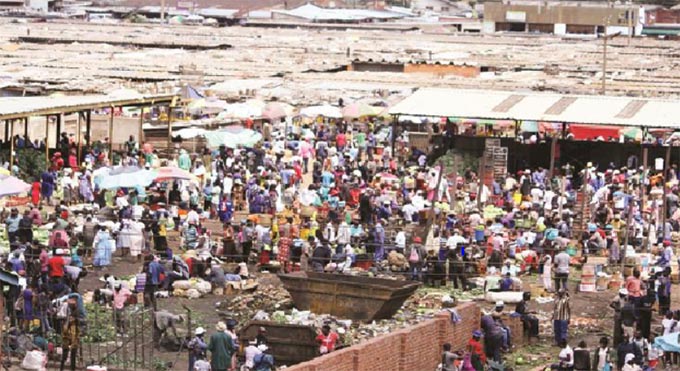
THE Government is moving fast to limit the devastation to the lives of the 4 695 traders whose stocks were destroyed in a recent fire at Mbare Musika Traders’ Market, and is finalising plans for a modern three-storey replacement able to accommodate at least 10 000 vendors as it Builds Back Better.
The immediate support for the traders and their dependants, a total of 23 000 people, will include urban cash transfers so they can at least eat, pay school fees, other support and loans for buying new stock and getting their businesses up and running at least in temporary premises nearby, while the new market is being built.
In one sense, it is a great shame that the Harare City Council just left a hodge-podge market that was a fire risk and in many ways an eyesore without working out with the stall holders how a proper upgrade could be done. This is fairly typical of Zimbabwean urban authorities, to just let inadequate services and assets linger on until they fall to bits or totally fail.
The Government took a far more adventurous approach once the disaster had struck. Legally, it was able to do this as soon as President Mnangagwa declared the fire and its aftermath a state of disaster. This declaration allowed the Government to intervene directly, take control and get around the high level of autonomy a municipal council possesses, even when it does not make much use of that independent governance.
By this week, Cabinet was already approving the basic concept of the new market, the three-storey complex with room for 10 000 traders, which will end the sub-letting and sharing of tables that marked the destroyed market and allow others to move in, basically doubling the stall numbers.
There are timelines, the work to start next month and take seven months, so this is not some vague political promise but a solid project with just the details being finalised. Other practical measures include a temporary market, with the Harare City Council now coming in to help out, so that those who are rebuilding their little businesses can be starting to earn their own income again while the building is in progress.
From the briefing after the Cabinet meeting, it appears that there is strong determination to make sure that the market is both modern and what is described as a smart market. This presumably includes sensible grouping of businesses so that it is easy to navigate and find your way around. This may also entail proper mapping, or the modern electronic equivalent, for the same reasons, and a stress on making it easy for both stallholders and customers to find each other and do business.
Obviously the market will conform to modern building by-laws and fire prevention codes. With 10 000 stalls the odds are high there will be another fire one day in the nature of accidents, but with everything done properly this time, that will damage perhaps one stall, not burn the complex down.
The huge size of the market is justified, although probably only in Mbare Musika. This is the centre of the highest populated suburb in Harare, so there is a giant base market, and it is also a major nexus in the transport grid, so there are large numbers of commuters and long-distance bus travellers passing through each day.
Those efficient transport links will also make it easy for others, who feel a bargain-hunting visit would be useful, to get in and out.
A lot of bad things are frequently spoken about the “informal sector”, this being denigrated as something very bottom rate and people only in the sector because they could not get a shop or factory job, even if that was just a minimum-wage cleaner.
Many in the market were earning moderate incomes, as can be seen by the extent of the losses they incurred when their stocks were destroyed and the numbers who they were supporting from these small businesses. These are valuable members of society, willing to get stuck in and work hard for a living and able to build their businesses.
This is one reason why the new-style market place is needed, so they have the proper premises for a small business and can grow. Some will move out in time, to larger shops and the like, as they build up their business but will have had a good start in the Traders Market. Others might become long-term traders, known to succeeding generations of shoppers. A market can accommodate everyone.
We assume that with the new market it will be possible to regularise the micro and small businesses it will house. This is not in the modern age that difficult; a tax registration can be done on-line for example and we hope the Harare City Council will have the same facility for some sort of inexpensive stall licence. It is then possible for a simple booth at the market to be set up to make the registration easy with advisors on tap.
We would note that many traders will not be paying much if any tax. Their income, or profits, will in many cases be within the tax-free band, although it will be a big move upwards when the day comes when the first dollar above that band gets taxed. There are some presumptive taxes, including in theory a basic $1 a day to be collected by the market manager, but any duty or VAT is likely to have been already collected before the goods reach the market.
But it is still important to have these traders in the tax database so that as they grow they can be easily monitored and when they do reach the taxpayer ranks, they move seamlessly into them.
It is almost certain that some sort of stall rent will be charged. This need not and must not be high, but with 10 000 traders it does not need to be high to ensure there is enough money coming in to maintain the market complex and as time goes on to upgrade it. The whole point of a proper market is to make it easy for micro businesses to start and flourish so the costs have to reflect that this is a starter level and cover just the basics.
The new market will also be a template for other urban markets, although probably not as large, in other cities and suburbs. We do not have to assume 10th rate facilities for micro-businesses instead of working out how to build and operate proper markets.


 Online Reporter