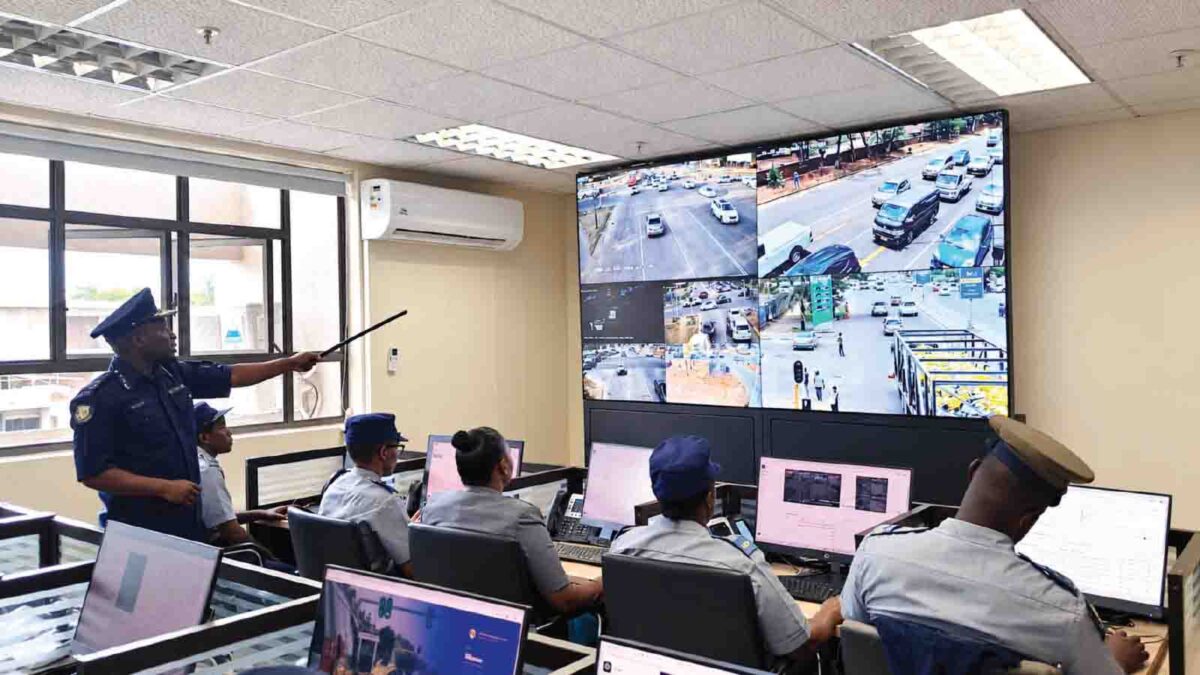
THE new electronic traffic management system already installed at 20 sites in central Harare and arterial roads in the city is capturing a vast number of traffic offenders.
Almost certainly, the police have to select which offences and offenders to deal with in these initial stages and besides the more serious offences, the police are now looking at identified multiple offenders, drivers who seem unable to follow rules of the road and seem wedded to breaking the law.
We have all seen them.
The driver breaking the speed limit and using the wrong lane to reach a red robot that he then shoots through is not that rare.
The system allows the police to not only follow a reckless driver on a single trip, but also to accumulate evidence of offences committed in several journeys.
The police now warn that they can accumulate adequate evidence to bring these serious offenders, those guilty of reckless driving and those building up a history of offences, to court.
While police can impose admission of guilt fines for minor and medium offences, they cannot move towards the necessary driving bans and licence cancellations to tame the serious offenders and remove them from the roads, at least for a while. That requires a magistrate sitting in court.
But at least evidence is now available that is likely to convince that magistrate.
A video image of the driver committing the offences, with automatic addition of time and date data, is hard to argue away.
Some vehicle owners may argue that someone else was driving the filmed vehicle at the time in question, but that can be easily overcome by simply bringing the owner in as a witness to identify the actual driver.
The basic police operational procedure will be for most offences sending the vehicle owner a message giving them the option of paying the set police fine or going to court.
If they want to see the footage of the offence, that can be arranged. If they decline to reply or pay the fine then the police will step up the pressure and arrest them and take them to court.
We would hope, as the system becomes more used, that a suitable special traffic office and fines centre can be opened, with electronic payment of fines a possibility so the offender of a minor breach does not actually have to join the queue.
But a fair number of offences are more serious and will require a talk with the police, and some will require that court appearance.
We would expect special traffic courts to be set up to deal with multiple cases every day, and equipped with the necessary electronics so that the police recordings can be played and access made to the data bases to prove ownership of vehicles and back-up evidence.
While several offences can carry a jail term, we would hope that more use will be made of community service unless the offence was so serious that this cannot be the case.
But there are motorists who earn enough to make the fines a minor bother, but who would be brought down to earth with community service, perhaps cleaning streets.
A lot of sloppiness has crept into driving and enforcement has become very difficult.
The far larger number of vehicles, and the worn-out traffic signs, robots and road markings at some intersections does not help to enforce good behaviour.
But the traffic lights and intersections where the new system has already been installed have been done up.
Some fairly fancy electronics are used at some, and most of the new traffic lights are solar powered with the tower holding the panels barred off from thieves and vandals.
Those installing the new lights clearly have some knowledge of the bad driving on our roads, with concrete barriers protecting the lights now common.
This means most drivers approaching one of these revamped intersections must strongly suspect they are being filmed, and so know that driving through a red light, or making a right-hand turn across the lanes from the left lane and all the other common offences is a bad idea.
That for a start might help reduce offences, as will the growing numbers contacted to pay fines or appear in court.
A lot of enforcement of traffic rules is built not so much on the fines, but on the time and bother of dealing with police enquiries and action.
But knowing that both the fine and all the associated dealings with police are now far more likely, many drivers will decide just to follow the law and the rules.
The police are positive on this. They would like to prevent offences, rather than catch and fine offenders.
A perfect traffic enforcement will see no offences and everyone obeying the law, but we are regrettably a long way from this.
But once again, we have to build one brick at a time to create these offence-free roads, and so the sooner we start the better.