daniel chigunwe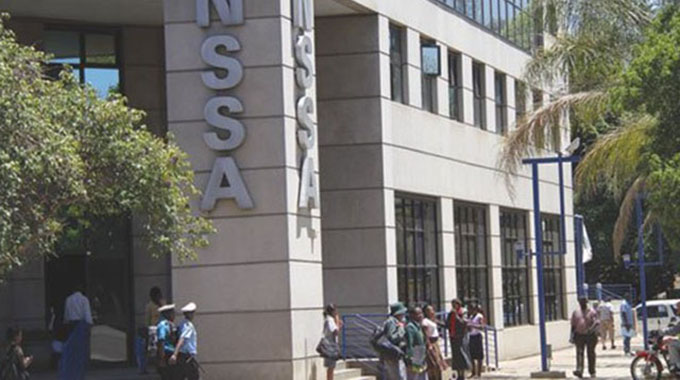
The informal sector is now a major driver of the Zimbabwean economy as well as the source of livelihood for a majority of the non-farming population and needs to be taken seriously and built up so that those working for themselves can have a decent life.
Changes in the tax legislation and other moves are designed to bring this sector into the formal economy, in the sense that an ever-increasing percentage of those involved will be licensed and registered businesses, small business under a single proprietor, a sole trader in the Zimra listings, rather than a registered company, but still a business.
The idea that you either get a job with someone else or are relegated to the informal sector is in many ways a hangover from the colonial days, where you either found a white business to hire you or you drifted along on the edges of society as a carpenter or vegetable seller or something similar.
Those days are long gone and the objective now is not so much as earning a salary, but earning a living, and figuring out ways to make that living as good a one as possible.
In other words, most people are going to have to be in businesses, either by themselves or in partnership with others using their skills and knowledge to provide goods and services others want to buy.
Perhaps we should change the labelling from “informal sector” to the “micro-business sector” to reflect what it should be. Admittedly the size of these businesses vary, from the vendor on the pavement or using a market stall all the way to skilled people earning a modest living providing services and goods and now being encouraged to formalise themselves, to avoid substantial withholding taxes and to start accessing the micro-business financing being set up.
The same concept is being applied to the small-scale farmers, as the Government pushes hard to move most in this group from families who just subsist to families who earn an income from the land, transforming these millions into business people.
Among other measures the National Social Security Authority (NSSA) is now exploring ways to develop a social security scheme that these micro and mini businesses can lock into.
The present schemes for salary earners is not really suitable, with premiums based on those regular salaries and demanded every month.
In the micro-business sectors income is very variable. Some months someone might earn reasonable money. The next month they might be lucky to earn enough to buy mealie meal. Yet not just NSSA, but other social security schemes such as medical aid, funeral insurance and the like are built around regular monthly payments.
And these schemes tend to be suspended at best, and cancelled at worse, when those regular monthly payments are not made, which makes them problematic and useless for those scraping a living, or even earning a modest amount, from their tiny businesses.
Yet those involved need social security as much as the salary earners, and perhaps more so since they cannot borrow in an emergency from their employer and their bank account is usually just a mobile money number.
NSSA is correct in seeing the need. But NSSA also has to exercise a great deal of imagination both in working out what sort of social security is required, in working out what sort of costs are affordable and especially in working out how someone with a very variable income can maintain payments.
This will require a lot of research and a lot of consultation. NSSA needs to talk to those in these sectors to find out precisely what they need, and what sort of emergencies need to be covered and the sort of old-age pension or disability pension that many might need in time.
It needs to be remembered that these people are on their own and so might need a broader scale of benefits that someone backed by an employer.
Obviously the premiums need to be affordable. Anyone can shop around for schemes with benefits offered by insurance companies and the like, and only to find they are priced way out of their range as well as ignoring that variable income.
NSSA needs to work backwards, setting the affordable sum first and then figuring out what can be offered for that monthly payment, rather than listing benefits and then writing down a number followed by lots of zeroes.
The actual payments will need to be flexible. Some months people can pay, some months they can even catch up, and some months the money is simply not there. This needs to be worked out carefully in advance.
NSSA will also need to work out ways of how people can make payments and can check the status of their programme and all the rest, without chewing up the entire income, or even a decent slice of the income, in administration costs.
Here big data bases, mobile money services and even phone apps will be critical. Modern technology in fact makes the whole thing possible.
But there will be need for face-to-face services for when people sign into the NSSA scheme, since physical documents such as ID cards need to be checked and when people need a benefit, since again someone has to make sure that the person deserving of the benefit is the one getting it.
NSSA, with its formal schemes, already has systems in place to guard against fraud and false claims and those need to be extended to the new schemes.
It will be a huge undertaking for NSSA, but a very worthwhile one so the authority needs to get it right and that involves more than just theory but detailed discussion and consultation and then making sure all the required bits and pieces are in place before anyone is asked to pay any money.


 Online Reporter