admin
admin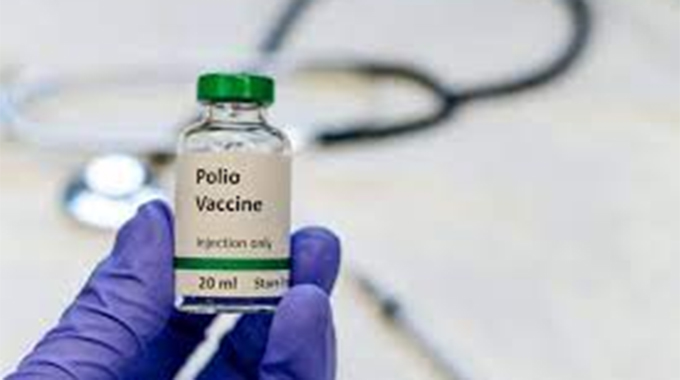
The outbreak this year of polio in Malawi and Mozambique has been taken very seriously by those two countries, who already have mass vaccination and re-vaccination campaigns in place, with the regional vaccination response now extended to Zimbabwe, Zambia and Tanzania on the advice of the WHO.
The region became free of wild poliovirus during the 1990s and was declared free in the early 2000s. This followed the major assault on polio, starting in the middle to late 1950s as vaccines became available, with those original injected vaccines replaced by the modern oral vaccines in the 1960s.
Africa as a continent was declared free of all wild poliovirus strains in 2020 as another major victory against the viral disease was notched up.
Two of the three identified global types were made extinct as part of this victory, leaving just wild poliovirus type 1 in Pakistan and Afghanistan as the last reservoir of wild poliovirus.
The outbreak in Malawi and Mozambique stems from this type 1, in particular from a strain of the type found in Pakistan in 2019.
The WHO has highlighted, using this transmission as an example, the need for all countries to be on the alert and to recognise that polio can spread very easily considering modern rapid travel and the large movements of people around the world at any one time.
Vaccination is the great protector of children, and the easiest way of breaking any chains of infection.
This is one reason why even though wild polio has been eradicated in Africa, vaccination against the disease is still routinely done. Once all wild reservoirs of poliovirus are eliminated, and this has been confirmed after the necessary gap between the last case and the announcement, polio will join smallpox as a defeated scourge of mankind.
Until then all countries need to maintain their guard. Zimbabwe does, with polio vaccine still one of the essential vaccines given to all children as part of that remarkable vaccination and monitoring programme introduced in Zimbabwe and many other countries in the 1980s as one of Unicef’s most productive interventions to save children’s lives.
That intervention, with financial backing from the Global Polio Eradication Initiative, Rotary International which for many years has made the eradication of polio a co-ordinated programme for all Rotary clubs throughout the world, and more lately the Bill and Melinda Gates Foundation, has seen many diseases that once destroyed the lives of millions of children fought back and coming close to extinction.
But for the final victories, as well as for the millions of lives that can and must be saved while the battle rages, all parents need to accept that vaccination is a right for their children and that they cannot and must not deny their children this right, basically a right to life.
We saw the problem in Zimbabwe earlier this year with an outbreak of measles, an outbreak that should not have happened.
The outbreak was largely confined to a single religious community, one who hardline members decry both access to modern medicine and to vaccination, although other sub-groups allow vaccination at least, and some go further and allow access to doctors.
The fact that the gaps in the vaccinations were largely confined to communities, rather than being scattered, meant that the normal herd immunity if large majorities are vaccinated does not hold up. The unvaccinated children, or those where the vaccination did not take, are not surrounded by the vaccinated, and so benefit from herd immunity as infection chains are broken before the child is reached.
Instead they are surrounded by the other unvaccinated, playing with them as their parents socialise within the community as believers tend to do, being with them in church services and prayer meetings.
So if one child in that group becomes infected it is possible that all will be infected, just like in the old days, well within living memory, when diseases like measles would sweep through a primary school over a couple of months.
Between today and Sunday the Ministry of Health and Child Care is running a major vaccination programme against polio, trying to reach every child under five.
It does not matter if the child has been vaccinated before, or how many vaccine doses they have received. The objective is to ensure that every child has an up-to-date and recent dose.
The first week of December sees this made sure of with a second dose for all the under fives. If all children, or at least almost all, are vaccinated then even if the outbreak spreads from our two neighbours it will not spread in Zimbabwe.
Our Health Ministry has the expertise, staff and the vaccine stocks needed to run this major vaccination exercise and has been fully mobilised to cope at clinics, hospitals, other health points and with mobile teams. It is the sort of thing they can do very well.
But the parents of the under fives need to respond.
Everything is in place and waiting for them and all that is needed is for the small child to turn up, stick their tongue out and get their drop of life-preserving vaccine. It is that simple and parents need to follow their heads and ensure they take their children.
We have seen how reluctance to vaccinate children killed scores in that last measles outbreak.
We have seen the suffering and deaths from those who followed the teachings of racist Americans and refused Covid-19 vaccination, rather than following the advice of the World Health Organisation and almost every doctor on the planet.
We must not make that mistake this time.
Our Government and the international health community are making vaccination easily available, so we need to take our children.



 Online Reporter