admin
admin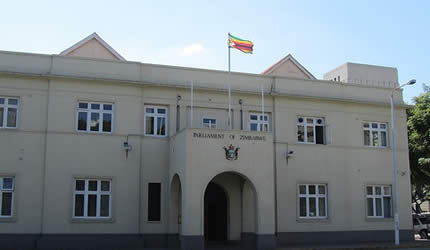
It will be a squash in the National Assembly on major State occasions, such as the opening ceremony, since there are only enough seats for around 160 of the 270 members. But at other times, the ordinary times, when less than half the MPs are physically in the House, there will be few great blocks of empty seats. And during critical votes, when the whips drive the bulk of the membership into the House, most members are standing in any case as they march past their tellers.
Having more members than seats is not that unusual.
The British House of Commons can seat only 427 of its 650 members, and was designed thus when built in the 19th Century, when there were even more members as Ireland was still part of the United Kingdom then, and a decision was made not to increase seating when it had to be rebuilt after the Second World War, having been bombed badly.
Suggestions of giving every MP their own chair and desk were shot down by Winston Churchill, who thought the crowds and sense of urgency added to the atmosphere of major debates and that lots of empty desks at other times would be depressing.
Even the Zimbabwe Parliament that was dissolved shortly before the election last month had more members than seats, and they coped even when a full turn-out was desired.
The addition, just for the life of two Parliaments, of 60 extra women members adds to the congestion, but not by that much.
The special extra members necessitated by the appointment of a Prime Minister and others from outside Parliament, now fall away.
One day a new Parliament building will be built. This has been actively planned now for three decades. No one knows just when those plans will be turned into reality.
But no one can build a new building this month, so the formal opening will be in the present building, and presumably the new chamber should probably simply plan for 210 members, the permanent number in what we all hope is a stable Constitution, meaning there will still be a crush until 2023 at the latest when the special women’s seats fall away, it being hoped that by that time parties will be fielding roughly equal numbers of men and women candidates.
The present chamber has been extended a few times over the decades. It started life as the dining room of a bankrupt hotel.
The old desks given to members were taken away in 1962 when the assembly was more than doubled in size to 65 members, and the green benches moved in.
Cross benches at the far end were added in 1969 and more seating squeezed in to cope with extra MPs since independence.
Perhaps another row of benches can still be added to each side, and perhaps the chamber can be extended to take in part of the central courtyard of the complex.
More bathrooms could perhaps be put in place with some offices moved to the much newer “Senate building”.
Members can, of course, vote funds for a new Parliament building, and perhaps even persuade their Senate colleagues in their more spacious chamber to go along with the idea, but we suspect that most voters will be keener on seeing the economy grow substantially before giving MPs their slice of the larger cake.
The five-year term has always been a problem for those wanting a new building; by the time the budgets for new buildings have been approved, tenders put out, contractors chosen and the building actually done it will almost be time for the next election, and most MPs will have to face a primary poll before that.
Some things are more difficult to explain to voters than other things.



 Online Reporter