Online Reporter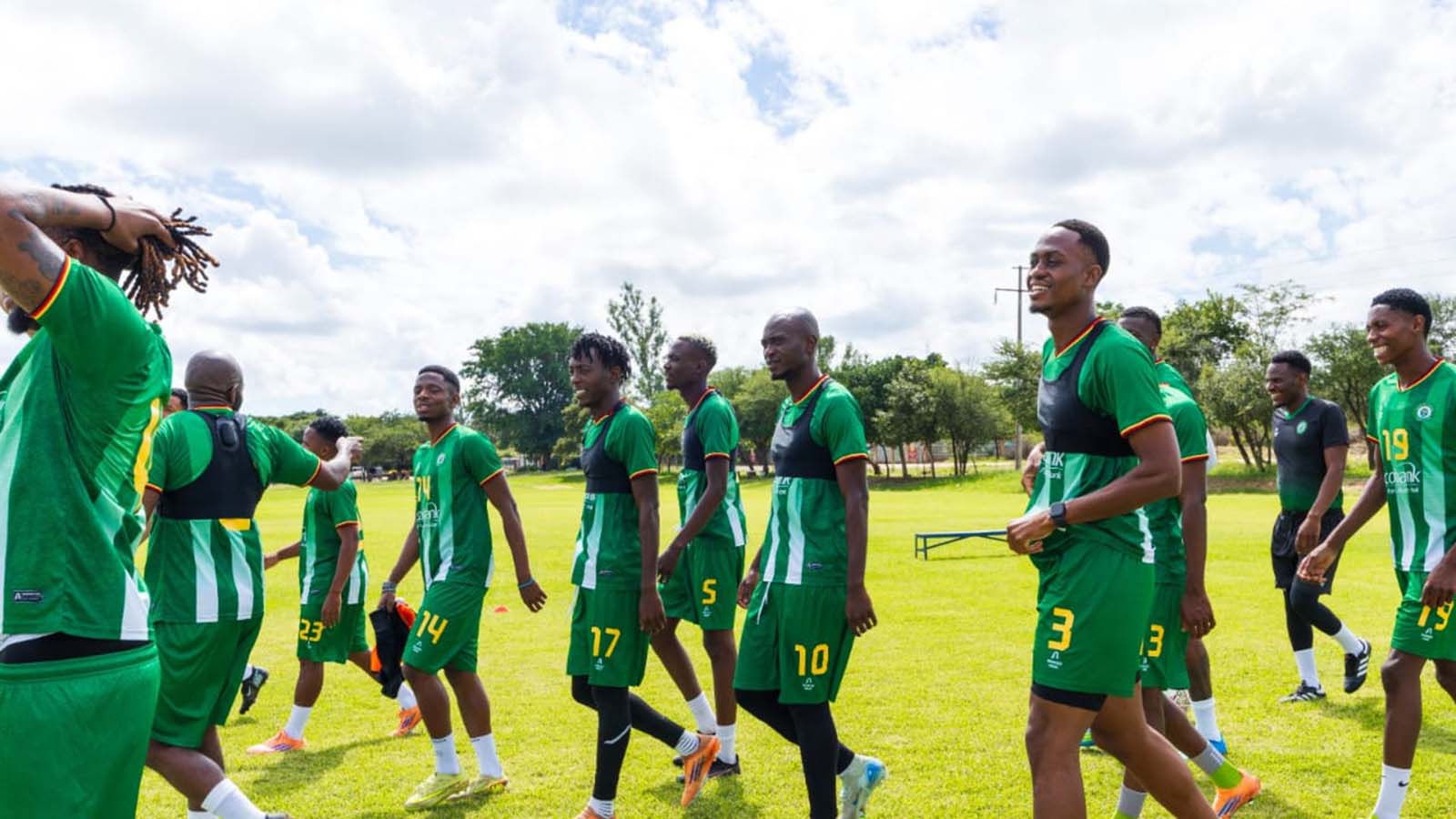
AS the country’s flagship sporting team, the Warriors, prepare to return into action and face Botswana in a Four Nations tournament in Francistown tonight. The occasion marks the beginning of a critical phase that could shape the future of Zimbabwean football.
Zimbabwe’s other COSAFA rivals, Malawi and Zambia, complete the cast of the teams at the Four Nations tourney at Francistown’s Obed Itani Chilume Stadium.
The Warriors have been inactive since December 29 when, needing at least a draw to qualify to the knock-out rounds, they agonisingly fell 3-2 to Southern African rivals South Africa in a 2025 Africa Cup of Nations Group B game in Rabat, Morocco.
Unlike club games, national team matches do not come thick and fast as they are factored into international windows that are arranged by world football governing body FIFA.
We believe that when the Zimbabwe Football Association (ZIFA), commendably engage with other associations to ensure the Warriors do not miss out during each window that FIFA avail, the senior side ought to make the most of such opportunities.
Having banished an ugly past when they would let international breaks pass by without any activity for the Warriors and often citing inadequate resources as the excuse, ZIFA this time are moving mountains to ensure the national team maximises on the chances to prepare for major competitions and, also pick some vital FIFA ranking points.
For head coach Marian Marinica, this is a different moment. Unlike his previous stint, which came under the strain of an 11th hour appointment as a replacement for the sacked Michael Nees, the Romanian now has an opportunity, which even he knows will be limited, to work with structure, intention and a measure of stability.
The real question is whether the environment around him will allow that process to take root.
The midweek training match against Highlanders, which ended goalless at Barbourfields in Bulawayo on Wednesday, is being brought out as some measure of the Warriors’ strength.
We, however, believe that using that exhibition match, which we understand was originally meant to be a closed doors affair, as a measure of the Warriors strength, is quite a flawed argument.
Despite it being important as a sparring exercise, which Highlanders on their part also used to sharpen the arsenal that Benjani Mwaruwari is building, it is vital to look at the bigger picture of what sort of Warriors project Marinica is aiming to construct for Zimbabwe.
There is a compelling case study of how to bring in and keep a coach which is there for us as Zimbabwe from just across the border, south of the Limpopo.
When Hugo Broos took charge of Bafana Bafana, the Belgian tactician’s early days were far from convincing.
His squad selections were questioned by many in South Africa, his results scrutinised and his approach debated.
Yet, something important happened.
The South African Football Association (SAFA) held firm in its support. More significantly, the fans, who are renowned for their passion and strong club loyalties, began to adjust.
Even supporters deeply aligned to clubs and traditional giants like Kaizer Chiefs came to accept that national team selection would not always mirror club popularity or sentiment.
It was a subtle but powerful shift from emotion to trust in a system.
That collective patience has since borne fruit.
Against modest expectations, Broos guided South Africa to a third-place finish at the 2023 Africa Cup of Nations, in Abidjan, Cote d’Ivoire, demonstrating what can be achieved when a coach is given time, authority and belief.
Zimbabwe now stands at a similar crossroads.
For the longest time, the Warriors’ journey has been characterised by short-term thinking, manifesting in quick appointments, immediate expectations and abrupt changes when results do not come instantly. This cycle has prevented the team from developing a clear identity and sustained competitiveness.
Breaking that cycle demands a shift in mindset.
ZIFA’s role in that shift is this central. Institutional backing must go beyond the announcement of a coach. It must translate into consistency, strategic alignment and the discipline to resist reactionary decisions.
The association should help the coach settle in by making sure their communication lines with key players are open and yet interference-free to avoid the drama we have been seeing every time the national team is announced. This is avoidable.
But institutions like ZIFA alone cannot carry this responsibility.
The fans, too, have a defining role to play. Passion must be balanced with perspective. Supporting the national team means trusting a process, even when selections are unpopular or results are still evolving.
It means recognising that building a competitive side requires cohesion, experimentation and time.
This weekend’s Four Nations assignment against Botswana and any of Malawi or Zambia in Francistown will not provide all the answers.
But we note that it offers a starting point and a moment to begin measuring progress not just in results, but in direction.
If Zimbabwe is to rise in African football, the formula is becoming increasingly clear. It must be anchored in stability in leadership, consistency in vision and patience across the board.
Success in football is never rushed. It is built painstakingly and at times, frustratingly.
And Zimbabwe has the pedigree to build success in football.