Online Reporter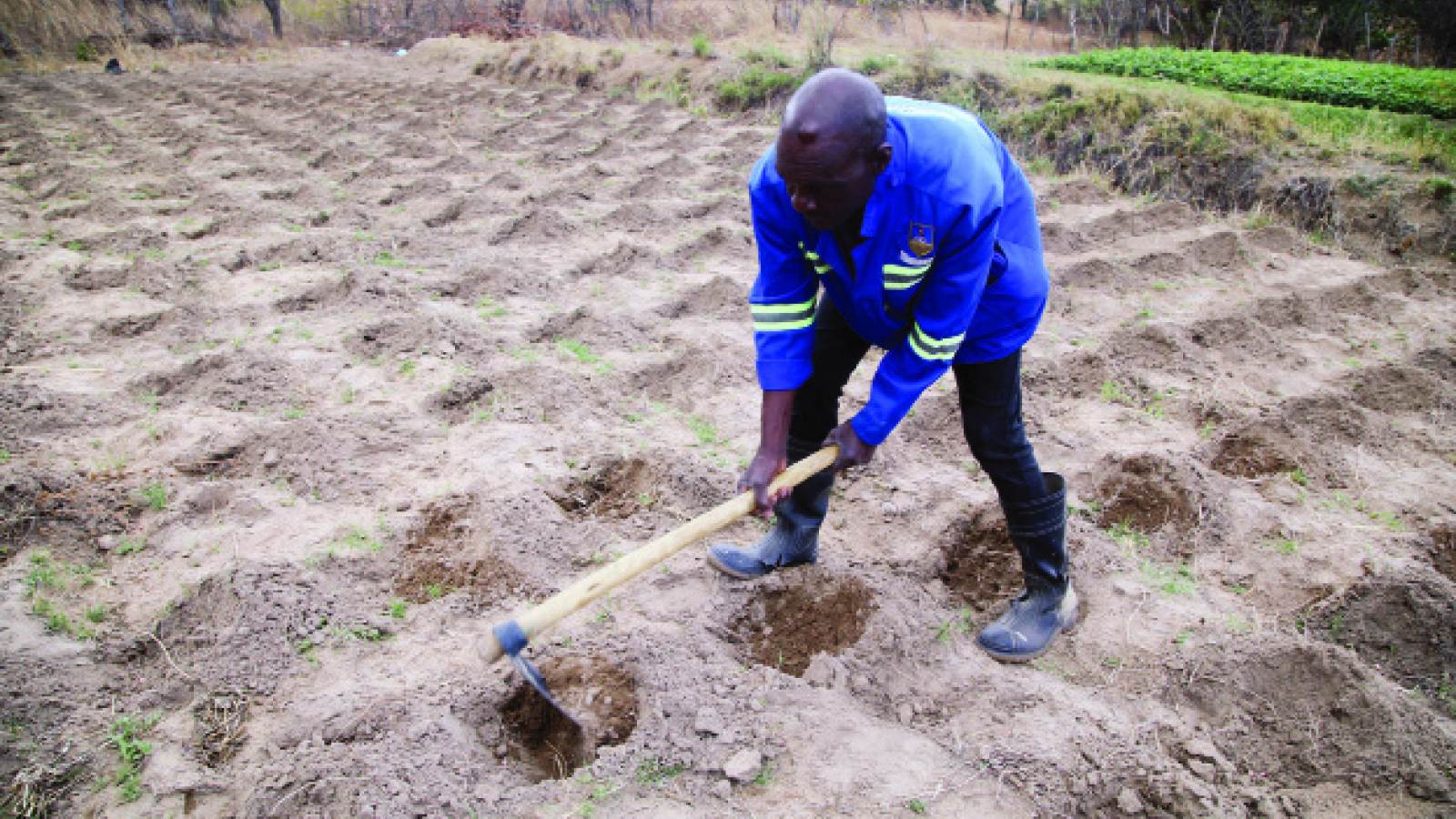
The Pfumvudza/Intwasa programme has been at the heart of the Second Republic’s rural development drive, building up the productive capacity of all farmers and ensuring that they not only grow enough food, but increasingly add surpluses and cash crops so they have business incomes.
This has seen most small-scale farming families joining the programme and while they all have the right to join, they still have to accept training and lay out for inspection their prepared plots and stocks of mulch required for conservation agriculture.
But once in, they can add to their plots each year. Older plots can be redug and cleaned up for a lot less effort than digging completely new sets of holes, and that allows many families to add to the number of plots each year, extending their production.
Again they have to actually show the land extension officers their new plots to gain the full inputs, but this is just one of the measures to ensure that those who do put in the work get the inputs and that those who cheat not only get nothing, but will have to be very persuasive in future when they reform and want to go honest.
Last year the farmers prepared a record 11,9 million plots, and this year the Ministry of Lands, Agriculture, Fisheries, Water and Rural Development is expecting the total to reach 15 million. Already, by the end of last month the farmers had 5 million plots ready for inspection, and with the active redigging and active additions should come close to the average of three plots a family.
Already the Ministry is starting to move inputs into the provinces so that when decent rains start falling, all farmers who have prepared their land will have their inputs ready to plant. Once again the Ministry experts are working out the best varieties of the best crops for each district or part of a district, to make sure that the farmers get maximum returns.
Because the inputs come from Government, and are paid for in the end by the tax payers, the Government obviously wants the maximum output.
This is one area where farmers signing up for the schemes have little choice. If they want to take risks with crops less suitable for their area, they must use their own money.
Taxpayers concerned that they have to fund Pfumvudza inputs should note that it is a lot cheaper to pay a farmer to grow their own food rather than have to buy grain in some support scheme, and there is the additional benefit that these farmers are learning more all the time, so they are building up surpluses and sales, and again this makes the scheme one of the cheapest, yet most effective ways of rural development.
There are limits for the Pfumvudza schemes, but already some of the best farmers have been adding to their entitlements, either extending their plot or looking at other crops suitable for their area such as tobacco with other financing. At the same time, livestock farmers participate in the basic Pfumvudza/Intwasa scheme, but are looking at lucernes and other suitable crops to build up their own resources of stockfeed.
The Government, while keeping the basic scheme in place has been adding to it with other Presidential schemes, something that is easier when the local extension officers know the precise skills levels and the sort of productivity that can be expected from the Pfumvudza farmers. Building reputations for hard work and integrity means that Government recommendations to others have some meaning.
The Government itself is now looking at not just the small irrigated horticulture plots that come with the village boreholes, but at other programmes such as the basic irrigation package for 1ha that can move a credit-worthy small scale farmer up the ladder. The credit worthiness rises for someone who uses inputs properly and honestly and does not believe in side marketing.
This sort of integrity, now being reinforced yet further with additions other African countries have found useful, lies at the heart of proper development and is driving rural development to new heights.
The decision to drop support for urban and peri-urban farmers is not a major switch. Most, in fact, were not following the plot requirements of Pfumvudza and few had proper legal access to land to make that worthwhile.
With the rise in the needs for public open space and better protection of urban wetlands, the sort of areas needed for an urban Pfumvudza programme were never going to be available. Of course, urban people should follow modern ideas when growing their vegetable gardens, but do not need formal support.
Meanwhile, the main thrust of support needs to go to rural development by backing farming families so that they become serious producers, and even when we talk about the most severe droughts, we note that in many areas Pfumvudza farmers who went a bit further and managed to store soil moisture and follow advice were making do even with lower production.
It remains the core programme for obvious reasons, mainly that a Pfumvudza farmer almost always gets at least something, and that sort of farmer is then better placed than most if they add other programmes and other revenue streams as they build up their businesses.