admin
admin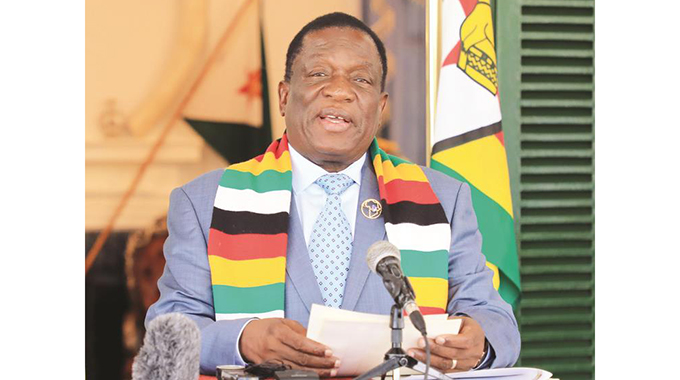
One important function of Independence Day is that it is a convenient point for us to take stock of where we are, where we have come from and where we still have to go, and in his wide-ranging interview this year to mark this important day President Mnangagwa did precisely that.
But he concentrated on the present rather than on the achievements of the past, at what the Second Republic has faced and is facing as it puts Zimbabwe back on course and this time on course in a real world rather than one of make-belief.
As he pointed out, when he won his own mandate in 2018, he and the team of technocrats he assembled to help sort out the problems faced a daunting task. He brought up the example of energy, and it was crucial and necessary to fix this to get other things fixed. Zimbabweans were facing major load shedding, which was one of the factors crippling industry that either had to cut back on production or spend a fortune on fuel, which was difficult to find, to operate their own generators.
Well that was fixed, not by any magic, but by practical policies. Zesa management was re-organised so the engineers, who actually know what they are doing, could operate.
Foreign bills were paid, so imports could resume to fill the gap. And, with the prepaid systems and correct pricing, Zesa was adequately funded to do this. On petrol and diesel, queues were rife, shortages were severe, and there was a lot of cheating, with some Zimbabwean business people smuggling out subsidised fuel to see in countries that did price correctly.
So the subsidy menace was eliminated, cutting one major source of private-sector corruption, pricing was altered to cover real costs, and eventually the honest parts of the private sector were mobilised to fill the gaps.
The entire system was changed to make cheating largely impossible, because there was no money in it. In the end this required equal taxes for petrol and diesel to end the last element of temptation.
So in the end Zimbabweans paid more for energy, but in return had guaranteed supplies. Not that the Government was totally trusting. The energy regulator, Zera, acquired teeth and could audit and examine the accounts and start doing its job properly, making sure that those in the energy sectors, and this included the Government-owned Zesa, could charge fair prices without profiteering. Perhaps the level of that achievement has been seen in the total destruction of the fuel black market and now in price competition at the petrol pumps. Zimbabwe is back in a normal world.
The resurrection and growth of the industrial sector, which started getting products back on shelves, was not a single policy. Rather it was built on the dramatic and far reaching reform of the fiscal and monetary systems.
And that was built on a host of policies. First, and fundamentally, the Second Republic started living within its means, running the country on what it raised in taxes rather than pretending Zimbabwe was rich and printing money, either literally or electronically, to fill the increasing gaps.
That in turn allowed the monetary reforms, which included the return of the local currency, carefully and in stages so there was no total meltdown, but surprisingly swiftly.
That policy was finally brought to fruition with the foreign currency auctions, and for the first time in over half a century market forces under regulation, but not control, could operate. The result has been a surge in production and, in many but regrettably not all sectors yet, competitive forces operating that ensured consumer choice and an increasing degree of competitive pricing.
Competitive pricing works when there is abundance and other Government policies, now coming to fruition, of ensuring that our farmers could grow what we needed have been filling gaps.
Black markets, profiteering and cartels require scarcity to work. When you open investment to newcomers, and fix the foreign exchange allocations to be open to all, you remove the props that too many relied on.
Admittedly those reforms did lead to a burst of high inflation, now largely tamed, as the underlying mess rose to the surface. And there was more than we expected, but it has now been accounted for. The monthly inflation rates are very low.
There are still too many economists who look at annual inflation rates, which are falling fast, but these are not useful and will not be useful until about September when the sudden stability will have been running for a full year. Then they start measuring something that is important and valid for our economy.
As President Mnangagwa noted, none of this was easy. And as he also recognised it did affect his Government’s popularity, but as he stressed it was necessary. When he started the reforms he did not sell them as the easy option. He simply told us they were needed if Zimbabwe was ever to grow economically by producing more rather than shuffling paper around. And he was right. Now the Government can do things having fixed its spending. This meant it can cope with emergencies, such as drought and cyclones, and with the major menace of Covid-19.
We had major, and very welcome, help in coping with these emergencies, but we need to recognise that the bulk of the money spent has been ours, coming from our taxpayers.
Besides the capital investment in our decaying infrastructure. And building new dams as well as rehabilitating older irrigation systems, and fixing the national highway system, which includes pricing tolls properly to pay for this, the Government has been able to step in to start addressing the mess in our urban authorities: bad roads, inadequate water supplies, decayed infrastructure.
Legally municipalities are supposed to be exemplars of local government, funding, maintaining and expanding their services.
Some of the problems, like Bulawayo’s shortage of raw water, are being rapidly addressed as a legitimate central government responsibility. But others require declarations of disaster to allow the central Government to step in. The President was in many ways easy on the opposition, simply urging them to identify with national goals, which surely means a more prosperous and functioning Zimbabwe, and then contributing to the debate and the efforts.
He was not looking for agreement, but rather proper input and argument rather than trying to wreck what we have first. But the urban local government mess does show quite dramatically the limited input of too much of the opposition. One would assume that since opposition parties control most urban councils that they would be using that opportunity to show how much smarter they were and testing out alternative policies.
Their only alternative offered is largely disaster and to ask someone else to bail them out. Well their foreign friends are not helping them make Harare great. The President’s impatience is justified, that he has to step in to fix stuff in the richest parts of Zimbabwe because opposition leaders want to organise demonstrations rather than repair roads and replace water pipes. One feels he would prefer competing on efficiency and seeing which ideas work the best so the flow of really good ideas would be a two-way process and so accelerate progress.
President Mnangagwa is not fond of rhetoric and that interview once again showed how he prefers to talk about what has been done and achieved, and what is being done right now, by workers on the ground.
And, yes, he was able to list a lot of accomplishments. In the end that is what he was elected to do and how he wants to be judged.


 Online Reporter